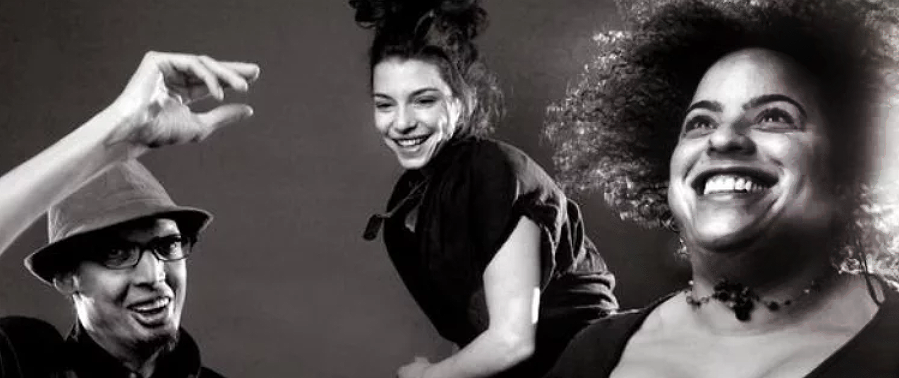
This weekend, Leeds-via-London stoner metallers Black Moth will play their final shows. After breaking onto the scene in 2012 with debut full-length The Killing Jar, they harnessed the power of the occult and the morose with a healthy dose of Black Sabbath, Nick Cave and Uncle Acid to become one of the brightest lights in the British stoner/doom scene. However, such is life, circumstances didn't work in their favour. Their final album, Anatomical Venus, was recorded a year before it was eventually released, which ultimately slowed the band's momentum – leaving over three years between records. "The album was done but we weren’t out there promoting it," vocalist Harriet Hyde tells Kerrang! from the comfort of a north London pub. "Although we did some really nice things off the back of it. We toured with L7, played with Sleep, which for us were ultimates. Hearing Donita (Sparks, L7 vocalist) say to the crowd that I was their frozen embryo child (laughs)… It genuinely made me cry.” Couple the delay with the fact that Black Moth's lineup are split across England – two members living in London, and three living in Leeds – made touring and rehearsal a trying ordeal.
"I quit so many jobs because we’d been offered a tour, and you can only do that for so long. What’s sad is you’ve got five people who have this incredible chemistry for making music together, but it all ends up being frustrating because you can’t scrape two hours together on a Friday night." Logistically, it became impossible to carry on. Harriet herself was burning out, using every available holiday she had to go on tour, she never found time to actually rest. "There was a heartbreaking moment where we were playing Vienna on tour and I was desperate to go see Vienna. Did I see it? Did I fuck!" she laughs. "I saw the back of a van then a venue, then we left." Ultimately, Harriet wrote the band an email, calling time on Black Moth. Admitting it was a hard pill to swallow initially, the rest of the band agreed that the band should leave it at the three albums they're proud of, instead of "pissing it away and falling out." Here, we talk to Harriet about the legacy of Black Moth, what she's learned, and what she hopes for the future of the music industry.
Even though it was a choice, you must be gutted it's over.
“Anatomical Venus said what I wanted to say. It was an offering that was a very woman-centric, feminist album that we made. Until that point we just happened to be women in a band. It was important to do it because I think a lot of people were like, ‘God, why are people even mentioning that we have female genitals, what does that have to do with it?’ But also, I do think as a woman you have a different experience to a man in any situation, and in a very male-dominated world you want to show that you can do as men do. But also your experience is different by way of being a woman, so I wanted to make a record that did properly respond to that. There was a very immediate response where there were a lot more teenage girls rocking up at the shows, coming up and thanking me for the lyrics and inspiration. That’s the point of owning what you’re doing as a woman, it’s not incidental.”
If you’re receiving such a strong reaction from fans, the logic isn’t to just stop.
“I started to find touring really difficult. I read a Leonard Cohen quote that I loved and seemed to hit the nail on the head, ‘Tours are like bullfighting, they’re a test of character every night.’ They bloody are! And women are cyclical, quite literally, so one night you might be ovulating and be like, ‘I’m the fucking queen of the world, I’m going to own this,’ but then you’re still on tour every night. But it’s the same for men and women. Putting yourself up there and performing on the days where you just want to be huddled in a ball started to feel very difficult. We all have our strong days and our mental health days, but you just have to get up there and do it anyway. We’re all in our 30s now, but the sad thing is that as musicians ripen and get better at what they do, life is also getting harder. You need to make a living. Everyone knows, but no-one talks about how it’s near enough impossible for bands. You’re touring with big bands and people think you’re in champagne hot tubs (laughs).”
Did you ever think it was going to be like that?
“The priority for us has always been about making the music we want to make. I don’t think we ever expected with the music we’re making to make millions, or even to make a living, but we weren’t even scraping by. The band was almost always operating at a loss and that’s not unusual at all. The bigger you get, the more outgoings you have. As life gets harder you need to support yourself, and you’re a musician alongside that, so it’s like a full-time job, but also your heart and soul’s in it. It’s a real testament to how important music is in life that people continue to do this. People do this until they’re rammed into the ground and penniless. I know people that’ve lost fiancées and given up so much, putting all their eggs in one basket and can’t make a living. That’s real. Fans need to know that musicians are real humans.”
Do you see yourself doing anything else musical?
“I think we’ll all do bits and pieces on a casual basis. Nico, our old guitarist, has a rockabilly/surf punk band called X-Ray Cat Trio and I’ve been doing a bit of singing on some doo-woppy tracks, which is ace. I’ve started doing dark versions of Everley Brothers’ songs with friends, just getting back to the roots of it all. Then we'll see what happens.”
Is there anything you wish you’d have done differently?
“I think I’d have been even bolder. It took me a while to land in my own skin, just through growing up. I have a much bolder sense of who I am now, I found it a lot harder when I was younger – finding how to present myself onstage as a woman. I went through all these different phases of glamming up, then suddenly feeling quite exposed by reviews pinning me as some kind of sexy frontwoman. So then I went full grunge to hide myself away… Maybe I would have just said, ‘Fuck it’ earlier on and just been who I wanted to be. I think this is why I’m excited for the future and I’m happy to hand the torch to other women coming through. We’re living through really exciting times. We’re not even thinking in binary terms about men and women any more. It’s amazing to see more trans people in rock’n’roll. I have a lot of hope for the next generation.”
No regrets?
“No regrets. We did what we did. I think we appealed to the weirdos, the real weirdos. I went to see John Waters earlier this week, I’m a massive fan, and I’m just reminded of how in awe I was of how he made art that really celebrated the weird, the perverted and the odd. And that’s what I wanted our songs to do. Some of our songs are really weird and perverted and dark and odd (laughs). Maybe that’s what we’ll be remembered for.”
It's a shame you didn’t make more money doing so...
“(Laughs) Yeah. It’s a weird thing to say because it’s not romantic. People like to think of their rock stars and musicians as being tortured poets doing it for the love of it, and I’m sorry, but we’ve got to fucking live like anyone else! We’re living through weird times where music has become an unlimited free resource. You don’t have to pay for it anymore. That’s great in some ways, of course, but people have to realise that a lot of musicians can’t afford to do what we want to do. We’re not asking to be Bono in a mansion. It would just be quite nice to carve a life for yourself that supports your creativity in making music alongside being able to live. And have solid mental health because we’re not exhausted and constantly trying to achieve something in a hostile environment.”
What change would you like to see in the industry to keep bands going longer?
“If I had the answer I would probably be a millionaire right now. Everyone is asking, ‘How does the music industry recover from this strange situation where the product isn’t the actual music, it’s merch and live?’ I wish I had an answer. In other countries the government invests in the arts more, there’s more support, more funding. But fans, please buy the records. Try before you buy, but buy it. Or buy the merch if you don’t want the records. Understand that bands are working bloody hard to do what they do, and if you like something then support it. Nothing in this life is really free. Our time isn’t free. Our energy isn’t free.”
From: https://www.kerrang.com/a-farewell-to-the-perverted-darkness-of-black-moth
DIVERSE AND ECLECTIC FUN FOR YOUR EARS - 60s to 90s rock, prog, psychedelia, folk music, folk rock, world music, experimental, doom metal, strange and creative music videos, deep cuts and more!
Saturday, September 7, 2024
Black Moth - Looner
Tibetan Miracle Seeds - Ideas
Tibetan Miracle Seeds are a new psychedelic rock band from Scotland, and the latest signing by upcoming UK psych record label Fuzzed Up & Astromoon Records. Their music leans heavily towards Anton Newcombe-ian psychedelica, so you better get your sitar and acoustic guitar ready before joining in with these soothing chants. There’s definitely some of that Brian Jonestown Massacre/Dandy Warhols fuzzy laziness going on here, but although Tibetan Miracle Seeds luckily also know how to write some ear worms for your brain to remember them by, they’ll never end up on top of the tops any time soon. Which is fine by them probably, let them emanate their incense heavy fumes from the periphery for a while. Their special edition vinyl records are long since gone, so I guess they have found their tribe. You know, those people who just know what a Tibetan Miracle Seed is, even without ever Googling it. Or an Inca Missile for that matter…that’s exactly the kind of tribe that will put these miracle seeds in their pipe and smoke it until they melted all their wellies. Personally I would have liked the album to be a bit more varied, and the highlights for me are therefore the songs where TMS really kick it off with some extra added grit where they almost land in stoner rock territory. A song like Melted Welly for instance does this terrifically. Otherwise Inca Missiles is a pretty cool debut album with a consistent sound, some real tunes, and killer artwork. Psychheads know what to do.
I asked main man, singer/songwriter and guitarist Jack McAfee to introduce his band, and this is what he had to say:
Hi guys, how have you been these past two years of ominous dread?
Busy writing and recording lots of music! It has been a weird time but also not having anything to do has been a good incentive to make music.
Can you tell us who you are, where you come from, and what you love most in the world?
A humble goat farmer from Dundee, Scotland. I love my goats more than anything.
Can you explain “Tibetan Miracle Seeds” and “Inca Missiles”? I have pictures in my head, but I’m sure they don’t come close to the truth!
The pictures in your head are closer to the truth than anything I could ever tell you.
These are our absolute heroes in life and music: George Harrison, Jimi Hendrix, Ken Kesey, George Carlin, Bill Hicks, Noam Chomsky
If your lives depended on it, which record would you be able to agree on as a band as the holy grail in music?
It’s not even my all time favourite record, but if aliens were to visit Earth and demanded we show them the greatest piece of music ever made, I’d give them The Dark Side of the Moon by Pink Floyd.
How did you determine your sound as a band? Was it a conscious decision or a natural one? And how does decision making go in general for TMS?
Really it’s determined by whatever bands and artists are currently being listened to. When you hear a song that makes you feel a certain way, and then asking the question, what is it about that song that made me love it so much, or moved me like it did? It could be a chord sequence, a particular instrument, the vocal performance, a cool riff – any element of the song that makes you feel something. Unexpected moments or changes really do something for me too.
What message would you like to convey as a band?
Save the bees.
What are your immediate- and future goals? What would be the ultimate achievement?
Immediate – play a gig. Future – go on tour. Ultimate – Make the greatest album of all time
What should the Weirdo Shrine readers do immediately after reading this?
Call your loved ones and tell them to listen to Tibetan Miracle Seeds. And read that book you’ve been meaning to read but haven’t made time for.
From: https://weirdoshrine.wordpress.com/2021/08/16/tibetan-miracle-seeds-inca-missiles-2021-fuzzed-up-astromoon-records/
Dolly Parton & Nickel Creek - Shine
There are few artists of the 20th century as decorated or prolific as Dolly Parton. She has written over 3,000 songs, 26 of which charted at #1, and has won 11 Grammy Awards. The seventh Grammy she won was Best Female Country Vocal Performance for this cover of the 90s hit “Shine,” part of her 2001 album, Little Sparrow. Parton sped up the tune a bit and replaced the grunge with her signature country twang. She was joined by the band Nickel Creek, who put on a bluegrass clinic during each breakdown. They make the tune their own through fierce musicality, while maintaining the prayerful themes of Collective Soul’s original.
The lyrics themselves are described by Collective Soul’s guitarist, Dean, as “basically a prayer.” Their front-man Ed Roland wrote the song in just one night, he told Songfacts: I always had the “Shine” riff, and I thought, “That’s a cool riff.” Then I came home and spent the night with my parents and Dean, who is 10 years younger than me — I didn’t even know he played guitar. So he was playing guitar, and I joined in. I just showed him the riff, and I was like, “I need to finish this.” So, I literally just wrote it right there, with Dean, sitting in my parents’ living room. I didn’t think anything about it. I probably wrote it in 1989, and it wasn’t out until 1994. He also told Songfacts that the lyrics may have been inspired by “This Little Light of Mine,” a song he had sung many times growing up as the son of a Baptist minister. Collective Soul released “Shine” as their first single from their debut album, Hints Allegations and Things Left Unsaid, in 1994. From: https://aleteia.org/2018/05/28/dolly-partons-cover-of-shine-is-a-bluegrass-masterpiece
Lykantropi - Vestigia
There are many threats facing our world today. Some are man-made (climate change, for example), while other dangers manifest as actual men and women. But is there any threat less talked about than that facing Sweden today? The time vortex seemingly whirling across that Scandinavian country, spitting out 70s alt-rock bands left, right and center? From Witchcraft, Horisont, and Graveyard to my subject today, Lykantropi, and, let’s be honest, recent Opeth too, there is a significant number of them around. This is not a negative per se, as much of the bluesy rock these groups turn out is enjoyable, but should it concern us? I mean, how much 70s rock can the present actually endure? Could it be Lykantropi’s sophomore effort, Spirituosa, that finally tips all of Sweden back into the past?
Possibly, quite frankly. Like their 2017 self-titled debut, Spirituosa is pure nostalgia, from the music itself to the lyrical subject matter. From the first chord of opener “Wild Flowers,” there is no doubt what these Swedes are about. And to be fair, what Lykantropi do, they do very well. We’re talking 70s bluesy rock, with melodic leads and groovy basslines, layered harmonies including flutes—and why the devil not?—all providing a platform for clean English and Swedish vocals. As to the subject matter, Spirituosa deal in whimsy, in old folk and fairy tales. I think it’s worth being quite clear upfront that there is very little that is metal, or let alone angry, about this record. This is a band that cites the “sweet harmonies” of The Mamas & The Papas, as one of their influences. I don’t personally see this as a negative (and I have been known to do a very poor version of “California Dreamin'” at karaoke) but it’s important that everyone is on the same page here.
And I have to say, it’s a page I increasingly liked. On my first listen—both to Sprituosa and its slightly rougher-edged predecessor—I found myself nodding along to the bass line and pricking my ears up to occasional harmonies on the vocals, particularly the female vocals (which I’m reasonably sure are delivered by the brilliantly named My Shaolin, though credits on the album are hard to come by) but not much more. Put on the spot, I would likely have paused, nodded sagely and then said, “yeah, it was fine.” Much like Coven’s Witchcraft Destroys Minds & Reaps Souls, which I suspect members of Lykantropi know well, I found that on further spins, significant parts of the album had actually wormed their way into my brain. Indeed, Spirituosa is more layered than I appreciated on my first listen. The multiple vocals (three, I believe, in band leader Martin Östlund, his fellow guitarist Pär Nordwall and the aforementioned My), coupled with psychedelic guitars and the flautist, all work surprisingly well. There is also structure to the album that carries you along, while highlighting certain parts, notably the starkly delicate “Songbird” and the groove-laden “Wild Flowers” and “Vestigia.” From: https://www.angrymetalguy.com/lykantropi-spirituosa-review/
2 Foot Yard - Crisis
Any band with a name that looks like somebody’s email password instantly arouses my suspicions — probably because clunky alphanumerical strings seemingly composed of someones ‘porn’ name and the year they were born were irritatingly prevalent among pop and dance bands of the early 90s. The number 2 was a repeat offender. In 1993 a euro trash rave band called 2 Unlimited held up the airwaves with the hit “No Limits.” Then there were Boys II Men. There was 2Pac.
Perhaps it’s just me, but 2 Foot Yard also has the whiff of a working title, like a loose confederation of Dutch DJs who got together for a couple of albums. But while they may be an ‘outfit’ of sorts, a vehicle for the talents of Marika Hughes (Charming Hostess, Vienna Teng), Shahzad Ismaily (too many to mention) and Carla Kihlstedt, they are no stuffed shirt. To name but a few of Ms. Kihlstedt’s projects: Sleepytime Gorilla Museum (Mr. Bungle with violins), The Book of Knots (responsible for a compilation of scary portraits of rotten industrial towns), and a song cycle for the stage based around Jorge Luis Borges’ Book of Imaginary Beings. The last is particularly impressive when you consider the influence of another famous musical menagerie: Saint-Saëns’ Carnival of the Animals - which, while being the source of as many radio friendly soundbites as any pop album, is experimental, cacophonous in parts.
If I may extend the analogy to 2 Foot Yard themselves, the eponymous “Borrowed Arms” is the radio friendly equivalent of the Carnival’s ‘swan’ (song), a perfect gem of chamber pop that would be unpleasant only to someone in a really bad mood. On the other hand the album throws up tracks like “Crisis”, which is shouty and abrasive. Overall though, Borrowed Arms and 2 Foot Yard are an experiment within the parameters of pop. Carla Kihlstedt implied as much in an interview after a gig in Amsterdam (the home of techno I might add). The band’s tiny 2 Foot Yard was that limited space in which the artists were hanging their work, leaning their stepladders, paint cans and so on. Although the sound was lush, the band members were few, and the arrangements were for songs of pop length, which could be reproduced easily on stage without the whole of Polyphonic Spree in tow.
The series of live videos with interviews are perhaps a more accurate glimpse of what the band can do than the album itself. But this is not to say Borrowed Arms isn’t great, it’s just so clearly created on the white paper that neutral ‘space’ estate agents and gallery attendants are so fond of pointing their clipboards at. It’s as if the record can never be more than a brochure for the live performance. Perhaps chamber pop is faulty anyway in it’s attempt marry the incompatible — a bold sketch of a pop song and something consummately ‘finished’. Is it a fundamentally pointless exercise? Or is the genre like classical music — put down on record for convenience, while it’s taken for granted that most music buffs would rather go to their church, the concert hall.
Despite all that’s been said though, 2 Foot Yard do transmit a rough and readiness, and even a kind of wartime bawdiness (see the provocative “Red-rag & Pink-flag”, based on E. E. Cummings’ poem) which appears to be born out of a life lived permanently on the road. Carla Kihlstedt is described on her myspace as “a wayward waif wandering the wide world, happily lost somewhere between the music conservatory, the arboretum, and the road house.” This excursion into fancy has the potential to be irritating, but it’s self deprecating enough to be endearing. In the Dutch interview, Carla seemed rueful about her tendency to end up with a band flanking her. I imagine her idea of normality must be pretty strange, but her talk of popping up in various projects as if she were a circus brat continually — but unsuccessfully trying to strike out on her own — seemed to make deliberate light of her prolific achievements. Anyway, what came across clearly was that the work of creating and recording music was more important to the members of 2 Foot Yard than where it originated.
Indeed there’s a touch of old fashioned socialism about the band, exemplified in the way they come on stage wearing workaday gear. Musicians, after all, must sweat a lot under those lights. 2 Foot Yard are old hands, ‘comrades’ skillful enough to make the best of any limitations imposed on them, even by themselves. They have the reliability of classically trained musicians and the rakishness of rock entertainers. Their accomplished album may not represent the full warmth of their live sound, but its influences (Klezmer and European Jazz) and its concerns (the restless heart, the cabaret bar, the sadness of settled life) record their trek through music, glamorous or world weary, and sometimes a bit of both. From: https://www.tinymixtapes.com/delorean/2-foot-yard-borrowed-arms
Drug Couple - 2027
Brooklyn indie duo Drug Couple is a band marked by a series of contradictory facets. The band’s members, Miles and Becca (themselves a couple) are willing to talk about their past projects, while hesitant to delve into the specific details (or even provide their surnames). Becca is ever the optimist, while Miles is a pessimist to his core. Most notably, their forthcoming EP seeks to reconcile the process of finding love and romantic companionship in a time when the End seems increasingly Nigh.
After sitting down with Miles and Becca in their Bed-Stuy apartment last weekend, however, I came to understand that these opposing parts represent a sort of harmony, an element key to understanding the band’s sound and ethos. Miles and Becca find that their respective personalities provide a necessary balance to their home life, and are able to recognize their music and relationship as something beautiful that exists despite our increasingly precarious political climate. Following the release of their debut EP Little Hits, I interviewed Drug Couple to better understand their relationship, their politics, and what we can expect from their forthcoming sophomore effort, Choose Your Own Apocalypse.
Q: So the two of you met at Brooklyn recording studio The CRC, where Miles was working as a producer for Becca’s old band. Can you tell me about that meeting, and how your relationship progressed. Did the music come before your relationship, or vice-versa?
A: Miles: The music definitely came before the relationship. Becca was in a band with my old next-door neighbor. I hadn’t seen him for years, and one day he showed up at the studio and played some demos, and I was like, “Oh, I see what you’re trying to do here.” But what he was playing me didn’t have Becca on it at all.
Becca: The demos had a previous lead singer on them. So we came in to the CRC, did some demos—
Miles: And I was like, “Oh my god, this is really cool, I’m really into it.” And what I was into is what she was bringing to the band. So part of us working together was convincing Becca she was a songwriter.
Becca: I had been writing songs for a long time, but I didn’t flex that muscle a ton, and didn’t really think of myself in those terms. And Miles really encouraged me to occupy that space. As soon as we started working together, we really clicked on a creative level. From early on it was clear that we had this really great collaborative relationship.
Miles: Not that long after, we broke for Thanksgiving, I stayed in New York and started mixing those demos while Becca went up to Vermont, and, y’know, I started forming a crush on this young woman who was writing these really compelling songs. So we had a production meeting and at some point I believe I said I had an “art crush” on you.
Becca: At that point, we realized we work so well together, we have a great collaboration, we should start a project ourselves. That was four years ago.
Miles: Since then we recorded a 16-song album, which we cut down into two EPs.
Q: Regarding the new EP, Little Hits, you described your music as “an attempt to showcase a dialogue between genders, as opposed to one side soliloquies.” Could you speak more to this point?
A: Miles: When we first started thinking about the idea, I was tired of bands comprised of men, specifically white men. I just no longer find it compelling, and I don’t know that it’s relevant. I also spent a lot of time as a solo artist, which is this incredibly insular, navel-gazing, staring-in-the-mirror thing. Which can be inspiring, but I feel like the end result of that is hating everything you make, because there’s too much of yourself in it.
Becca: I think doing things where it’s just you, it’s really easy to enter into this space where you either think, “Oh, this is really great” or, “Oh, is this terrible?” And I don’t feel that way when we write stuff because it’s not just me that’s reflected there, it’s you too — and I love you.
Miles: It creates this back and forth that feels more interesting, that has more staying power. I like it four years later, in a way that I don’t always like the things that I was thinking four years ago. And it’s richer.
Becca: And from a practical perspective, there’s two of us, and we have our own distinct perspectives, and sharing that space with Miles really elevates what I can do. It makes me better, I think it makes us both better.
Q: The sense I get is that this dynamic between the two of you amplifies your joint output.
A: Miles: Really, if I start a song on my own or Becca starts a song on her own and we run it through our filter by playing together, it comes out as a Drug Couple song.
Q: Besides the music, there’s another component of your relationship, in both the title of the EP, as well as the name of the band, which is drugs.
A: Becca: What!
Q: Yes, what a shocker. From your press release, you’ve indicated a mutual appreciation of LSD, especially given the cover art for the Little Hits EP is sheets of acid—
A: Miles: Well I will just say we think the name speaks for itself. I will say when we came up with the name it was very early on in the Trump era, before he was elected when Jeff Sessions was a person who was hanging around with him. We’re part of a culture that felt a little defiant about that. Like, yeah, y’know, we smoke a lot of pot. We’ll leave it at that.
Q: You cite your primary influences as Yo La Tengo, and Dinosaur Jr. Were there any non-musical influences or cultural touchstones that informed this project?
A: Miles: With naming the band Drug Couple, we’ve got a little bit of revolutionary in us. We have fairly radical politics; I’m very heavily invested in politics.
Becca: Miles still talks about running for office, and I feel like that’s something that could happen down the line. Drug Couple 2020.
Q: You’ve indicated a desire to release your music “before the impending armageddon,” and your new EP is billed on the premise of “finding someone special to share the end times with.” How does that shared existential dread affect your music?
A: Becca: For our second EP, Choose Your Own Apocalypse, we had started playing around with the idea of finding love in the time of the apocalypse right around the time that we had started writing together, which was around the 2016 election. So we have a lot of unreleased songs that kind of play on that theme and that concept. I think it just felt like a natural theme — it didn’t feel we were going to “explore” it, it was like, “Oh, everything’s going to shit.”
Miles: It’s like, “Oh, the climate’s getting worse and Donald Trump is gonna be president, so we’re not gonna make it, I guess.”
Becca: But amidst all that horrible shit, we met, and started doing something beautiful.
Miles: And at the same time, things have not necessarily gotten better; they seem to be getting worse. But we’re planning to get married this summer. I would like to start a family —the EP kind of deals with, how do you square that with the fact that, as a species, we’re kind of tying a bow on our own existence?
Q: That’s interesting, because It doesn’t seem like there’s a lot of pessimism in your music.
A: Becca: Well, I wouldn’t say that we are pessimistic.
Miles: Which is funny, because I am definitely a pessimist. Which is the difference between the two of us, because I’m never disappointed—
Becca: And I’m an optimist, which means I’m always disappointed. And we meet somewhere in the middle.
Q: One of my favorite tracks on Little Hits is “Be In 2,” because the narrative splits the difference between talking about a relationship and slightly cryptic, almost metaphysical phrases. What informed the writing of that song?
A: Becca: For that particular song, we sat down in my barn in Vermont and wrote it together, in that room, start to finish. We’re writing that way more and more. The actual content of the song was about the impossible things you ask someone that you’re in a relationship to do, that you ask of each other.
Miles: “Be In 2” is essentially about asking someone to be in two places. There’s an impossible aspect of love. It’s so grandiose, but we’re small people, and we’re flawed. And when you fall in love with someone, it’s this great thing that you’re asking someone to carry for you, and it’s preposterous. It’s an insane thing.
From: https://bedfordandbowery.com/2019/12/dont-be-surprised-if-musical-and-romantic-duo-drug-couple-runs-for-office-%EF%BB%BF/
Maryam Saleh - Ayez Awsal
In what could be described as a fresh and ingenious collaboration, Egyptian singer Maryam Saleh and Lebanese composer Zeid Hamdan came together to present Halawella, an album comprising of Arabic satirical lyrics and state-of-the-art electronic music. Initially meeting in 2010, Saleh and Hamdan swiftly began their collaboration, and experimented with this fusion of Arabic lyrics and electronic beats. Together, they performed an array of concerts inside the Arab world and abroad. Halawella is thus a continued collaboration between both musicians, albeit one that witnesses further experimentation. The album comprises of 10 songs, six of which are reinterpretations of Sheikh Imam and Ahmed Fouad Negm’s songs: Valerie Giscar D Estaing, Nixon Baba, Ghaba, Youyou, Halawella and Chal El Hawa. As for the other four songs, Watan El Akk, Eslahat, Emchi Ala Rimchi, Islahat, and Walaa Soda, they were written by Mido Zoheir, Omar Mostafa, Amr Qenawi, and Maryam Saleh. Saleh is also the music composer. The album is steeped in dark humor and rebelliousness and tugs at politics and life.
Maryam, a theatre artist herself, manifests her performance skills in Halawella, her second album after her debut release Mesh Baghanny (2012). She maintains her rejection of traditional music- her voice intensifies the black comedy characteristic of the album’s songs. Saleh chops the lyrics into little snippets, exhibiting a remarkable ability to play with her voice. Maryam began her music career with participations in Baraka band, which reinterpreted Sheikh Imam’s songs with rock music, and Gawaz Safar band which she founded herself, before commencing her solo career. Her repertoire also includes acting roles in films Ein Shams, Bel Alwan El Tabeeeya and Farah Layla TV series. Her theatre experience includes collaborations with El-Warsha and Tamy troupes as well as Choir Project. Furthermore, her repertoire is steeped in experimentation, with collaborations with Palestinian musician Tamer Abu Ghazaleh and Egyptian musician Maurice Louca. Halawella was produced by Mostakell, a music label for indie Arabic music operating under Eka3 platform. Palestinian musician Tamer Abu Ghazaleh, Eka3’s founder, explains that the platform “has become an incubator and accelerator for business models that helps to fill the gaps in the Arabic music market."
Besides Mostakell, Eka3's portfolio also includes “Almoharek (Live booking agency of indie Arabic music), Awyav (Arabic Music Content Agency), and Ma3azef.com (Music Magazine). The album was produced jointly with both Saleh and Hamdan. The production took a long time “because -- as usual -- we work with low budgets, and each of the artists lives in a different country, which made us work on the production bit by bit whenever the circumstances allow us,” Abu Ghazaleh asserts. Upon the album’s release, the production team opted to spread the album’s recorded music, rather than focus on live shows. So far, they have focused on the Arab region release, but they are scheduled to plan Europe's release, as well as an album tour by early 2016. Halawella was presented at Rich Mix London, UK on 23 October, and at BO18, Beirut, Lebanon on 12 November. Ahram Online spoke to Saleh about Halawella, her music collaborations, singing style and upcoming plans.
Ahram Online (AO): Is Halawella a development of your relationship with Imam’s music?
Maryam Saleh (MS): Certainly. Halawella witnesses a development in my own relationship with Sheikh Imam's repertoire. I also found in Zeid's music the right sound that we could present Sheikh Imam's music through, and thus introduce his music to the young generation that would not have heard this music otherwise.
AO: Tell us more about your specific collaboration with electro-music producer Zeid Hamdan.
MS: I've been a fan of Hamdan's music ever since he was performing with and composing music for Soap Kills, and Kazamada bands. Besides his incredible music, working with Hamdan is in and of itself an enjoyable experience. He is always excited about music, which in turn inspires me to fetch new songs that we can work on together.
AO: Tell us more about Halawella.
MS: The album comprises of six of Sheikh Imam's songs, and the rest are my own musical compositions, which include Watan El Akk, Eslahat, Emchi Ala Rimchi, Walaa Soda and Islahat. I also wrote the lyrics for Emchi Ala Rimchi, and took part in writing Walaa Soda, alongside Amr Mostafa and Amr Qenawi. As for Watan El Akk and Islahat, they were written by poet Mido Zoheir. What I like the most about Zoheir's lyrics is how he sees things. He reminds me of Samuel Beckett’s plays, a kind of art which I really love. And I’ve been interested in these styles of lyrics and music state since I was in Baraka band (2008) and also in my debut album Mesh Baghanny (2012).
AO: In Halawella, as elsewhere, you perform, rather than just sing. Is this style of singing influenced by your experience in theatre?
MS: I've worked with my father, director, writer and theatre critic Saleh Saad in street theatre since age nine. I specialised in the character of the popular clown. Most of our work together was based on the idea of folk arts in Egyptian society, and which in turn really influenced my musical career. I was also influenced by Sheikh Imam and others. All together, these influences contributed to the way I sing now.
AO: In Halawella, we see you as a performer, singer, songwriter and composer. How challenging was this project for you?
MS: I love each of Halawella's songs, and the making of each song constituted a unique experience of its own. This, I believe, explains why I didn't find the idea of taking on many and diverse responsibilities hectic or challenging, especially that the project took so long to finish. I'd say that the biggest challenge we encountered was that Zeid and I live in different countries, which negatively affected our ability to rehearse together, to think collaboratively, and to also work on new songs. But I’d say that our excitement towards this collaboration always overcame these challenges.
AO: This is your second collaboration with Mostakell, after your debut album Mesh Baghanny. How important is this music label to you?
MS: Mostakell helped me launch my solo career, after I had always performed as part of bands. I had feared the idea of working on my own, but I nonetheless grasped the importance of taking such step through my work with Mostakell.
AO: How do you assess this current moment in your musical career? What has changed? And what are your upcoming steps?
MS: The main change I encountered is that music has become a career, and I now devote all my time to singing and music, a decision which I wasn't so conscious of, and which is a constant source of fear. I fear losing the playful spirit I approach music with, and the ability to enjoy the music process as a result. To deal with that fear, I like to involve myself in many projects, and to constantly experiment with different people. My future plans include a collaboration with musicians Tamer Abu Ghazaleh and Maurice Louca. The project includes research and experimentation with the new music in our society, from maharaganat, to shaabi music, to experimental music. Each of us will leave their own imprint in this project. All three of us are merged together in an end result, which seems unusual yet exciting nonetheless. The project is scheduled to come out by the summer of 2016.
From: https://english.ahram.org.eg/NewsContent/5/33/168776/Arts--Culture/Music/INTERVIEW-Egyptian-singer-Maryam-Saleh-on-her-new-.aspx
-
Pledging allegiance to thick, throttling fuzz guitars, primal psychedelia, and thundering rhythms, the 21st century rock revivalists Wolfmot...
-
01 - The Wizard 02 - Traveller In Time 03 - Easy Livin' 04 - Poet's Justice 05 - Circle Of Hands 06 - Rainbow Demon 07 - All My Life...
-
In the front, the Pit kids ruled. In the back, the grandparents huddled. And sandwiched between both were the rest of the diverse crowd-swin...
-
John Benoit, founder of post-hardcore band Resilia, talks with Dying Scene about the band’s origins, influences, and what 2024 has in store ...
-
Slow Pulp have released a new video for “Track.” The video features hand-drawn animations by Corrinne James, which were inspired by beautifu...