Monday, April 17, 2023

Shireen - Umai


 #Shireen #witchpop #folk rock #dark folk #neo-medieval #folk metal #electronic #Dutch #music video

Shireen is a band that comes from Netherlands and has managed in a little while to form a completely personal sound which is constantly evolving. By mixing folk and acoustic rock with ambient and pop and introducing the use of electronic samples and beats in their music, they created their own genre they call Witchpop. The "acrobatics" between various genres produces an excellent result that dresses the wonderful voice of Annicke, frontwoman and Shireen's lyricist. Annicke very kindly gave us an interview about the band's work and dreams.

What motivated Shireen to go on their own genre and what reactions do you get when you say “We play Witchpop”.

The genre we play (or actually, not conforming to a set genre at all) has never been a choice for us. We write whatever we like, and don’t try to fit it somewhere because that would only retain us from using the full scale of possibilities. So it happens naturally that our music usually floats in-between genres. We get our inspiration from a lot of different artists and music styles. We gave our style the name Witchpop to get rid of the “describe what you play” questions (which actually didn’t work haha). But even if people don’t know the genre, they immediately have a general idea or a feeling about what kind of music we play.

When someone listens to your works for the first time, they might be surprised by the contradiction that comes from the atmosphere of your music and your lyrics. How do you manage to combine social and inner matters (like the human cruelty and endurance or femininity and modern religion) in a style of music that in its "traditional" form is more "out of this world" and how does the audience respond to it?

I don’t feel there is a contradiction in the style of our music and my lyrics. I write the lyrics and sing vocals exactly how I feel them. The rest of the musicians in the band are really attuned to what I mean by it, and every single one of them has their own unique influence on the sound when writing songs. I strongly believe in using people’s strengths as good as possible. When we write a song for me it feels as if it grows like an organic thing. People who like our music sometimes tell me in person that they are very touched by the lyrics and their meanings, that is the most rewarding thing for me.

How do you evaluate Shireen’s musical evolution since 2014 and ‘Unmarked’, until today and what changes brought the new member addition to the Shireen sound?

We took it slow, deliberately. I’d rather do things good than rush it. I don’t want to make “fast food music” anyway; bringing out singles for the sake of exposure, or fill an album with less good songs just to finish and be able to sell the album sooner. The whole modern world is already filled with stuff like that, and I feel, and hope that people also feel that there is no soul in it. We all deeply enjoy the positive reactions we get from people, and it motivates me to make new things. Every new band member has a big influence on our writing music. When Guido joined us with electronics he brought a complete new world of possibilities with him, and we started to (re)write songs to implement his amazing sounds. So does Berend, our newest band member and guitar player, bring in his style and we get inspired by the new possibilities of it.

Starting with the Umai video we can see a character like an alter ego developing and we find her again on the covers of Shireen’s three digital single releases and of course on the ‘Matriarch’ album cover. Is this character going to be Shireen’s optical signature?

I have always styled myself quite dramatically for our live shows. It is like a ritual; I always do my own hair, makeup and design and make my own stage outfits. I try to catch this feeling in a sort of character design that I then wear and become it. It’s not like becoming a different person to me, it’s more like “wearing my extra special skin”. I just don’t like “normal”, So I would say yes, as long as I’m the frontwoman of Shireen it will probably always be a dramatic signature style.

From: https://www.blackvelvetradio.gr/index.php/synentefkseis/430-interview-with-shireen-welcome-to-sound-world-of-witchpop


It's A Beautiful Day - White Bird


 #It's A Beautiful Day #David LaFlamme #folk rock #psychedelic rock #jazz rock #1960s

San Francisco psychedelic folk-rock unit It's a Beautiful Day was primarily the vehicle of virtuoso violinist David LaFlamme, born April 5, 1941 in New Britain, Connecticut but raised in Salt Lake City, Utah. After beginning his musical education at age five, LaFlamme later served as a soloist with the Utah Symphony, following an army stint by settling in the Bay Area in 1962. There he immersed himself in the local underground music scene, jamming alongside the likes of Jerry Garcia and Janis Joplin; after his short-lived Electric Chamber Orchestra splintered, LaFlamme also co-founded an early incarnation of Dan Hicks & His Hot Licks before assembling It's a Beautiful Day in mid-1967. The group -- which originally included LaFlamme's keyboardist wife Linda, vocalist Pattie Santos, guitarist Hal Wagenet, bassist Mitchell Holman, and drummer Val Fuentes -- issued its self-titled debut LP on Columbia in 1969, scoring their biggest hit with the haunting FM radio staple "White Bird." Linda LaFlamme left It's a Beautiful Day soon after, going on to form Titus' Mother; keyboardist Fred Webb signed on for the follow-up, 1970's Marrying Maiden, while Holman exited prior to 1971's Choice Quality Stuff, recorded with new guitarist Bill Gregory and bassist Tom Fowler. In 1973, ongoing disputes over royalties forced LaFlamme out of the group he created, and upon installing new violinist Greg Bloch, the remaining members issued It's a Beautiful Day...Today before dissolving in the wake of 1974's 1001 Nights. LaFlamme mounted a solo career in 1977 with White Bird, continuing his protracted legal tussle with ex-manager Matthew Katz for years to follow.  From: https://www.allmusic.com/artist/its-a-beautiful-day-mn0000109012/biography

Patti Smith - Dancing Barefoot


 #Patti Smith #art punk #proto-punk #art rock #hard rock #new wave #alternative rock #singer-songwriter #1970s

Jeanne Hebuterne was married to a famous artist in the early 1900s. They had a child together, and she was pregnant with another. In 1920, her husband died, from either drug addiction, illness (or both). Two days later, Jeanne threw herself off a building, killing herself and her unborn child, leaving their first child orphaned. In ‘Dancing Barefoot’ Patti Smith looks at this shocking story of love, loss and grief, probably through the lens of her own relationships. She grabs the cliche "Oh God, I fell for you" with both hands, and twists it into a grotesque meditation on love and death. That last line is repeated over and over while Smith recites some cryptic poetry, probably representing the last thoughts in Jeanne's mind before she died.  From: https://songmeanings.com/songs/view/3530822107858544768/

"I had the concept to write a lyric line that would have several levels - the love of one human being for another and the love of ones creator," Patti Smith wrote on her website. "So in a sense, the song addresses both physical and spiritual love."
The lyrics didn't come with the album, but a blurb on the sleeve read, "Dedicated to the rites of the heroine," which was the only way to know for sure that Smith wasn't singing the homophone "heroin." Smith says she was asked to change the word to avoid confusion and make the song more marketable, but she refused. This certainly stymied the song commercially, but Smith wasn't going to compromise her art.
Jim Morrison of The Doors was an influence on this song. "I always imagined Jim Morrison singing it, which resulted in me singing and recording it in a lower vocal register," Smith wrote. "I wanted the verse to have a masculine appeal and the chorus to have a feminine one." At the end of the song, Smith recites some of her poetry ("The plot of our life sweats in the dark like a face..."), which is something Morrison innovated on Doors songs like "Peace Frog" and "The WASP (Texas Radio and The Big Beat)." In some live versions, Smith would start the song with this spoken intro:
    We shut our eyes, we stretch out our arms
    And whirl on a pane of glass
    An affixation
    A fix on anything
    The line of life, the limb of tree
    The hands of he
    The promise that she
    Is blessed among women
"Dancing Barefoot" is one of Smith's most popular songs, and one of her favorites, performed at most of her concerts. It was never a hit, but neither were any of her songs with the exception of the Bruce Springsteen-written "Because The Night." Considering her acclaim it's surprising how few albums she sold and how rarely she made the charts. A song like "Dancing Barefoot" certainly could have become a hit if she had made some concessions and did the standard promotion, but that wasn't her M.O. Fans, journalists, and other musicians (like Springsteen) did what they could to spread the word, but mass appeal eluded her, which seemed to be for the best. Even decades later, many listeners are pleasantly surprised to discover her music and peel back the layers of her lyrics.
On the album notes, the song is dedicated to "Jeanne Hebuterne, mistress of Amedeo Modigliani." Modigliani was an Italian painter who died from tuberculosis in 1920. The next day, Hebuterne joined him in death by jumping out of a window.
"Dancing Barefoot" is the theme song to the 2023 miniseries Daisy Jones & The Six, about a fictional band from the '70s. The series uses a lot of original music, but producers felt "Dancing Barefoot" encapsulated the story better than anything they could write. The main character, Daisy (played by Elvis Presley's granddaughter Riley Keough), makes a spiritual connection with music that eventually leads her to the band.
From: https://www.songfacts.com/facts/patti-smith/dancing-barefoot

Mr. Elevator & The Brain Hotel - When the Morning Greets You With a Smile


 #Mr. Elevator & The Brain Hotel #psychedelic rock #psychedelic pop rock #neo-psychedelia #garage rock #alternative rock

Four years on from their debut album, LA Psych quintessentialists, Mr. Elevator & The Brain Hotel deliver a thoughtful and enticing experience in the 13-track work When The Morning Greets You. From a quick scan over, it is fair to say that Mr. Elevator has pulled out all the stops to deliver a wholesome spectacle. For fans of The Coral, Allah-Las, Pink Floyd, and Mystic Braves. From the start 'When The Morning Greets You with A Smile' the band are on it. Zesty vocals moving around a skippy bright drums/bass and organ groove. This song gets better with every turn with The Doors style bridge. While the chorus is vast and enrapturing, especially when the three-part harmony vocal line "And she's so fine" arrives. Again we hear a similarly skippy vibe with 'Madeline', which smiles all over the place, via the electric piano, bubbly bass, and enthusiastic drumming. The chorus has a melodic and harmonic feel not dissimilar to The Hollies mid 60's work. Beat rhythms and sugary Davey Jones vocals lead the way on the slightly distant 'Sunshine Daydream'. There is some mellotron like lines present which warp and warble cheerfully. 'Dreamer' has classic fuzz organ stomp, oompah bass and glam rock shuffle drums under a very Monkees formula, and pounding keys led groover 'Are You Hypnotized?' awakens rather than lulling, there are moments of late 70's British Two-Tone on here. The candyman-ish dull ghoulish piano 'A Lullaby' would have been an ideal sound shot for the end of last year. Leveling and pulling is the cosmic comedown Pink Floydful 'Intro' , moving into the dimly-lit 'Cosmic Bloom' a speedy Doors latin groove with grimy guitars, spacey organ flurries, under ghostly vocals.The energy intensifies via the powerhouse drums 'Fuzz Phantom', with hyped-up organ under Marc Bolan-ish whining. It has some sort of dramatised retro space crisis, think the late 60's/early 70's sci-fi TV programs. The robotic sonic expanse 'Tears Of Green' terrifies truly, like an imaginary galactic empirical marching anthem. For fans of the likes of Temples and Kula Shaker, here is a gem of a tune, mid-tempo drum beat, organs surround and drive forward, under exquisite three-part harmonies exploring the freedom mantra 'Let Me Be'. It really takes you away from life's current intense environment and the 'Let Me Be (Outro)', sees drums quick double-time march forward in a Doors style organ crescendo. The mellow dreamy, 'Ending' moves in an uncanny similarity, melodically to 'All Across The Universe', and that is fine as it revives the song's overwhelming essence.  From: https://soundblab.com/reviews/albums/17251-mr-elevator-when-the-morning-greets-you

Sally Rogers & Claudia Schmidt - Way Down The Road


 #Sally Rogers #Claudia Schmidt #folk #traditional #Americana #contemporary folk #singer-songwriter #a capella

Sally Rogers is a singer/songwriter and educator, who is originally from Beulah, Michigan and now resides in Pomfret, Connecticut. In her youth, Sally lived by the family farm and was exposed to music at an early age, as her mother was a pianist and the organist for the local church. Folk music was very popular in the ‘60s and early ‘70s, and singers like Joni Mitchell, Joan Baez and Judy Collins, were dominating the charts. After receiving a guitar for Christmas, Sally began to learn and explore songs from these and other popular artists. During her college years at Michigan State University, she studied Music Education and frequented the legendary coffee house The Ark… which showcased popular touring folk artists of the day. At The Ark, she attended ballad workshops, hoots, guitar and folk gatherings. During this time, she added the dulcimer and banjo to her arsenal and continued to expand her repertoire. After graduating college with a teaching degree, Sally began to perform regularly at local venues and clubs. She met the established Canadian folk singer Stan Rogers and he persuaded her to audition for a booking agency in Toronto. This turned out to be a good move because after passing the audition, she began to perform at major festivals and fine venues throughout Canada and the United States.  From: https://musicguy247.typepad.com/my-blog/2020/05/sally-rogers-interview-mountain-dulcimer-music-teacher-claudia-schmidt-howie-bursen-quilts.html

I first heard Craig Johnson sing "Way Down the Road" at the North Country Folk Festival in Ironwood, Michigan, where I was also performing. The version of "Way Down the Road" that I transcribed from Craig's set at the North Country Folk Festival is quite close to the version attributed to Sally Rogers. The differences are minor, mainly in syntax and punctuation. Since I was sitting next to Sally during Craig's performance, it is reassuring to know that our versions are nearly identical. Although I lost my transcription a while ago, I was able to reconstruct it from the information on this thread.
- Brian Humphrey

I remember back in '33
When we were still down in Tennessee,
Just gettin' by took all your time,
Away down the road.
The word went out in '41
Uncle Sam said get the big job done,
So we hired out at Willow Run
Away down the road.

Blow your whistle up through the pines
Out across the mountains and the Clinchfield Line
Blow for better times
Away down the road

Well we come from the mountains and the damp coal mines,
Started in to working on Henry's lines,
Eight hours steady and overtime,
Away down the road.
The city folks didn't want us 'round,
So they moved us out to the edge of town,
Salt box houses on the bulldozed ground,
Away down the road.

Chorus

We were strong backs bending in the welder's light,
Rivet guns pounding on a windy night,
A rich man's war, a poor man's fight,
Away down the road.
Punch in, punch out, make your time,
Hurry with the turret boys, you're getting behind,
The bombers roared low in the blacked-out skies,
Away down the road.

Chorus

You try to pay the rent man, try to save a buck,
Patching up the tires on a wore-out truck,
City folks pass and holler "Hey Kentuck",
Away down the road.
You say you'll move back south when the war gears down,
But your dreams die easy when your check comes round,
Caught between the mountains and a factory town,
Away down the road.

Chorus

Now the plant's closed down and the gates are closed,
New cars rust in the rain and snow,
Let me sleep where the gunstick laurel grows,
Away down the road.
You can bury me down in Tennessee,
'He lived for a dollar' - let my tombstone read
And died unknown in a strange country,
Away down the road.

From: https://mudcat.org/thread.cfm?threadid=534


The Tea Party - The Bazaar


 #The Tea Party #hard rock #progressive rock #experimental rock #blues rock #industrial #Middle Eastern #Moroccan roll #Canadian

The Tea Party is a Canadian rock band from Windsor, Ontario, with blues, progressive rock and Middle Eastern influences who formed in 1990 and disbanded in October 2005. They reformed in 2011 to play some shows in Canada. They have released seven albums commercially during their time together. Guitarist and vocalist Jeff Martin, who has perfect pitch, was also producer for almost all of their albums. All three members played a range of instruments and they took up to 37 on tour with them at times in their career.  From: https://www.concertarchives.org/bands/the-tea-party

The Tea Party is a versatile and long-running Canadian rock band with a towering stage presence and a dynamic sound that combines blues, industrial rock, and psych-blasted progressive rock with Middle Eastern influences. Emerging in 1990 and led by charismatic frontman and guitarist Jeff Martin, the group released seven albums before they ceased operations in 2005. After reuniting for a series of shows in 2011, the Tea Party announced that they were officially re-forming, resulting in the release of 2014's acclaimed The Ocean at the End. The band continued to ply their esoteric wares into the next decade, releasing Blood Moon Rising in 2021.
The band formed in 1990 around the talents of Jeff Martin (guitars, vocals), Stuart Chatwood (bass, vocals), and Jeff Burrows (drums, percussion), all of whom had played in various groups together during their teenage years in Windsor. Adopting their moniker from the legendary hash sessions of Beat generation poets Allen Ginsberg, Jack Kerouac, and William Burroughs, the Tea Party released their eponymous debut album in 1991. Steeped in the dark, psych-blasted blues-rock of the Doors and Led Zeppelin and produced by Martin, who would go on to helm all of the group's future albums, the self-released record caught the attention of EMI, which quickly added the trio to their roster. 1993's Splendor Solis marked their debut for the major label, and the LP found favor both at home and in Australia. The group further honed their unique blend of hard rock, mystical open-tunings, sitar, and Middle Eastern rhythms on 1995's Edges of Twilight. Continuing to absorb influences, the trio adopted a darker, more industrial tone on 1997's Transmission, which maintained the dervish-like esthetic of prior outings while introducing sequencers, samples, and loops. The Tea Party continued to straddle the nexus of alternative hard rock and orchestral worldbeat on 1999's Triptych.  From: https://www.allmusic.com/artist/the-tea-party-mn0000565815/biography

Saturday, April 8, 2023

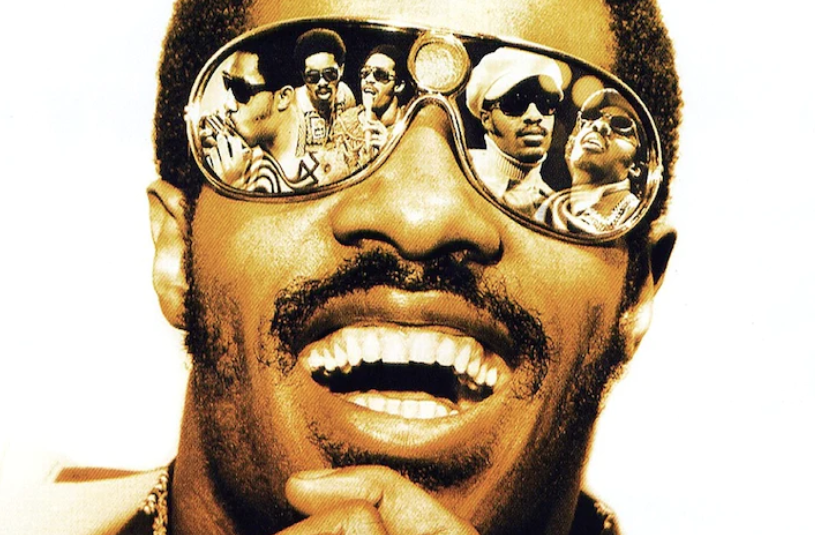
Stevie Wonder - Live PBS Soul! 1972

  Part 1

Part 2

#Stevie Wonder #Motown #soul #R&B #pop soul #funk #rock #gospel #jazz #progressive soul #1970s #PBS TV broadcast #music video

Introduced by smooth-talking host Gerry B, Stevie Wonder's 50-minute 1972 live set for PSB show Soul! was never broadcast in the UK. It documents a period when Wonder's creativity was so rampant that nothing Soul!'s producers threw at him could crush it: not a contemporary dance interpretation of You And I, nor a surfeit of low-budget psychedelic effects, nor the deadly patter of Gerry B ("You used to be Little Stevie Wonder. What was it like being Little Stevie Wonder?"). He shifts between My Cherie Amour and Dylan's Blowin' in the Wind with breathtaking slickness, interpolates Superwoman with passages of intricate afro-funk and ends a frantic Uptight with a wall of dive-bombing synthesized noise. Meanwhile the studio audience provide delightful period detail: when Wonder plays a vocorder, they gasp in awe, as if he's just donned a jet pack and flown around the studio.  From: https://www.theguardian.com/film/2005/sep/30/dvdreviews.popandrock

Oh boy. It just doesn’t get much better than this. Stevie Wonder at the height of his powers playing on the PBS show Soul! with his band Wonderlove. The episode was broadcast on December 20, 1972, just two months after his landmark album Talking Book was released. One month later, “Supersitious” would be the number one song in the country. As you watch this footage, try to wrap your brain around the fact that the man was all of 22 years old. From all indications Soul! was a wonderful show indeed. Produced by Ellis Haizlip, it ran from 1968 to 1973 and featured a wide array of incredible black performers and personalities, including Al Green, Kool and the Gang, the Staple Singers, Richie Havens, Earth, Wind, and Fire, Herbie Hancock, and Gladys Knight and the Pips as well as fascinating individuals like James Baldwin, Imamu Amiri Baraka, Louis Farrakhan, Nikki Giovanni, James Earl Jones, Melvin Van Peebles, and Stokely Carmichael. On occasion people like Curtis Mayfield or Wilson Pickett would take over the hosting duties. Nobody can say they put on a dull program. There’s so much astounding stuff in this video. Stevie sings a chunk on “My Cherie Amour” in Italian, while “You and I” is accompanied by a fully choreographed ballet. Stevie covers Marvin Gaye’s “What’s Going On,” Bob Dylan’s “Blowin’ in the Wind,” and the Temptations’ “Papa Was a Rollin’ Stone”—on this last number, Stevie uses a vocoder to arresting effect. There’s a brief, amusing interview with host Gerry Bledsoe. Like any good show, things heat up steadily, and by the end things are well-nigh out of control, up to and including the kaleidoscopic video effects (which actually make use of a kaleidoscope).

Track listing:
For Once in My Life
If You Really Love Me
Superwoman (Where Were You When I Needed You)
You and I (We Can Conquer the World)
What’s Going On/My Cherie Amour
Blowin’ in the Wind
With a Child’s Heart
Love Having You Around
Signed, Sealed, Delivered I’m Yours/Papa Was a Rollin’ Stone
Superstition
Maybe Your Baby/Superstition Outro
Uptight (Everything’s Alright)

From: https://dangerousminds.net/comments/higher_ground_transcendent_stevie_wonder_pbs_tv_special_from_1972

Today we take it for granted that Black culture is mainstream American culture. But, before the age of hip-hop, cable TV, the internet, streaming, and mobile phones, African Americans basically had to crowdsource their own entertainment guide. Forget about Black stories being told — so few Black artists were even accepted on TV that the African American community found out via word of mouth when a beloved performer would make a guest appearance on a sitcom, drama, or talk show. One appearance was treated as an important event. During the Civil Rights Era, negative representations of violence were easy to find on the nightly news, but positive portrayals of Black culture were hard to come by. Just one movie, TV episode, or live appearance was treasured. Sammy Davis Jr. starred in a 1967 TV war thriller, The Enemy, where he figures out that a fellow GI is really a German soldier and kills him before he can sabotage American troops. Audiences were shocked; Black audiences were shocked in a very good way.
As seen in the Mr. SOUL! documentary, that was the landscape that Ellis Haizlip wanted to change with his groundbreaking, often thrilling, public television series SOUL! (exclamation point included!) SOUL! showed the Black community in a positive, highly diverse light. Haizlip did not represent the Black artistic community as a monolith but as a mosaic with only excellence and originality as the connecting threads. That community could be classically trained or church-taught, rural or urban, come with exact theatrical diction or speak with a Spanish accent.
Starting in September of 1968, Haizlip produced and eventually presented, the very best of Black art, from dance and poetry to cultural icons and thought leaders. But the glue that held Haizlip’s venture together was music. Haizlip selected R&B sax legend King Curtis as the show’s musical director and even stepped aside to have soul legends Jerry Butler and Curtis Mayfield present a number of episodes. Like its namesake, SOUL! featured the greatest R&B artists of the day — many of them the greatest artists of all time. Caught right at the start of his career, the unstoppable vocal talent of future Grammy Lifetime Achievement Award-winner Al Green just bursts out of the screen. The same can be said for Patti Labelle, who performed on SOUL! a rendition of “Somewhere Over the Rainbow” that shows how naturally the Hollywood standard fit into the Civil Rights movement.
Ellis Haizlip, a black, openly gay intellectual, may have been a theatrical producer but he could spot musical talent a mile away. The songwriting team Ashford & Simpson had just scored a huge hit for Diana Ross with “Reach Out and Touch (Somebody’s Hand)” but Haizlip asked them to perform the song on his show. SOUL! features the duo’s very first performance and they knock it out of the park. Ashford & Simpson became stars while some artists on the series never broke through. Watching Novella Nelson’s searing rendition of “Cold Water Flat” may have you scratching your head as to why she didn’t become a household name.
The single greatest performance on SOUL! may just be Stevie Wonder’s marathon version of “Superstition.” Wonder was so thrilled to be on the series, and the audience was so into it, that Stevie would not stop playing. They literally ran out of tape - not film, tape! - and had to change cassettes to keep capturing Wonder in motion. As seen in the Mr. SOUL! documentary, when Questlove mentions the joy of watching the studio audience watching Stevie Wonder perform for them. They knew magic was being created in front of them.  From: https://www.pbs.org/independentlens/blog/listen-up-music-was-heart-of-soul/