Saturday, April 8, 2023

Andy M. Stewart - By the Hush


 #Andy M. Stewart #ex-Silly Wizard #Scottish folk #Irish folk #traditional #singer-songwriter

Andy M. Stewart was a Scots singer and songwriter who was at the forefront of a resurgent contemporary Scottish folk scene in the 1970s as the voice of the Edinburgh-formed group Silly Wizard. In their early days the band held a residency at the small but popular Triangle Folk Club in the city, a Saturday night haunt which typified Edinburgh’s rich folk scene of the time alongside venues like the Crown and Edinburgh Folk Club; at the height of their popularity they toured to great appreciation in Europe and the United States – and sold out an annual engagement at the Playhouse during the Edinburgh Festival. The reasons for Silly Wizard’s success were many, but easy to broadly sum up: on the one hand, the striking musical virtuosity of the prodigiously talented young brothers Johnny and Phil Cunningham from Portobello, on the other the marvelously soft but powerful vocal ability of Stewart, and in between the skills of key prime-era members Gordon Jones and Martin Hadden.
A well-spoken raconteur on the live stage, whose ability to introduce his songs informatively and with genuine humor enhanced the experience of hearing them, Stewart wrote music and lyrics which are – particularly in the case of his ballads – rich and still freshly emotive. A skilled banjo player who used his middle initial to distinguish himself from the elder Scots singer who shared his name, Stewart’s skills lay in interpreting Scottish folk standards and in writing additions to the canon which were at once traditional and modern. His songs ran a range of emotions from the delicate romance of The Queen of Argyll to the knowing humor of The Ramblin’ Rover.  From: https://www.scotsman.com/news/obituaries/obituary-andy-m-stewart-singer-and-songwriter-1997406

By the Hush / Paddy's Lamentation

O.J. Abbott from Hull, Quebec, sang the emigrant and Civil War song By the Hush, Me Boys in a 1957 field recording made by Edith Fowke. It was included in 1961 on his Folkways album Irish and British Songs from the Ottawa Valley, and in 1975 on the Leader album Far Canadian Fields, which was offered as the acoustic companion to Fowke's Penguin Book of Canadian Folk Songs. She noted in the Leader album's booklet:
Although this song obviously came out of the American Civil War it seems to be unknown in the United States. O.J. Abbott learned it from Mrs. O'Malley, the wife of an Ottawa valley farmer, for whom he worked back in the 1880s. We can only surmise that she must have heard it from some Irish-American who wandered up to Canada after the Civil War.
This is an interesting combination of two themes common in many Irish songs: that of emigrating, and of becoming involved in other countries' wars. Of course thousands of Irish emigrants did ‘fight for Lincoln’, and the ‘General Mahar’ mentioned was probably General Thomas Francis Meagher, commander of the famous Irish Brigade that distinguished itself on the heights of Fredericksburg and in the battle of Richmond. His promise of a pension ‘if you get shot or lose your head’ is a fine example of Irish graveyard humour.

Edith Fowke collected this song, also known as Paddy's Lamentation, in 1957, from O.J. Abbott (1872-1962) who was born in Enfield, England, and came across to work in Ontario lumber camps. It has been found in print as a broadside ballad called Pat in America, but it appears that Abbott's version might be the only one collected in oral tradition. The realisation that Irish immigrants were essentially drafted off the ships into the Union Army during the Civil War provides the distressing backdrop for this song. General Meagher led the renowned Irish-American Sixty-Ninth Brigade from New York.

Will Finn and Rosie Calvert sang Paddy's Lamentation in 2018 on their Haystack album Beneath This Place. They noted: A song from the Irish Diaspora, this story was unfortunately true for millions of Irish immigrants who fled terrible conditions in Ireland for the promise of a new start in America, only to be conscripted into a civil war that they had no stake in.

More Maids sang By the Hush on their 2021 CD Fourmaids. They noted: This song is among the first ones Barbara Coerdt learnt when she started getting interested in Irish Music, and she is very grateful to have come across it on Andy M. Stewart's epic solo recording. It is one of the saddest emigrant songs as it tells the story of a man who gets no chance to start a new life but is drawn into the American Civil War, loses his leg and is denied the pension he was promised. In the end he only wishes to be back home, poor in “dear old Erin”—“dear old Ireland”.

From: https://mainlynorfolk.info/folk/songs/bythehush.html

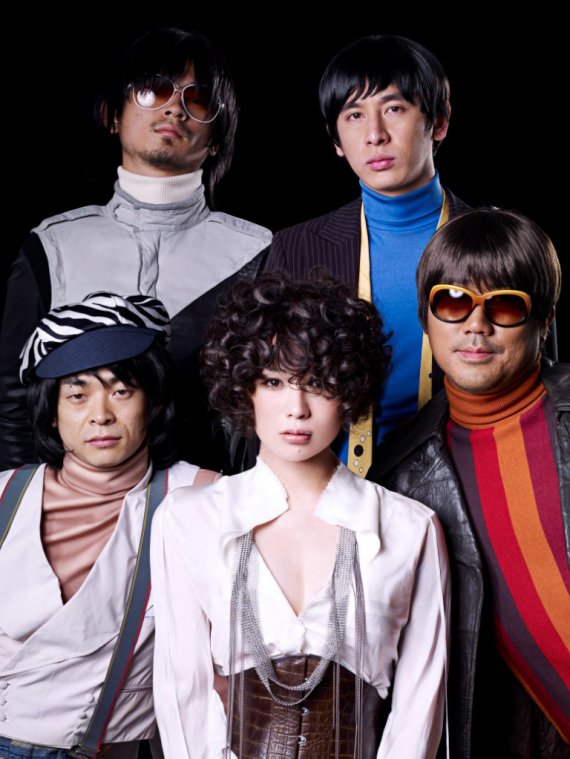
Tokyo Jihen - 秘密 (Secret)


 #Tokyo Jihen #Shiina Ringo #experimental rock #avant-pop #acid jazz #alternative rock #progressive J-Rock #Japanese

Tokyo Jihen started as Ringo Sheena's backing band at first for her last concert tour before ending the first half of her solo career. Sheena was contemplating working with a band while working on her last solo album, Kalk Samen Kuri no Hana. She began looking for members of her backing band to support her solo tour "Sugoroku Ecstasy" in the Autumn of 2003. The tour band was introduced as Tokyo Jihen during the tour for the first time, featuring guitarist Mikio Hirama, pianist H Zett M, drummer Toshiki Hata, and familiar bassist Seiji Kameda. The musicians she selected became the core of what would become Tokyo Jihen. After the tour, she announced that she would stop her solo career to join Tokyo Jihen as a full-fledged member.

Ringo Sheena (椎名 林檎, Shiina Ringo)
Instruments: Lead vocals, Electric guitar, Acoustic guitar, Piano, Electronic keyboards, Melodica, Kazoo
Real name: Yumiko Shiina (椎名 裕美子, Shiina Yumiko)
Sheena is an acclaimed singer-songwriter who has enjoyed enormous popularity since her debut at the age of 18. She is the founder and the leader of the group, and initially wrote almost all their songs, but later shared songwriting duties with the other band members.

Seiji Kameda (亀田 誠治, Kameda Seiji)
Instruments: Bass guitar, Upright bass, Electric upright bass
Kameda is a music producer and music arranger for many Japanese musicians. Kameda is also a famous session bassist. He participates in many musicians' recording, or plays a bass as a member of various solo singers' backing band. Kameda knew Ringo Sheena before her debut, and he has supported her since then. Ringo Sheena calls him "Shisho", meaning master or teacher. He rose to fame along with her and became a famous producer, but he concentrates on playing a bass guitar in Tokyo Jihen.

Toshiki Hata (刄田 綴色, Hata Toshiki)
Instruments: Drums, Percussion
Real name: Toshiki Hata (畑 利樹, Hata Toshiki)
Hata had drummed as session musician and tour musician for various artists, including Mika Nakashima, Dreams Come True, and Fujifabric. He was also a member of a band headed by Junpei Shiina (椎名 純平, Shiina Junpei), Sheena's elder brother. Hata frequently plays as a support member of his former band Scoop, as well as forming the band Kotoho (コトホ) with Hideaki Yamazaki, another ex-Scoop member and current bassist for School Food Punishment.

Ukigumo (浮雲, The Drifting Cloud)
Instruments: Electric guitar, Acoustic guitar, Backing vocals, Rapping
Real name: Ryosuke Nagaoka (長岡 亮介, Nagaoka Ryosuke)
Ukigumo is an old friend of Sheena's. He has also played music with Junpei Shiina before, as well as Hata and Tabu Zombie of Soil & "Pimp" Sessions; he also played on Sheena's fourth solo album, Sanmon Gossip. He gave Sheena advice when the former members of Tokyo Jihen left the band. He has his own band, Petrolz (ペトロールズ).

Ichiyō Izawa (伊澤 一葉, Izawa Ichiyō)
Instruments: Piano, Electronic keyboards, Electric guitar, Background Vocals
Real name: Keitaro Izawa (伊澤 啓太郎, Izawa Keitaro)
Izawa and former Tokyo Jihen pianist HZM are alumni of the Kunitachi College of Music, and have been in a band together before. He has his own band, Appa (あっぱ), and has more recently played with the band The Hiatus as a tour member.

H Zett M (H是都M, H ZETT M)
Instruments: Piano, Electronic keyboards, Background Vocals
Real name: Masayuki Hiizumi (ヒイズミ マサユ機, Hiizumi Masayuki)
HZM is a core member of the Japanese instrumental jazz band PE'Z, which made their major debut before the formation of Tokyo Jihen. After the release of Tokyo Jihen's first album, he decided to leave to devote himself to PE'Z full-time.

Mikio Hirama (ヒラマ ミキオ (晝海 幹音), Hirama Mikio)
Instruments: Guitars, Background Vocals
Real name: Mikio Hirama (平間 幹央, Hirama Mikio)
Hirama had released two mini-albums on indie labels as a solo musician, and was also in the band "Peppermints Kiss Cafe" as a guitarist at the time he joined Tokyo Jihen. Sheena had met him before at an audition, and subsequently searched for him in hopes of adding him to the band. After the release of Tokyo Jihen's first album, he decided to return to his career as a solo musician.

The real names of Hirama and Hata are 平間 幹央 and 畑 利樹 respectively, but, Ringo Sheena gave them stage names, using Kanji which is not usually used for their names, but as they are the phonetic equivalent, the pronunciation is not changed. Since Ryosuke Nagaoka always drifted unsteadily and nobody knew where he would go, Sheena named Nagaoka "Ukigumo" which means the drifting cloud. Sheena planned to give Keitaro Izawa a stage name, but he refused and chose one for himself, Ichiyō Izawa.

The band members have different writing styles. Sheena Ringo and Ichiyo Izawa write their songs using musical notation. Seiji Kameda uses different methods, recording himself humming, using musical instruments, or using a computer. Ukigumo, on the other hand, cannot write musical notation, Izawa or (less frequently) Sheena transcribe his tunes in the studio. Since Ukigumo writes music without considering a song, it is hard for Sheena to put the words to his music, so he often writes the lyrics to his own songs. Finally, Toshiki Hata stubbornly refused to write music, even declining to write lyrics when Sheena asked him to. He finally did contribute one song to the band's last EP before their split, Color Bars, and the first EP since their reunion.

From: https://www.wikiwand.com/en/Tokyo_Jihen

Thursday, March 30, 2023

October Project - Live at The TLA Philadelphia 1996

Part 1

Part 2

 #October Project #Mary Fahl #folk rock #alternative rock #alternative folk rock #adult alternative #classical rock #progressive pop #1990s #music video

October Project's music is dominated by distinctive and powerful female lead vocals (nothing to do with waif-like, breathy whisperings). Indeed, Mary Fahl's deep voice has an earthy sensuality that looms larger than life on the band's two albums, both filled with superb chorus hooks and haunting melodies. October Project also features keyboardist/vocalist Marina Belica, guitarist David Sabatino, keyboardist Emil Adler (piano, keyboards and harmonium) as well as his wife Julie Flanders who, although not a musician per se, writes the band's lyrics. They released two fine albums in the mid '90's before getting dumped by their record company in 1996, at which point they simply broke off. Like an afterthought, some of the band members later resurfaced as the November Project but reverted back to their former name and released a self-produced E.P. in 2003. Deemed more pop than prog, the music of October Project is perhaps best described as 'vocal-dominated symphonic prog', something akin to Renaissance for the orchestral textures, although Mary Fahl does not sound at all like Annie Haslam. The band's first two albums, which focus primarily on her rich, sultry vocals, feature intense melancholy ballads that ride on a combination of lush keyboards, strings and guitars. Keyboards and acoustic guitar are emphasized on the eponymous "October Project" whereas on "Falling Farther In", an album of slightly more linear compositions with pared-down arrangements, the electric guitar is more prominent. The E.P. "Different Eyes", which features the late reunion of some of the band members (sans Mary Fahl), showcases some reworked material from the band's early days.  From: https://www.progarchives.com/artist.asp?id=2190

Mary Fahl’s parents weren’t musicians, but they liked listening to music at home in Stony Point, New York. And with one record player upstairs in the boys room, it was the music blaring from the big family console downstairs that seeped into Fahl’s skin and bones. That meant a lot of show tunes from Mary Martin and Ezio Pinza in South Pacific to My Fair Lady, with an original Broadway cast that included Julie Andrews and Rex Harrison. “Mary Martin had that big alto voice,” Fahl said. “Even the men that sang on that record, Ezio Pinza … I liked their voices. People in Broadway now don’t even sound like that. I miss those kinds of voices. They sounded like real people back then. Everybody sounds the same to me now. And I used to sing along with those things. And I think it built up my voice.”
Eventually, though, she was turned on to British folk by an older brother, and her tastes shifted from Joni Mitchell and Carole King to Sandy Denny (“There’s something so pure in that voice; it’s so emotional”), Richard and Linda Thompson, and June Tabor. Soul and R&B weren’t played either upstairs or downstairs so, for better or worse, those voices didn’t influence Fahl. “So many modern voices are so gospel-inflected,” Fahl said with a touch of disapproval. “There’s a lot of white girls out there that, they sound like they’re singing in church because those gospel-inflected singers are so great. And the black singers are fantastic.” But one hip and powerful American white chick named Grace Slick did get Fahl’s attention. “Everybody had ‘White Rabbit,’ ” she said. “Everybody had Jefferson Airplane. So I loved her, I loved those powerful alto voices. It’s funny, ’cause I really, I have to admit I don’t recognize a lot of people that are on Top 40 radio right now. To me, I can’t pick one out from the other. I just can’t. And then there’s sort of another branch that has gone off. It’s sort of Feist made a left turn and everybody followed her. And I like her. I think she’s great. But I didn’t grow up with that. That ain’t my voice.”
Raised in a Catholic family with more siblings than expendable outcome, Fahl was fortunate to be a natural-born singer. While never taking a voice lesson, she watched her cousins develop into “great instrumentalists. … Like prodigies. I was not that. I just sang all the time.” If she wanted to pursue a musical career, Fahl was on her own. Laughing at the memory, she remembered her mother saying, “Well, if you were really good, you would be like your cousin Alice. You wouldn’t need lessons. You could just pick it up and play it.” Instead, Fahl performed at holiday shows and plays in the Catholic schools she attended, entered an acting program at NYU for a year with the hope of going into musical theater, then left because “I felt like I was wasting my parents’ money. It was a big stretch for them.” Transferring to McGill University (with $800 a year tuition) in Montreal, she occasionally sang in little coffee houses or rock groups that weren’t much bigger.
Upon graduation, “I didn’t know what I was going to do, really,” she said. “I sort of floundered around and went to Europe and sang a little bit there.” Eventually returning to New York, destiny introduced her to Julie Flanders. “She was not happy and not working and not doing anything creative,” Fahl remembered. And she said, ‘You know, I really want to be a songwriter,’ and I said, ‘That’s funny, I want to be a singer.’ And then she introduced me to her boyfriend, who was working as a clerk at HBO or something like that.”
Flanders’ boyfriend (and future husband) was Emil Adler. And the three of them witnessed the birth of October Project. “We were all sort of that stage where we wanted to do something and we were old enough and serious enough that we just said, ‘Well, this is it. We’re gonna make this happen no matter what,’ ” Fahl recalled. “We really worked so hard and just left no stone unturned. You know, took it very, very seriously.” Within two years, they had a deal with Epic Records, then toured with the likes of Sarah McLachlan and Crash Test Dummies. In 1995, the Los Angeles Times proclaimed, “Mary Fahl is the voice that launched a single promising rock band, October Project.” Taking an artsy, classical approach to the rock genre, the band that also included Marina Belica and David Sabatino seemed like a perfect fit for Fahl’s golden pipes. But perhaps they were too serious for AM or FM radio, especially during the growing grunge era.  From: https://www.nodepression.com/after-becoming-pen-pals-musician-mary-fahl-and-author-anne-rice-form-an-everlasting-bond/

Norihiro Sekitani

As Cesar Cruz once said, “Art should disturb the comfortable and comfort the disturbed”. And personally, I’m pretty mentally deranged - at least, according to the average twitter tween. So, I think it goes without saying that I often find myself disappointed with many music videos created for my favorite hardcore music. It’s like - yeah, wow, cool, the artist is whipping his hair, or moving erratically. That’s cool and all, but the music without the video produces such an abstract brutality, that your crazy dances don’t really cut it. I could see crazier things if I went down the street and gave my local individual without a home five bucks and told him to dance. It’s for this reason that I was so enthralled with the abstract body horror of Cyriak when I was younger. I wanted to feel a fear that would never meet me in the physical realm - a horror existent within only the creative hellscape of the human mind. Later in life, I discovered music that evoked a similar visceral reaction to Cyriak’s art - and I couldn’t help but think, “what if we combined that aforementioned surrealism with hardcore music, and turned them both up to 11”? Welcome, to the beautifully twisted surrealism of the prolific Japanese mixed-media artist, Norihiro Sekitani. Norihiro Sekitani is a legendary visual artist when it comes to the Japanese ultra-hardcore scene. Hell, he’s even done some videos for hardcore breakcore metal. To give you an idea of his specialty, I’m just gonna read you the names of some bands he’s made visuals for: DJ Rainbow Ejaculation, Zombieflesheater, Maruosa, you probably get the picture. The Pink Tentacle blog described his work as, “medical book meets manga meets [suggestive material].”  From: https://www.youtube.com/watch?v=MFZU_E1R2iU

 
Maruosa - ACA
 
 
Zombieflesheater - Face Destroy
 
 
DJ Rainbow Ejaculation - At Numerous Discos On Any Given Night
 

Laboratorium Piesni - Lecieli Zurauli


 #Laboratorium Piesni #world music #European folk #Eastern European folk #traditional #polyphonic chant #Slavic folk music #a capella #white voice #Polish #music video

Laboratorium Piesni (polish: Song Laboratory) is a female-run collective music project, founded in Poland in 2013. The vast majority of their songs are from Polish and Eastern European folk traditions, though they also incorporate other sources. They also host workshops to help people develop their voice and “awaken the human musicality.” Laboratorium Piesni’s primary musical focus is polyphony (multiple voices with little to no musical accompaniment), which is the dominant form of ritual and folk music for animist cultures, also  surviving into Europe as a dominant form into the 1500’s. This music is also known as “a capella,” but many groups have moved away from this Christian label (“a capella” literally means, “in the way of the chapel”).  From: https://abeautifulresistance.org/pagan-music-list/2019/3/23/the-pagan-music-list-2

The band Laboratorium Pieśni can attest to the fact that local and indigenous culture is becoming more and more popular in the globalized world. Let the question of quantity not be an indicator of their quality, but the fact that the Facebook group is followed by over 80,000 people is telling and shows that such music arouses interest. Their white voice is interesting and very eloquent in the 21st century. Thanks to this, the eight-member band also serve as anthropologists who, traveling around various corners, bring various traditional songs into the workshop to present them in their own polyphonic interpretations.
Laboratorium Pieśni draws a vocal map of Central and Eastern Europe (Belarus, Poland, Ukraine), and also the Balkans, Georgia and Scandinavia. It seems that there are no limits, and the singers' heads are full of ideas and enthusiasm for finding songs from different cultures. Many of the songs are sung a capella, but some of them gain accompaniment in the form of subtly introduced shamanic drums, bells or percussions. Thanks to this, the vocals gain a multidimensional character and space. At the same time, they do not obscure the content, on which you can fully concentrate thanks to the simplicity prevailing here. "Rosna", the long-awaited album, collects all these interests on one release. It shows the band in more mystical songs, those taken straight from indigenous villages, but also more lively songs, such as the Finnish "Käppee", which breaks with its Slavic origin. Girls often choose love topics for the workshop, devoted to interpersonal relationships - the album comes with lyrics with translations, thanks to which the songs are more communicative and understandable. But even if we don't decipher them during the first listening, the music still sounds mysterious, shamanic and blunt. In the era of post-produced recordings and sound-packed tracks, such clean vocals, devoid of effects, are perfect hygiene for the ear, because they remind us that something seemingly simple can be complex and multi-threaded at the same time.  Translated from: http://noweidzieodmorza.com/pl/9212-laboratorium-piesni-rosna/


The Verve Pipe - Photograph


 #The Verve Pipe #alternative rock #post-grunge #indie rock #pop rock #1990s #music video

When Brian Vander Ark was a kid growing up in Grand Rapids, Michigan, he and his brothers often played a perverse game of “church,” with Brian as Jesus and his brothers as the congregation. Once, his brothers crucified him mid-sermon by strapping him to the backyard deck with belts and rope. Alone to atone, Brian wept as his brothers partied on. “After hours of screaming, they finally took me down,” recalls the Verve Pipe singer. “My brothers were relentlessly sadistic Christians.” Along with crucifixion anxiety, Vander Ark says his religious upbringing left him “ridden with guilt,” a subject that figures prominently on the Verve Pipe’s major-label debut album, Villains. Set to a hummable brand of workingman’s grunge, Vander Ark’s painfully earnest tales of regret have made the group this year’s dorm-room poster boys. Either their ascendancy is a sign that for every year there must be a grunge giant, or the scholastic set is more wary of irony than anyone could have imagined. “We appreciate the dynamics of grunge,” says drummer Donny Brown, brushing off charges that the Verve Pipe’s music can sound plainly derivative. “If the song feels heavy and it sounds better driving it, then we drive it. Make it grunge. Who cares?”
Brown and Vander Ark met in the early ’90s when they were both painting a Lee’s Famous Chicken Shack restaurant in Kalamazoo. Along with Vander Ark’s younger brother Brad on bass, the trio enlisted guitarist A.J. Dunning and keyboard player Doug Corella from Michigan-area alternative bands. The band soon found a home on the fertile fraternity circuit, where, says Vander Ark, “they’d still pay us, even after the cops pulled the plug.” Now, six years later, they’re in New York on “the biggest day of our lives,” taping Letterman and VH1 appearances, with the proud Vander Ark parents in tow. After a day of minimal hijinks—the Verve Pipe behave like scrupulous Midwesterners—Vander Ark kisses his parents goodbye and gets ready to head north for another gig. Still, he seems more like a frustrated choirboy than someone living out his rock’n’roll dreams. “I still believe in blasphemy,” Vander Ark admits. “Like that scene in The Exorcist where Linda Blair is masturbating with the cross. That absolutely bothers me. For the sake of the movie, it’s a fabulous scene. But it makes me squirm.”  From: https://www.spin.com/2017/04/the-verve-pipe-interview/ 

His Name is Alive - Can't Go Wrong Without You


 #His Name is Alive #experimental rock #dream pop #avant garde #alternative rock #indie rock #neo-psychedelia #art rock #Quay Brothers #animated music video #stop-motion

The ever-changing project of multi-instrumentalist/producer Warren Defever, His Name Is Alive have explored a veritable record store's worth of music during their decades-spanning career. In the early 1990s, they helped define the sound of the arty indie label 4AD with the experimental dream pop of albums such as 1991's Home Is in Your Head and 1993's Mouth by Mouth. As time went on, their rotating lineup mirrored their shifting sounds. Defever and company surveyed sunny, Beach Boys-tinged pop on 1996's Stars on ESP just as deftly as they channeled gospel and R&B on 2001's Someday My Blues Will Cover the Earth. A few years later, they fused their dream pop roots with African and Asian elements on 2007's Xmmer. His Name Is Alive entered a particularly creative period in the 2010s, combining the ambitious and heavy sounds of prog and metal with ethereal vocals on the concept albums Tecuciztecatl (2014) and Patterns of Light (2016). Later in the decade and into the 2020s, Defever revisited early ambient recordings on collections such as 2019's All the Mirrors in the House (Early Recordings 1979-1986) and reworked them on mixtapes including 2020's Ghost Tape EXP.  From: https://www.allmusic.com/artist/his-name-is-alive-mn0000681402/biography

Starting from the late 70s, US born/England based duo of identical twins Stephen and Timothy Quay produced a whole number of stop-motion animations and their unique style, in turn, influenced a whole number of other animators. Much of their work is based on the writings of Franz Kafka and Bruno Schulz, features little to no dialogue, and relies heavily on musical scores/soundtracks. Their connection with musical world became more pronounced as they directed music videos for His Name Is Alive, Michael Penn and 16 Horsepower. Some  incorrectly assume that they are responsible for creating videos for the band Tool (undoubtedly, very similar in style to Quay’s work, but created mostly by the band’s guitarist Adam Jones).
The two videos that the Brothers Quay directed for His Name Is Alive are “Can’t Go Wrong Without You” and “Are We Still Married.”  From: https://ihrtn.net/brothers-quay-his-name-is-alive/