Sunday, January 29, 2023

Betty Davis - Nasty Gal


 #Betty Davis #funk #R&B #soul #funk rock #singer-songwriter #1970s

Picture yourself in a hot sweaty New York City nightclub in 1969, surrounded by the musical elite: Miles Davis, Jimi Hendrix, Sly Stone. The drums are pounding, an out-of-tune guitar is wailing. A beautiful woman crawls across the stage, growling into the microphone, her voice summoning fierce femininity and raw sexual energy, taking rock ‘n’ roll into a new era of sound — gritty, unbridled and raunchy. No, it’s not Janis Joplin or Tina Turner. Her name is Betty Davis. But no one would fault you if this wasn’t your first guess. When Betty Davis died on Feb. 9, the world lost a groundbreaking artist who created and inspired many of the famous sounds of the 1970s, and yet her name was omitted from the lexicon of musical history until recently. Obituaries are pouring forth, lauding her genius and contributions and lamenting her lack of commercial success. What very few of these official records of Davis’ life will state outright, however, is that her lack of recognition was a direct result of misogyny and racism.
Growing up in 1990s Berkeley, I had no clue Betty Davis existed. Bay Area rock was Santana, the Grateful Dead, Journey. Rock ‘n’ roll spoke to this 14-year-old Black girl’s alienation and frustration with the world, but also perpetuated those same feelings of alienation. I was the lone Black female face at every concert I went to. Local bands Green Day and Rancid were carrying on Berkeley’s rock legacy, yet that lineage was consistently represented as male and mostly white. I first learned about her by reading Miles Davis’ autobiography. By this point I was a professional background singer touring with local funk bands. Even as I performed with artists such as George Clinton or sang alongside members of Fishbone, I still thought my role in rock was to support a man musically. In his book, Miles described his second wife as an unparalleled performer. The woman who inspired his 1970 album “Bitches Brew.” The woman who changed his style and musical ear. It was an inspiring recollection of her. But Betty Davis remained a rock ‘n’ roll mirage. What happened to her? How had this larger-than-life woman been reduced to an anecdote in her ex-husband’s book?
In 1968, Betty Davis (then Betty Mabry) was a fixture of the New York club scene. She had built somewhat of a name for herself as a songwriter, most notably penning the Chambers Brothers’ hit “Uptown (to Harlem).” Known for her wild stage antics, flamboyant fashion and sexual magnetism, she was primed for stardom. She was friends with Jimi Hendrix and Sly Stone. She went from dating South African trumpeter Hugh Masekela to marrying American trumpeter Miles Davis in 1968. By the next year, she was recording her first album for Columbia Records with her husband at the helm. Betty Davis embodied punk rock and brought feminine sexuality to the fore, long before Madonna writhed in a wedding dress singing “Like a Virgin.” She created gritty punk/funk long before Rick James proclaimed it as his own. She bought Miles Davis his first wah-wah pedal, inspiring his foray into fusion with “Bitches Brew.” She was gestating the future of music but, even then, the record execs balked at her fierce rock ‘n’ roll. When her relationship with Miles dissolved, her recordings were shelved in a vault. Leaving New York behind, Betty migrated to San Francisco, finding communion within the Bay Area’s music community. Recorded at San Francisco’s renowned Wally Heider Studios, her debut album, “Betty Davis,” featured the region’s top musicians, including members of Sly & the Family Stone, Santana and the Pointer Sisters. It was a confident, alluring funk record, and it declared her prowess as both a woman and a rock star. She followed it up with “They Say I’m Different,” recorded at Sausalito’s Record Plant, and “Nasty Gal,” for which she went back to New York. Davis released these albums in a burst of creative energy, one each year from 1973 to 1975. Betty’s music should have fit right into the social climate of free love, feminism and civil rights in 1970s San Francisco. Instead, the public backlash was swift and crippling. The NAACP teamed up with conservative church groups to have her banned from radio for “indecency.” She was boycotted. Prevented from performing. Her album sales floundered. While white women were allowed to be sexually liberated in the free-love era, Black women were not. While Black men were allowed to gyrate onstage, Black women were not. The same sexual magnetism that made Robert Plant famous was indecent coming from Betty Davis. The American people couldn’t handle a fully empowered Black woman like Betty Davis making rock ‘n’ roll.
Eventually her music went out of print, and she went on to live a quiet private life far from her previous incarnation as a punk-funk queen. Then, as the decades passed, the tides began to change. In 2007, I opened a copy of The Chronicle with the headline “A funk queen steps out of the shadows,” written by acclaimed music critic Jeff Chang, about two of Betty Davis’ albums being rereleased. I clipped the article, ran to Amoeba Records and listened to her music. In the newspaper’s picture, I saw myself. In the music, I heard who I could be as a funk diva. With each Betty Davis rerelease, multitudes of young Black women have been able to see their embodied selves through her music. And thankfully, Betty, who died at 77, lived long enough to see it. Nearly 50 years after the release of her debut alum, Betty Davis has legions of disciples, each of us born from her vision of Black female empowerment. Amongst my local community of Black women in rock, I hear these sentiments echoed. “She showed me I could have raunchy, sex-kitten swag, and still be soft,” Oakland rock musician Femi Andrades told me. “Her music gave permission to express my rage, my sexuality, myself, unfiltered. Raw.” Berkeley singer-songwriter Viveca Hawkins said simply, “I’m grateful to know that it’s OK to be that bold.”
From: https://datebook.sfchronicle.com/music/how-betty-davis-paved-the-way-for-black-women-in-rock-and-funk
Psalteria - Nazad, Nazad, Mome, Kalino


 #Psalteria #medieval #world music #neo-medieval #folk #traditional #pre-BraAgas #Czech

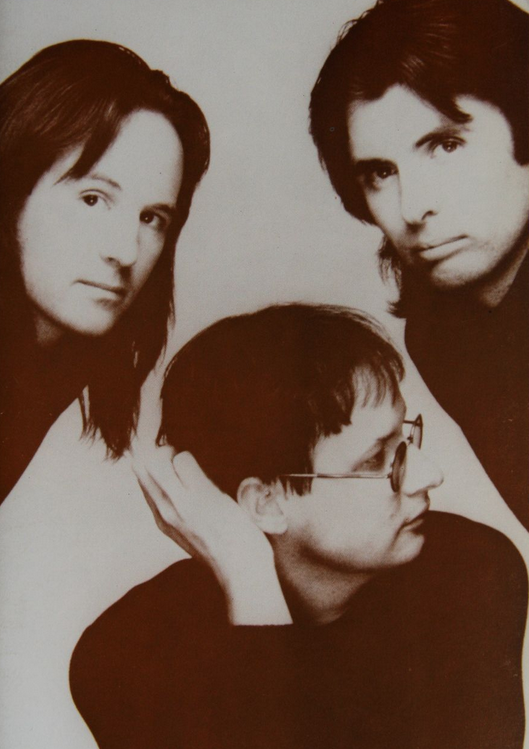
Psalteria was a Czech medieval folk band consisting of four young women. The quartet advertised itself with the catchphrase "the medieval women's band". The group's repertoire consisted of traditional pieces from the Middle Ages, which the group interpreted in their own way. In addition to songs in German, Latin and French, most of the songs are in Spanish. Due to a high presence on German medieval markets, Psalteria was able to achieve high popularity here in the medieval scene. In January 2007, the group disbanded. The band members now play divided into the medieval groups BraAgas and Euphorica.  Translated from: https://de.wikipedia.org/wiki/Psalteria

 ‘Go back, Kalina, don’t follow me. Ahead is a thick forest, you can’t cross it.’
‘Then I’ll turn into a hawk. I’ll fly over the forest. I’ll be yours forever.’
‘Go back, Kalina, don’t follow me. Ahead is a deep river, you can’t cross it.’
‘Then I’ll turn into a trout. I’ll swim across the river. I’ll be yours forever.’
‘Go back, Kalina, don’t follow me. At home I have a beautiful wife and some children too.’
‘Then I’ll turn into the plague. I’ll kill your wife and take care of your children. I’ll be yours forever.’
From: https://londonbulgarianchoir.bandcamp.com/track/nazad-nazad-mome-kalino

XTC - Then She Appeared


 #XTC #new wave #post-punk #progressive pop #art rock #pop rock #baroque pop #art punk #power pop #psychedelic pop #1980s #1990s

XTC are one of those odd bands that defied convention and actually got better as time went on. Usually a band makes a big splash at the start of their career and continue to make continually less impressive albums as their career progresses. XTC did it the other way round: they started off as a reasonably good power-pop act and actually steadily improved over time. True, there was a slight stumble with Mummer and The Big Express, but they had reached incredible creative heights with Skylarking and by the time of Nonsuch they had reached a point where they had outlasted almost all of their peers and were still making music at least as good as what had been released before. Andy Partridge was still at his height as a songwriter, Colin Moulding was gaining confidence and penning gems like “Bungalow” and Dave Gregory’s guitar and keyboard work was giving the whole band a musical maturity which marked them as a band of rare quality.
Despite it equaling Oranges & Lemons’ chart success, Nonsuch has become increasingly overlooked as a key album in XTC’s career, as it wasn’t cited as an influence on the second wave of Brit-pop that reached its crescendo in the middle of the last decade, nor was it hailed by the more heavyweight music press in the same way that Skylarking, and to a lesser extent Oranges & Lemons were. For years the only copies of Nonsuch available in the UK were as a part of a substantial remaster and reissue programme by their former record label.
While Nonsuch has never enjoyed the sycophantic praise smothered over it by lesser acts as their early albums have, or enjoyed the press recognition of being a lost classic in the same way that Skylarking has, it remains one of XTC’s most well-rounded and broad albums. Over two decades on from its original release Nonsuch finally seems to be getting the recognition it deserves for being not only a great XTC album, but one of the finest British pop albums of the 90s. Oddly enough there seems to be a major reissue of it due in the not too distant future, as apparently Steven Wilson of Porcupine Tree fame has been following his success of doing similar work for the likes of prog rock acts like King Crimson and Yes, by working on a full bells and whistles version of Nonsuch.
From: https://www.backseatmafia.com/not-forgotten-xtc-nonsuch/

Tracy Bonham - Jumping Bean


 #Tracy Bonham #alternative rock #post-grunge #singer-songwriter #1990s

Woman to Woman: Erin Harkes chats with Tracy Bonham
When offered the opportunity to interview Tracy Bonham, I jumped at the chance. As I struggled to teach myself how to play guitar in my college dorm room back in the 90s, this powerhouse musician of the Lilith Fair era was an inspiration to me. Thankfully, and not surprisingly, she was an absolute delight to talk with. She was also super patient with the technical difficulties and all the times throughout the discussion where I made it about me.
Me: Obviously you’re best known for “Mother, Mother,” a song I love. The first time I heard it I was in the car with my mother, so it was just perfect. She was like, “Oh, this is a nice song” with a hint of passive aggression. And then you started screaming at her and I thought, “Tracy and I are best friends now.”
Tracy: That’s an awesome story—really cool. No one has ever told me that.
Me: I’m sure you know how moms can be. They’re like, “Oh, maybe you should write a song like this for me.” Then it got to the chorus and I thought, Maybe I will…
Tracy:  That’s great. That’s awesome.
Me: But beyond that, which work would you say you’re most proud of?
Tracy: It’s gonna sound so stupid, but I’m really proud of my body of work. I can’t choose one song because they’re all a timestamp of who I was at that moment. When I look back, I see it as a kaleidoscope or a tapestry of who I am. And I like knowing that I have many albums out there—not as many as I should have in my almost 30 years of doing this—but at least I have a nice handful.
Me: I’m sure it’s hard to choose just one. I know that when you’re known for one particular thing, sometimes people tend to overlook your other labors of love.
Tracy: Yeah, that happens all the time.
Me: But I’m glad to hear that you’re proud of all your work because that’s not very common. Sometimes you have a couple of stinkers that you’d rather nobody ever heard.
Tracy: Oh, I went through that. I thought my second album, “Down Here,” was a stinker for a long time. Then it happened to come up on my playlist or my iTunes while I was driving and I forced myself to listen to the whole thing. I was like, Wait a minute. I actually LIKE this. I had to come around. I needed time away from that one.
Me: That makes sense. I also have a song I didn’t like that much, but then my friends would tell me “That’s my favorite song on the album!” Maybe that would be somebody else’s favorite, too.
Tracy: Yes, exactly. You have to give it up at some point. It’s like letting your kids go off to college. You have to let them go.
Me: And I do think of songs as my children, so it’s funny that you said that. When somebody asks me my favorite song, I ask them, “Do you have kids? Which one is your favorite?” Then they get it. Except once in a while, somebody says, “Kyle’s my favorite,” and I’m like, “Okay, you ruined the question.”
Tracy: That’s hilarious.
From: https://nippertown.com/2022/06/28/woman-to-woman-erin-harkes-interviews-tracy-bonham/


The Albion Country Band - I Was A Young Man


 #The Albion Country Band #Ashley Hutchings #Martin Carthy #John Kirkpatrick #British folk #folk rock #British folk rock #1970s #ex-Fairport Convention

The tangled vine that is the family tree of English folk-rock music has several long stems that wind through it, touching many other stems and branching wildly. One of these is Ashley Hutchings. As Ashley “Tyger” Hutchings, he was a founding member of Fairport Convention. Throughout his long career, he founded or influenced so many other bands and musicians that his status as a folk icon cannot be questioned. His insistence on exploring the pre-industrial folk music of England over more rock-based musical styles may have led to musical partings, as seen with Fairport Convention and Steeleye Span, but this idealism is compelling. One of the bands Hutchings founded after leaving Fairport Convention (besides Steeleye Span) is The Albion Band.
The Albion Band grew out of a large backing band that played on Shirley Collins’s No Roses album in 1971. The Albion Band’s lineups changed regularly, to say the least, even before the first recording as “The Albion Band.” Before the recording of their first album, the band included Richard and Linda Thompson, among others. An exhaustive history of the band in all its various incarnations, not to mention its some twenty album releases, would be of book-length.
The Albion Band’s first album, Battle of the Field, recorded as The Albion Country Band, had Hutchings, Sue Harris, Martin Carthy, John Kirkpatrick, Simon Nicol, and Roger Swallow as the band’s lineup. Ex-Fairport drummer Dave Mattacks plays on a cut as well, and four sackbuts are used to great effect on “Gallant Poacher.” The album, recorded in 1973, was not released until 1976. The feeling of the music overall is unsurprisingly reminiscent of Fairport Convention, given the musicians involved. Shortly after recording the album, this Albion Band disbanded, and Hutchings is said to have considered leaving music behind. After a break, though, he formed the all-acoustic Etchingham Steam Band, and then in 1975, restarted a new Albion Band, calling this incarnation The Albion Dance Band. In the mid to late 1970s the band concentrated on earlier music and dance music, with John Tams, Philip Pickett, Dave Mattacks, and Ric Sanders, among others, in the lineup.
From: https://agreenmanreview.com/music-2/albion-country-bands-battle-of-the-field-and-the-albion-bands-1990-happy-accident-and-songs-from-the-shows/

Monday, January 23, 2023

Fotheringay - Too Much Of Nothing


 #Fotheringay #Sandy Denny #Trevor Lucas #folk rock #British folk rock #singer-songwriter #ex-Fairport Convention #Bob Dylan cover #1970s #Beat-Club

Fotheringay was a short-lived British folk rock group, formed in 1970 by vocalist Sandy Denny on her departure from Fairport Convention. The band drew its name from Denny's 1968 composition "Fotheringay" about Fotheringhay Castle, in which Mary, Queen of Scots, had been imprisoned. The song originally appeared on the 1969 Fairport Convention album, What We Did on Our Holidays, Denny's first album with that group. The band expressed Denny's vision of the potential of folk rock to express complex meaning and deep personal emotion, using traditional ballad forms, but with the power of a rock band. Their self-titled first album was one of only two albums, as they broke up a year later, in January 1971, while working on their second (recently released). The rhythm section was formed by Gerry Conway and Pat Donaldson, lauded by Denny as the best in the business. In the absence of Richard Thompson - who was prepared to tour with her, and act as session musician, but wanted to follow his own career - lead guitar was taken by Jerry Donahue, whose transatlantic country roots and softer personality brought a different, less edgy feel to the music. However he was a skilled technician, with great feel, as he showed on their album, and later Fairport Convention records. The group was completed by rhythm guitarist and second lead vocalist Australian Trevor Lucas, whom Denny was to marry, and who also later accompanied her back into Fairport.  From: https://www.last.fm/music/Fotheringay/+wiki

Squirrel Nut Zippers - Animule Ball


 #Squirrel Nut Zippers #swing revival #retro-jazz #Americana #Harlem jazz #New Orleans jazz #jump blues #gypsy jazz #punk jazz #retro-1930s #retro-1940s #animated music video

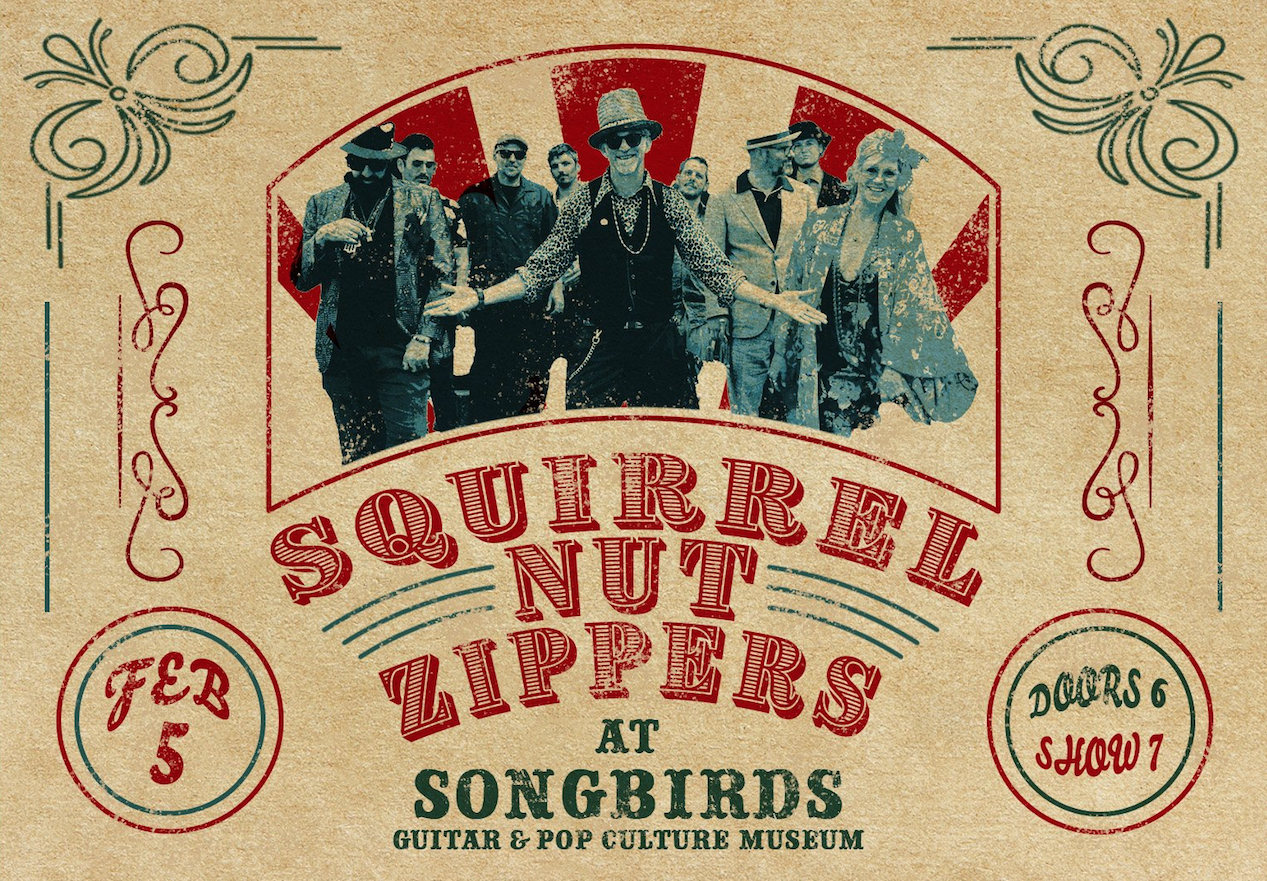
The Squirrel Nut Zippers began their musical journey in Chapel Hill, North Carolina, in the mid 1990s, as a musician’s escape from the cookie cutter world of modern rock radio at the time. Jimbo Mathus along with wife Katherine Whalen and drummer Chris Phillips formed the band as a casual musical foray playing for friends and family around town. It wasn’t long before the band (which had grown in size) developed a reputation for pioneering a quirky mix of jazz chords, folk music, and punk rock leanings and attracted a national audience. Outside of the rollicking concerts which were rapidly growing in attendance, NPR was the first significant national media to take notice of the band followed by an appearance on Late Night With Conan O’Brien. With grunge and alternative rock in full swing back in 1995, the Squirrel Nut Zippers debut album ‘The Inevitable’ sounded like nothing happening musically at the time.  From: https://thevogue.com/events/squirrel-nut-zippers-november-8-2022/

Since 1995, the Squirrel Nut Zippers have sacked and plundered old, weird America then sailed off to further distant lands. They have used New Orleans as their hideout and base of operations. Jean-Lafitte-like, they hide on the lee side of Barrier Island, receiving goods and masking dark back channel deals, hiding in cellars or in plain view. On Sept. 25, fans will be able to gaze into the tea leaves that make up their brand new album, ‘Lost Songs of Doc Souchon’, to see if they can discern their own destiny. The first single from the album “Animule Ball” was originally recorded back in 1938 by Jelly Roll Morton.
“This new album was inspired by all of the mysterious characters from the history of New Orleans jazz music,” commented band leader Jimbo Mathus. “It speaks to the hidden roots of where our aesthetic, interests and philosophy comes from. It pulls on the hidden thread.” As mentioned above, the album’s first single is a cover that dates back to 1938. In keeping with that time period, the band turned to Fleischer Studios (home of Betty Boop) to use some of their historic animations for a brand new video for the track. “When I first started the Zippers, the Max and Dave Fleischer cartoons were a huge part of our inspiration. The look, the music, all of it,” Jimbo said. “So to have their blessing to use some of these characters and create something new with it is thrilling to me.”
“Fleischer Studios has a long history of bringing together the best in music and animation, so the opportunity to continue that great tradition with a band like the Squirrel Nut Zippers, nearly 100 years after debuting the first sound cartoon in 1926, is a wonderful honor, and one that would surely put a smile on Max Fleischer’s face,” commented playwright Jeni Mahoney, who serves on the Board of Directors for Fleischer Studios.
From: https://parklifedc.com/2020/08/10/song-of-the-day-animule-ball-by-squirrel-nut-zippers/