DIVERSE AND ECLECTIC FUN FOR YOUR EARS - 60s to 90s rock, prog, psychedelia, folk music, folk rock, world music, experimental, doom metal, strange and creative music videos, deep cuts and more!
Sunday, July 21, 2024
The Body & Dis Fig - Coils of Kaa
US duo The Body, who have long operated in the post-apocalyptic remains of metal and noise, team up here with Dis Fig, AKA Berlin-based DJ, producer and vocalist Felicia Chen, known for her brilliantly unsettling 2019 album Purge and a subsequent full-length collab with the Bug. Here, there are times when the dub-wise feel is rather like Kevin Martin’s insectile alias at his most jaded and speaker-destroying, but even he might hold back from the hellish moods on show here. If current news events and the general state of the world are making chirpy pop or earnest heartbroken balladry seem trite, this explosively heavy album might resonate better.
Fans of the Body will be familiar with Chip King hollering in startled adrenal shock – still one of contemporary music’s best sounds – while the guitars, bass and drum programming again get pushed through the red and into the black, shaking with distortion. But Chen deepens the duo’s emotion and expands their tone. Her vocals are sometimes choral, chafing against the tracks in a beauty v beast dynamic, but she also frequently disrupts that, letting accusation seep in to crack her voice with anger.
The Body’s programmer Lee Buford has always flirted with techno, minimal wave and industrial, but Chen’s grounding in club culture seems to enhance all that, as when an analogue signal searches the wreckage of Dissent, Shame, or when Coils of Kaa settles into an almighty groove as Chen chants and taunts. Whether it’s a sludge-metal lope or a near-techno pulse, this truly awesome album’s sense of rhythm is perhaps its note of hope, suggesting a centre that just might hold even as things fall apart. From: https://www.theguardian.com/music/2024/feb/23/the-body-and-dis-fig-orchards-of-a-futile-heaven-review-awe-inspiring-music-for-heavy-times
The Youngbloods - Sham
My first-ever concert at the Fillmore East in New York City was on November 23, 1968. The headliner was Iron Butterfly, Canned Heat was the middle act and the Youngbloods opened the show. I was so excited, 16 years old and everything about the concert experience was shiny and new. Everything was great. I hadn't gotten to the point where something “sucked.” No. It was all exciting and fresh. I liked Iron Butterfly and already bought the mega-hit album In-A-Gadda-Da-Vida. According to Atlantic Records executives I spoke with at one time, it was the first RIAA Gold-certified rock album. That album was given Gold record status in 1968, and eventually went double-platinum. Anyway, having taken LSD for the first time in April 1968, I will surmise that I was high on acid at this concert. What an occasion!
The opening band was the Youngbloods and I was blown away. They were riding high off their super-hippie anthem “Get Together,” which had been an FM staple for the past year. They played a song called “Darkness, Darkness” that wasn't released yet and I remember that it was haunting and beautiful. That's about all I remember except that I also loved Canned Heat and Iron Butterfly. The night was memorable because it was my introduction to the whole new world of live shows. Over the next 12 months I was able to see dozens of the world's most famous artists like the Stones. Hendrix, Blind Faith, Free, Spooky Tooth, Procol Harum, the Grateful Dead, Jefferson Airplane, B.B. King, Johnny Winter, Terry Reid, Ten Years After, the Jeff Beck Group, Eric Clapton, Delaney and Bonnie, Mountain, Traffic, Led Zeppelin, the Woody Herman Orchestra, Chicago (when they were still called the Chicago Transit Authority/CTA), Pacific Gas & Electric, Lee Michaels, Janis Joplin, the Nice, Family, the Paul Butterfield Blues Band, Joe Cocker, NRBQ, Jethro Tull, Blues Image, Man, and the Who. The point of listing all these artists and shows is because I feel it's important to give atmospheric context to this review.
My memory was that the three bands at my first Fillmore East concert, the Youngbloods, Canned Heat, and Butterfly, were important to me at the time. My memory of this moment is such that I wanted to go back to a time. I bought the Youngbloods album Elephant Mountain when it was first released in 1969, and when I saw that it had just been re-released in an audiophile 180-gram vinyl version, I had to find out where this album stood in my emotional memory bank. I went into my record collection and found my original 1968 copy of Iron Butterfly’s In-A-Gadda-Da-Vida and my original 1968 copy of Canned Heat’s Boogie with Canned Heat. Back in those days, if you didn't have the latest release of a band you had just seen, you bought it the next day. What did not survive my many moves between girlfriends and band relocation was Elephant Mountain. The original Elephant Mountain album came out a good six months after I saw that first show, and I couldn't wait for the re-release copy to arrive from Acoustic Sounds. I hadn't thought about the Youngbloods for many years. I could have downloaded or streamed the album but I wanted to create the entire experience again (if that was possible).
The new vinyl package came with a great six-page insert with photos and lots of historical information. First off, I learned that Charlie Daniels – yes, that Charlie Daniels – was the producer known as Charles E. Daniels at that time. Then I learned the album's seemingly free-form style was due to the band's insistence (and subsequent acquiescence by their record label RCA) that music should be a wondrous spontaneous creation full of experimental instruments and sounds never (or rarely) heard before. The Beatles’ Sgt. Pepper’s Lonely Hearts Club Band was used as the example to the record label that the band should be left to record whatever they felt was right. I read all of this before I played the album. Elephant Mountain refers to the geographical area where the band was situated – Marin County. This is important to know as the band was surrounded by the newly-explosive effect of the Grateful Dead, the Airplane and all the San Francisco jam bands of the era. In the liner notes, the one band member quoted the most extensively, known as Banana (how ’60s) said that this kind of meandering jam style had no effect on the band. In fact, he went on to say that the band was part of and an extension of bands like the Lovin’ Spoonful, Buffalo Springfield, and the folk-rock scene.
OK, I finally put the album on and the opening track “Darkness, Darkness” immediately took me back to 1968 and 1969. On the plus side, lead vocalist Jesse Colin Young has a voice that sounds of the times – in the best sense. Like listening to Bob Lind’s voice on the song “Elusive Butterfly” or Scott McKenzie’s “San Francisco (Be Sure to Wear Some Flowers in Your Hair).” Trust me, if you lived through those times the vocal vibes from these voices have a lot of meaning. Jesse’s vocals, at certain times, actually recall Janis Joplin’s at her most sincere and non-histrionic. After that opener, the band plays it all soft, however, and the recording, while very clean, lies fairly flat. For a band that says they were not part of that San Francisco jam scene, there seems to be plenty of that on this album. The liner notes tell a story that the band wrote the songs prior to recording, but as the album progresses what they may call rehearsed songs sound to me like they don't know when to stop. It is very strange that an album can contain some tightly-written material and then veer off where jamming fills a lot of space. It makes for nice background music, but I'm trying to remember if I used to play the entire album or just a track or two.
To put this in perspective, I played all the Buffalo Springfield albums in their entirety over and over, as I did with the Dead, Airplane, Love, Iron Butterfly, Canned Heat, the Incredible String Band, Pink Floyd, The Doors, etc. Bands like the Lovin’ Spoonful, the Turtles, and The Mamas & the Papas had many huge radio hits, so the albums they released were not that important to me, but all those bands had a very tight focus The Youngbloods’ Elephant Mountain, however, came at a time where you were supposed to sit around stoned out of your mind and you were supposed to groove on it. Apparently I did but got bored with it. Now, listening to it is an interesting exercise in memory retention and musical context.
The legendary Kevin Gray did the pure analog LP transfer and the sonics, given the times, are what you would expect, meaning the more you like the songs the more you will like this album. The vinyl transfer is dead quiet, but then again, so is the music, so there are not a lot of dynamics going on. My consumption of LSD, beginning in 1968 and peaking into 1970, however, made many marginal things extremely acceptable. It is in this contact that I will say that the next time I want to hear “Darkness, Darkness,” I probably will stream that song, as there is little in the musical noodling here on the rest of the album to hold my interest. Some musicians may really like the quasi-jazz leanings, as it seems that the band is trying to make a point. I'm not enough of a musician, however, to care about this as a “cool” factor. Our editor, Frank Doris, though, tells me he thinks “Ride the Wind,” which he first heard about 15 years ago, is one of the most marvelous songs he’s ever listened to. Yes, listening to the entire Youngbloods Elephant Mountain was a fun snapshot in time and fairly enjoyable, but only proves the old cliché: You can't go home again. From: https://www.psaudio.com/blogs/copper/revisiting-the-youngbloods-em-elephant-mountain-em
Valravn - Kelling
Before I tell you about the superlative new CD by Valravn, I have to tell you what I like, and dislike, about ice storms. I'm wary of their destructive power. Trees come down, and electrical power can be disrupted. On the other hand, ice storms have a cruel beauty. The morning after a proper ice storm, the earth is crusted, and the tree branches make a strange clacking sound in the wind. The trees themselves look alien: you can see the branches, bark, and leaves through the layers of ice. And yes, this has everything to do with Koder på snor.
Valravn hail from Denmark and the Faroe Islands. The band's first, self-titled album featured electronica versions of traditional Nordic (Denmark, Faroe Islands, Iceland, Sweden) folksongs, enhanced by acoustic instruments. While interesting, and certainly danceable, Valravn had not yet fully settled into their own identity. But how the band has matured on Koder på snor. One would have to go back to Sorten Muld's landmark Mark II (1997) for the precedent of electronic treatments of Danish folk song. Further, the listener can easily be forgiven for noting parallels between lead Faroese singer Anna Katrin Egilstraoð's singing and the occasional Bjork-like whisper-to-a-scream vocalisms. Everything about Koder på snor (or "codes on a string," a tribute to the theoretical physics of string theory) is so fresh and inspired that Valravn may have released one of the more significant albums to successfully combine traditional folk elements with electronic ambiance.
String theory has evolved into an explanation that tries to show that the forces and materials of the universe are all interconnected, and it doesn't take much imagination to see that this idea is also rooted in many religions and 'alternative' lifestyles which stress the relationships between people, the earth, and all living things. Further, if you're brewing up a musical sound that is rooted in the organic and the electronic, then not treating the two soundworlds as disparate forces can result in a seamless mix. Valravn take this approach and their songs go widescreen; cinematic; elegiac; and yes, funky. The electronics envelop traditional acoustic instruments such as the hammered dulcimer, the hurdy gurdy, flutes, viola, mandola, but the beauty of the structure is still visible, like an ice-encased tree.
The band has chosen to focus on their own compositions on Koder på snor, and Valravn give themselves the time to explore their fusion. The title track goes over the seven-minute mark; beginning gently with hammered dulcimer, Anna Katrin Egilstroð's voice enters like a singsong wave. In between verses, she explores the joy of making sound, using onomatopoeia: "tip tap," "bum plum," "wish wush," "pling plang." The result is mesmerizing. Around three minutes in, we get the thudding bass of electronica, and Valravn ramp the tune up before returning to the comparative innocence of the dulcimer. This is dance music, but weightless; you forget your body, and just follow the stream.
The traditional Faroese tune "Kelling" starts with "Hag lies on the doorstep, dead/Cannot eat nor butter nor bread" and quickly turns into a storming dance tune, with viola gliding over relentless percussion, both electronic and live. Giddy and infectious, the vocals drop out, returning over a skittering beat, stuttering and with the call "Statt upp og dansa! (Stand up and dance)," Valravn hit their crescendo. That hag might be dead, but this tune is totally alive! There's a very traditional feel to the band's own "Seersken," recalling Hedningarna in their glorious frenzied electronic experiments; it is difficult to resist the interplay of the flute, groaning beat, and tribal percussion that animates this composition. And finally, the Valravn again throw caution to the wind on their epic "Farin uttan at verða vekk," complete with a choir that sails over deep cello sounds, dulcimer, and sparkling electronic landscape. From: https://www.rootsworld.com/reviews/valravn09.shtml
Joe Jackson - Another World
Joe Jackson's detour into the '40s sounds of Louis Jordan and Cab Calloway on 1981's Jumpin' Jive should have made clear that he was more than just another of the new wave's "angry young men." If not, then Night and Day was here to help. Jackson's fifth album set the scene in June 1982 with a stylish art deco cover and a Cole Porter-inspired title. He was making grown-up music now, mixing sophisticated pop, a dash of salsa, chamber music, Eastern modes and splashes of jazz. Still, Jackson shied away from the idea that any of it was meant to be backward-looking.
"I'm not a nostalgist," Jackson told The New York Times back then. "Since I wasn't born until 1954, how could I be nostalgic for a time I never lived in? The music I make is for the moment – for 1982." He'd adopted New York City as a home base when not on tour, and Night and Day pulsed with its energy and rhythms, its passions and its sins. The LP lacked the nervy musical attitude of 1979's Top 20 U.S. hit Look Sharp!, but that didn't mean it was without edges. There was just more to Jackson's musical vision.
"Rock 'n' roll is too narrow and limiting. That's why I've been trying to make connections with earlier traditions," Jackson told the Times. "There's so much about rock 'n' roll tradition that I hate. The idea of 'hope I die before I get old,' for instance. For me, whatever golden age there was in rock is definitely long gone. People have weird ideas about the history of rock. They think it came suddenly out of nowhere, and they're absolutely wrong. That's what Jumpin' Jive was about. Louis Jordan's jump-blues was a huge influence on Chuck Berry and Bill Haley."
At first, it seemed as if Jackson had lost his audience with this latest musical turn. He impishly released the complex and moving "Real Men" – a song that takes a cutting look at gender roles – as the LP's first single, then watched it fail to break the Top 90 in his native U.K. "Real Men" didn't even chart in the U.S. But then came "Steppin' Out," with its twinkling piano flourishes, stirring mechanical rhythms and soul-lifting lyrics. The single promptly went to No. 6, helping Night and Day become Jackson's only Top 5 smash in both the U.S. and U.K.
The momentum carried Jackson's impossibly sad ballad "Breaking Us in Two" into the Billboard Top 20, while "Steppin' Out" garnered Grammy nominations for Record of the Year and Best Pop Vocal Performance. Jackson suddenly found himself on a much bigger stage, figuratively and literally. "The pinnacle of it was Madison Square Garden in 1984," Jackson told the Times Colonist in 2016, "which pulled about 8,000 people." But this iconoclast's iconoclast wasn't celebrating the achievement. "A lot of people were congratulating me, saying, 'You've made it,'" Jackson added, "and I was thinking: 'Get me out of here.' I hated it."
He proceeded to dive deeper still into this LP's jazzier elements on the subsequent Body and Soul, bringing in bright brass and even deeper subject matter, and then placing it all behind a smoky album cover that deftly played off 1957's Sonny Rollins, Vol. 2. In keeping, his commercial momentum began to dissipate. Still, in Jackson's mind, all of this made thematic sense.
"I think that the thread going through it is just me," he told Alan Sculley in 2001. "It's my personality and my voice and putting different elements together. I think you just see different sides of it on different albums." Unfortunately, there were still those who pined for the lean post-punk joys of Look Sharp! and 1979's I'm the Man. Those days, however, were long past – and, for Jackson, happily so. "Believe it or not, I'm still getting reviews where people call me the angry young man of British new wave," he told the Times in 1982. "People latch on to one image so they don't have to think, and that kind of laziness has come to characterize the whole music scene these days." From: https://ultimateclassicrock.com/joe-jackson-night-and-day/
Ethel Cain - God's Country (feat. Wicca Phase Springs Eternal)
A few weeks ago, Hayden Anhedönia fainted mid-show. The 25-year-old songwriter and musician, who in the past year and a half has found sudden fame under the stage name Ethel Cain, was performing at the Sydney Opera House. Halfway through the fan-favourite A House in Nebraska, she realised something was wrong. “Every time I belted, I felt a little bit dizzier,” she recalls. “Right as I was going into the second chorus, I was like: ‘Here we go.’” And then: lights out.
The Pittsburgh-based Anhedönia stresses that the incident was “nothing serious … I’m used to being alone in a quiet, isolated environment – I’m kind of a low-energy, low-vibration, low-stamina person to begin with – so let’s just say I’m very out of shape,” she says. But the incident sent a ripple through her huge fanbase, who had begun tweeting and posting footage shortly after it happened. “I kind of just sat in a room for six years making music, and then suddenly I was on the road all the time,” she says. “Usually I’m able to, like, grip the mic stand and kind of push through, but Sydney night two, it was like, ‘Nope, you flew too close to the sun with that one.’”
Passing out at the Opera House was a capstone on 12 months that have served as a kind of crash course in alternative pop stardom for Anhedönia – even if she never really wanted to be a pop star to begin with. Raised in a Southern Baptist family in small-town Florida, she was homeschooled and raised listening to Christian music. As a teenager, she discovered pop, and became enamoured of the music of Florence + the Machine; she became active on Twitter and Tumblr, and started making friends online. She moved out of home at 18 and, at 20, came out as a trans woman. Shortly after, she began releasing music as Ethel Cain, a character inspired by southern gothic, horror films, and the religious trauma of Anhedönia’s own upbringing.
After building up a small, dedicated fanbase with a series of EPs released in 2019 and 2021, Anhedönia truly broke through into the alternative mainstream with 76-minute epic Preacher’s Daughter. Released last May, it tells the story of the Ethel Cain character, a gnarly tale of abuse and cannibalism that, somehow, became one of the year’s biggest pop breakouts, and a mainstay in critics’ end of year lists. Touching on hazy ambient music, gothic country and doom metal, many of its songs stretch out to the 10-minute mark, with no choruses or discernible hooks. Its calling-card single, American Teenager, is a heartland rock anthem that feels indebted to Taylor Swift and Bruce Springsteen, but most other songs, like the pulverising Gibson Girl or the glacially paced Thoroughfare, seem to exist at the intersection of Lana Del Rey, the ambient folk artist Grouper, and Godspeed You! Black Emperor at their most grinding.
And yet, the album struck a chord, winning Anhedönia a colossal, adoring fanbase, despite the relative density of the actual music. At the time of the album’s release, Anhedönia told the New York Times that she was happy to “play Miss Alt-Pop Star and … parade myself around” if it meant that she would be able to build a sustainable career. A year later, she seems less sure. Zooming from her bedroom in Pittsburgh, perched on a desk chair in a forest green hoodie, in front of a window that’s been blacked-out with a blanket, she says that she “would really love to have a much smaller fanbase, and kind of go back to where I was aiming for ahead of time” instead of the intense scrutiny – positive and negative – she faces now.
Part of Anhedönia’s popularity – she has nearly 300,000 Instagram followers, and was the face of recent Givenchy, Miu Miu and Marc Jacobs campaigns – can be attributed to the fact that she is extremely internet literate, and became known online for a sharp Twitter feed on which she participated in jokes and memes about her public image. It soon began to feel as if she was “a dancing monkey in a circus. It’s very like, ‘Oh, she’s so funny on Twitter, she’s so relatable’ and then it becomes this big weird joke cycle,” she says. Although she stresses that she loves the support and adoration of her fans, she says it can become demoralising to not have her art met on the level she’d like it to be: “Don’t get me wrong, laughter and memes and jokes are always really fun. But when you want to post something to be consumed seriously, people are still joking – and then you get like, thousands of comments that are like, ‘silly goose’. All of a sudden, you start to feel like you can’t turn off the memeable internet personality thing.”
Live, Anhedönia is a captivating, remarkable performer: during a show at the London club Omeara last year, you could hear a pin drop as she shepherded an audience of thrilled young fans through her largely hushed setlist. But at concerts, Anhedönia will sometimes be trying to perform her quietest, most intimate songs, only to have people yell jokes at her, breaking the spell. “I had a show recently where I was singing the really quiet intro to Sun Bleached Flies,” she recalls. “I went to hold a fan’s hand and they began sort of screaming, ‘I didn’t even know who you were two weeks ago, I found you through a meme on TikTok.’ It’s almost like heckling. I don’t think any of them are mean spirited, but it’s a little jarring.”
Earlier this month, she deleted her Twitter, leaving fans aghast. “I always kind of conflated openness with honesty and I thought that if I was completely transparent and bared every aspect of my soul that people would think I was relatable and kinda cool,” she says. “Then I was like, I don’t want to know you. I don’t want to be friends with you. I don’t want to have all of my personal business and every innermost thought just out there on the internet for the world to see.”
Another part of the reason Anhedönia pulled back from social media was the way that her fans began to demand access not just to her, but to her friends and family. “I really had no idea the full nature of my success until I had those closest to me kind of half-joking, half actually kind of complaining, being like: ‘People are DMing me and asking me questions about you and trying to become my friend only to find out months later that they’re really just trying to get to you through me,’” she says. “I always thought that success would exist in a vacuum for me but it did start to affect my family. And my closest friends and even just acquaintances of mine. I’m not Britney Spears, but it was noticeable for them and it created a really weird dynamic between us for a while.”
Part of the problem, Anhedönia thinks, is the fact that she is often classed as a pop artist, and therefore becomes part of the stan economy, wherein teens treat female artists “like fantasy football teams”, arguing “about streams and stats and followers and almost using them as like Pokémon to fight each other.”
Right now, aside from an impending tour, Anhedönia is living the quiet life in Pittsburgh – “I just sit in my cave all day and write or embroider, watch a movie, play a game. My friends and I will go to the woods or a river, anywhere there’s not a lot of people” – and working on the follow-up to Preacher’s Daughter. “I’m trying to push my own envelope a bit. I’m trying to be super intentional about it and careful and dedicated and meticulous. Some of the songs I’m proudest of are on this project.”
Still, she is conscious of where her music goes, and says “no to most opportunities … I’ve been asked to share some stages with some artists, I’ve been asked to sing on some songs with some big artists, and I just had to say no, because I don’t want to be up there with them, I really don’t,” she says. “ I really do want to reiterate how grateful I am for everyone who’s ever said a nice word about my music. But I really think there can be too much of a good thing – there’s just some levels of success that I really don’t want for myself.” From: https://www.theguardian.com/music/2023/jul/07/ethel-cain-preachers-daughter-interview
Imperial Jade - The Call
If you’re a fan of classic rock from the 60s and 70s I think Imperial Jade needs no further introduction. Meanwhile, due to a relatively short career of the band, here follows a short intro to this ambitious Spanish band. Imperial Jade is a bluesy classic hard rock quintet formed in Barcelona in 2012. In November 2015 their first record Please Welcome Imperial Jade saw the daylight, being a bombastic entrance to the scene of hard rock. The new 2019 album On The Rise shows the band honing their sound in an almost cinematic quality adding further contrasts to their aforementioned style. On The Rise consists of 10 ordinary and 2 bonus tracks, all recorded by using modern technologies and tools while keeping the rehersal effects and this bluesy feeling like in the good old days. It feels organic yet defined and charming at the same time. It is somehow based on the melodies that are easy to be understood and assimilated, sober instrumental parts and good commanding vocals.
This bluesy and soulful feeling is best exemplified on the songs like a guitar driven “You Ain’t Seen Nothing Yet” and due to the accessible melodies of “Dance”. The opening track “You Ain’t Seen Nothing Yet” is high energy and soul packed track while the band successfully blends elements of a solid Country Rock on the song titled “Sad For No Reason”. “Glory Train” and “Heat Wave” both continues this characteristic upbeat, feel good tempo and vibe. “The Call’ is yet another completely different track which starts very psychedelic, but further on develops. In other words, it is a varied release but still within classic and heavy blues rock waters. On The Rise is a very successfully evolved and non derivative record that will please all fans of the band and the genre in general. Esp. recommended for those into Led Zeppelin, Aerosmith, Deep Purple, Airbourne, Alice Cooper etc. From: https://www.metal-revolution.com/reviews/imperial-jade-on-the-rise
Thursday, July 11, 2024
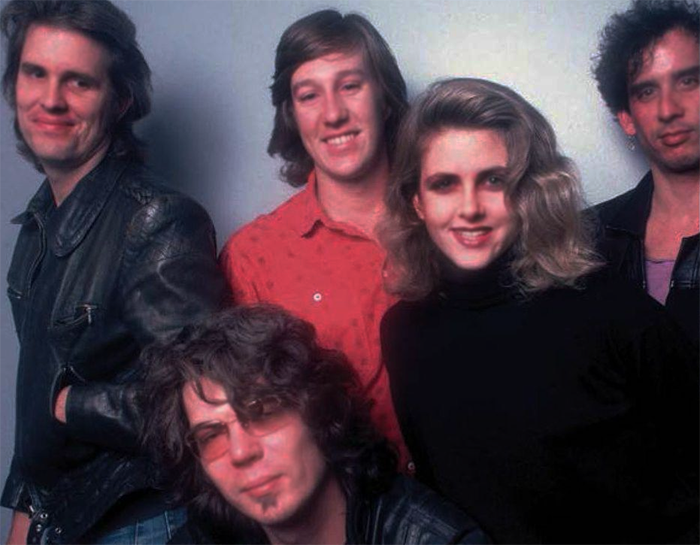
Lone Justice - Live at The Palace, Los Angeles, CA 1984 / Live at The Ritz 1985 / Live on German TV 1987
And so it was one evening I first saw Lone Justice. Big things, it seems, were anticipated for this band. They had been signed to Geffen, had Jimmy Iovine produce their debut album and had been raved about by Linda Ronstadt. Not only that but, we were told, lead singer Maria McKee was the half-sister of Brian MacLean from Love! To be honest, at the time, I had no idea what that meant, but it was said in such a way that this seemed like a CV-deal-clincher. They performed, the ‘big two’ – ‘Sweet, Sweet Baby (I’m Falling)’ and ‘Ways To Be Wicked’ songs from their upcoming debut release. The latter had been written by Tom Petty and Mike Campbell. They were a couple of tunes that showed that in McKee the band were fronted by someone with a perfectly suited country rock voice; all power and inflection. And she looked the part too, tossed strawberry blond curls, floaty dresses, motorcycle boots and a worn telecaster. What was there not to love? I did, and as I always did in those days, I rushed to HMV in my lunch hour the next day and bought the album.
And here is the thing – at the time it did not feel great. The rock songs were mixed with some rushed country – ‘East of Eden’, ‘After the Flood’, ‘Working Late’. The singing was great, the playing was great but it felt odd. Maybe this was because, at the time, I had no idea I was into Americana. I knew I liked some things (see list of bands above) but I had little notion of the boundaries or possibilities of the genre. To be frank, I didn’t know it was a genre. Neither, it seems did many others. The common agreement is that the band were over-hyped and could not possibly live up to expectations. I saw them play a mid-afternoon slot at Wembley Stadium on U2’s ‘Joshua Tree’ tour where a weak sound system and lights lost in the afternoon sun did them no favours. The band fractured with McKee and guitarist Ryan Hedgecock recruiting two new members and recording a new album – ‘Shelter’. This time Iovine was joined in production duties by another big name in Steve Van Zandt who also wrote some of the material. It was more mainstream than the debut but again bombed. This time I saw them at the Leeds Warehouse where they put on a fabulous energy packed show. The band broke soon after, the final track of ‘Shelter’, the McKee written ‘Dixie Storms’ was an indicator of the more epic solo material she would produce next and she is perhaps best known for her UK Number one hit ‘Show Me Heaven’.
So why, after a tale of woe are they my choice for the A-Z? Looking back now it seems that Lone Justice were a band (no pun) out of time. We were not ready for them; the geography of Americana was too new – just like fusion food, we provincials were a little too used to our tastes. What was perceived as a weakness then – that they satisfied neither rock nor country audiences is no longer a millstone. Indeed, it has become the USP of Blackberry Smoke whose ‘Too Country for Rock, Too Rock for Country’ T-shirts are a defiant shout against pigeonholing – you will see them at Luke Combs concerts as easily as at Monster Trucks (and this year at the Download festival).
Lone Justice deserve a reappraisal, had they been around now I have little doubt that a night headlining the Roundhouse would come as no surprise to anyone. From: https://americana-uk.com/americana-to-z-lone-justice
-
Pledging allegiance to thick, throttling fuzz guitars, primal psychedelia, and thundering rhythms, the 21st century rock revivalists Wolfmot...
-
01 - The Wizard 02 - Traveller In Time 03 - Easy Livin' 04 - Poet's Justice 05 - Circle Of Hands 06 - Rainbow Demon 07 - All My Life...
-
John Benoit, founder of post-hardcore band Resilia, talks with Dying Scene about the band’s origins, influences, and what 2024 has in store ...
-
In the front, the Pit kids ruled. In the back, the grandparents huddled. And sandwiched between both were the rest of the diverse crowd-swin...
-
While the track was made famous by The Temptations, “Papa Was a Rollin’ Stone” was originally written for the Motown band The Undisputed Tru...