Wednesday, March 20, 2024

Jill Sobule - When My Ship Comes In


Jill Sobule doesn’t plan, onstage or off. As a musician on the road, she loves to riff between songs, most of which she calls “story songs.” “They’re narrative. I talk about people. I was influenced by storyteller-songwriters… Dylan. John Prine. Leonard Cohen.” So, it wasn’t that difficult for the singer to turn her catalog into a theatrical piece that rocked New York City in October and November of 2022. Sobule’s F*ck7thGrade at Manhattan performance space the wild project was extended, and beloved by critics for its warmth and honesty. I sat down with her recently to ask about her process, her influences, and her background.
Sobule might be best known for the song “I Kissed A Girl.” No, not the 2008 Katy Perry song. Sobule created her version in the nineties: “I was about to record for Atlantic, and I was goofing around… there were no queer songs in 1995 on the charts. It was kinda based on queer pulp fiction from the 1950s.” Unlike the straightforward flirting of Perry’s record, Sobule’s is wry. She describes it as “two unhappy housewives who get it on after their Tupperware party.” And the irony was intentional and double-edged. “We knew that the only way to get that song on the radio was to make it light and funny, so we could get away with the ‘insidious gay agenda’,” Sobule jokes.
By the time Sobule was recording in the early ’90s, she’d learned to forge her own path. She didn’t want to just be the singer in the band: “I wanted to be a little rocker, but there were no female role models for me…” When she was coming of age in the ‘80s, female musicians in a Guitar Center were “asked if that’s their boyfriend’s guitar,” and one label even felt comfortable explaining to Sobule that they’d love to sign her, but “we already have a female artist.” 
Sobule managed to acquire not only a guitar but also a strong identity and sense of self growing up as a “Denver Jew, third generation from the Old Country.” She describes her family’s secular Judaism with humor and self-awareness: “We were to Judaism what Olive Garden was to Italian restaurants.” In fact, as the sole and self-described “token Jew” at St. Mary’s Academy, an all-girls Catholic high school, she was excused from theology class but elected to attend, and even played guitar at mass. “I’ve always been, and still am, interested in everything from world religions to weirdo cults.”
Growing up, she mined music, religion, and words wherever she could find them. She recalls asking her mother for Ms. Magazine, devouring her mother’s copy of The Women’s Room, and frequenting a bookstore in Denver called Women To Women. “I remember going in there like going into a speakeasy for books. I remember having this huge crush on Gloria Steinem,” she laughs. “I was a little political girl, a little radical left-winger. I don’t know where I got that. Maybe knowing that inside there was a little queer identity waiting to burst out.” In Denver, she had no one to share that with. “It was my own thing.” So when Sobule decided to put together F*ck7thGrade, she knew the story had to take place in that particular moment. “I realized I had a lot of songs about that period in my life. Freud said, the first week or month or year in your development is the most important. He was full of shit. It was seventh grade that made you who you are today.”
This isn’t her first theatrical piece—this summer she played “a rabbi’s wife who gets murdered” in A Wicked Soul In Cherry Hill at the Geffen Playhouse in Los Angeles. That role marked her first time back on stage in a scripted piece since playing “Miss Hanukkah and Queen Esther” in first grade. “It’s a whole different world than what I do in concerts—having to memorize! I have a whole new respect for actors.” Now that the run is over, Sobule is in familiar territory, the unscripted. “I’m a rolling stone. My stuff is still in a storage locker. I have to figure out where I want to be.” And whatever the next story song brings.  From: https://lilith.org/2023/02/jill-sobule-is-still-laughing-at-the-world/
 

Blood, Sweat & Tears - I Love You More Than You'll Ever Know


This song was written by Blood, Sweat & Tears founder Al Kooper and is the second track from the group's debut - and only album recorded with that lineup - Child Is Father to the Man. While the song itself didn't see single release, it did see some substantial play on progressive rock stations.
From Al Kooper's biography Backstage Passes and Backstabbing Bastards: "'I Love You More Than You'll Ever Know' was a split tribute to Otis Redding and James Brown. (The lyrics were a nod to Otis' song 'I Love You More Than Words Can Say,' and the melody was 'reminiscent' of James Brown's 'It's a Man's World.') On December 6 1967, Otis died in a plane crash and it really fucked me up. The next night we began recording the album. I insisted we record 'I Love You' first. Nobody objected. We put down a blistering track, and it looked like this was gonna be an easy album to make. We overdubbed Freddie [Lipsius]'s solo and Steve [Katz]'s fills, and then it was time to put a vocal on it." Kooper goes on to say that the band was so nervous about his vocal skills, that he prepared a practical joke to ease the tension. On the first recording take, he started singing the lyrics in French, having memorized them that way beforehand. Everybody stopped in shock and he innocently smirked "Oh, you wanted me to sing it in English?" Then there was take two... Going on from BB&BB: "Now my eyes were screwed shut, and I was thinkin' about Otis and this sounds clichéd as hell, but it's true. I was saying to myself, "This is for you." And I was singing. One take. They called me into the booth for playback, and everyone was smiling."
In spite of this song's success, the band eventually did kick Al Kooper out. It was a cross between wanting a different lead vocalist, and creative differences with the rest of the band objecting to Kooper's tight control. For one thing, Kooper insisted on including one song, "The Modern Adventures of Plato, Diogenes, and Freud," which he wrote, and the rest of the band hated. He got his way by the grace of producer John Simon's mediation, and Kooper points to that moment as the beginning of the breakup of the band. The chief rivals here are Kooper and Colomby; these two continue bitter feuds to this very day over whose idea was what and who gets the money from Child Is Father to the Man.
The album cover art is famous for being a funny/creepy photo trick, showing each of the band members sitting and standing with child-sized versions of themselves. We all know that. But did you know about the popular blog meme using Photoshop (although Gimp can do it, too) to swap heads between a baby and an adult? It's called a "manbaby" and there's a page about it at Know Your Meme which seems at a loss to explain exactly whence this meme originated... but we know, don't we?  From: https://www.songfacts.com/facts/blood-sweat-tears/i-love-you-more-than-youll-ever-know

Saturday, March 9, 2024

Nina Simone - Live Holland 1965

 Part 1

 
Part 2

“My skin is black,” the first woman’s story begins, “my arms are long.” And, to a slow and steady beat, “my hair is woolly, my back is strong.” Singing in a club in Holland, in 1965, Nina Simone introduced a song she had written about what she called “four Negro women” to a young, homogeneously white, and transfixed crowd. “And one of the women’s hair,” she instructed, brushing her hand lightly across her own woolly Afro, “is like mine.” Every performance of “Four Women” caught on film (as here) or disk is different. Sometimes Simone coolly chants the first three women’s parts—the effect is of resigned weariness—and at other times, as on this particular night, she gives each woman an individual, sharply dramatized voice. All four have names. Aunt Sarah is old, and her strong back has allowed her only “to take the pain inflicted again and again.” Sephronia’s yellow skin and long hair are the result of her rich white father having raped her mother—“Between two worlds I do belong”—and Sweet Thing, a prostitute, has tan skin and a smiling bravado that seduced at least some of the eager Dutch listeners into the mistake of smiling, too. And then Simone hit them with the last and most resolutely up to date of the women, improbably named Peaches. “My skin is brown,” she growled ferociously, “my manner is tough. I’ll kill the first mother I see. ’Cause my life has been rough.” (One has to wonder what the Dutch made of killing that “mother.”) If Simone’s song suggests a history of black women in America, it is also a history of long-suppressed and finally uncontainable anger.
A lot of black women have been openly angry these days over a new movie about Simone’s life, and it hasn’t even been released. The issue is color, and what it meant to Simone to be not only categorically African-American but specifically African in her features and her very dark skin. Is it possible to separate Simone’s physical characteristics, and what they cost her in this country, from the woman she became? Can she be played by an actress with less distinctively African features, or a lighter skin tone? Should she be played by such an actress? The casting of Zoe Saldana, a movie star of Dominican descent and a light-skinned beauty along European lines, has caused these questions—rarely phrased as questions—to dog the production of “Nina,” from the moment Saldana’s casting was announced to the completed film’s début, at Cannes, in May, at a screening confined to possible distributors. No reviewers have seen it. The film’s director, Cynthia Mort, has been stalwart in her defense of Saldana’s rightness for the role, citing not only the obvious relevance of acting skills but Simone’s inclusion of a range of colors among her own “Four Women”—which is a fair point. None of the women in Simone’s most personal and searing song escape the damage and degradation accorded to their race.
Ironically, “Four Women” was charged with being insulting to black women and was banned on a couple of radio stations in New York and Philadelphia soon after the recording was released, in 1966. The ban was lifted, however, when it produced more outrage than the song. Simone’s husband, Andrew Stroud, who was also her manager, worried about the dangers that the controversy might have for her career, although this was hardly a new problem. Simone had been singing out loud and clear about civil rights since 1963—well after the heroic stand of figures like Harry Belafonte and Sammy Davis, Jr., but still at a time when many black performers felt trapped between the rules of commercial success and the increasing pressure for racial confrontation. At Motown, in the early sixties, the wildly popular performers of a stream of crossover hits became models of black achievement but had virtually no contact with the movement at all.
Simone herself had been hesitant at first. Known for her sophisticated pianism, her imperious attitude, and her velvety rendition of “I Loves You, Porgy” (which, like Billie Holiday before her, she sang without the demeaningly ungrammatical “s” on “loves”), she had arrived in New York in late 1958, establishing her reputation not in Harlem but in the clubs of hip and relatively interracial Greenwich Village. Her repertoire of jazz and folk and show tunes, often played with a classical touch, made her impossible to classify. In these early years, she performed African songs but also Hebrew songs, and wove a Bach fugue through a rapid-fire version of “Love Me or Leave Me.” She tossed off the thirties bauble “My Baby Just Cares for Me” with airy insouciance, and wrung the heart out of the lullaby “Brown Baby”—newly written by Oscar Brown, Jr., about a family’s hopes for a child born into a better racial order—erupting in a hair-raising wail on the word “freedom,” as though registering all the pain over all the years during which it was denied. For a while, “Brown Baby” was as close to a protest song as Simone got. She believed it was enough.
And then her friend Lorraine Hansberry set her straight. It speaks to Simone’s intelligence and restless force that, in her twenties, she attracted some of African-American culture’s finest minds. Both Langston Hughes and James Baldwin elected themselves mentors: Simone, appearing on the scene just as Holiday died, seemed to evoke their most exuberant hopes and most protective instincts. But Hansberry offered her a special bond. A young woman also dealing with a startling early success—Hansberry was twenty-eight when “A Raisin in the Sun” won the New York Drama Critics’ Circle Award, in 1959—she had a strongly cultivated black pride and a pedagogical bent. “We never talked about men or clothes,” Simone wrote in her memoir, decades later. “It was always Marx, Lenin and revolution—real girls’ talk.” A milestone in Simone’s career was a solo concert at Carnegie Hall—a happy chance to show off her pianism—on April 12, 1963, which happened also to be the day that Martin Luther King, Jr., was arrested with other protesters in Birmingham, Alabama, and locked up in the local jail. The discrepancy between the events was pointed out by Hansberry, who telephoned Simone after the concert, although not to offer praise.
Two months later, Simone played a benefit for the N.A.A.C.P. In early August, she sang “Brown Baby” before a crowd gathered in the football stadium of a black college outside Birmingham—the first integrated concert ever given in the area—while guards with guns and dogs prowled the field. But Hansberry only started a process that events in America quickly accelerated. Simone watched the March on Washington, later that August, on television, while she was preparing for a club date. She was still rehearsing when, on September 15th, news came of the bombing of Birmingham’s Sixteenth Street Baptist Church, killing four young African-American girls who had just got out of Bible class. Simone’s first impulsive act, she recalled, was to try to make a zip gun with tools from her garage. “I had it in my mind to go out and kill someone,” she wrote. “I didn’t yet know who, but someone I could identify as being in the way of my people.”
This urge to violence was not a wholly aberrant impulse but something that had been brewing on a national scale, however tamped down by cooler heads and political pragmatists. At the Washington march, John Lewis, then a leader of the Student Nonviolent Coordinating Committee, was forced to cut the word “revolution” from his speech and to omit the threat that, absent immediate progress, the marchers would go through the South “the way Sherman did” and “burn Jim Crow to the ground.” James Baldwin, in a televised discussion after the bombing, noted that, throughout American history, “the only time that nonviolence has been admired is when the Negroes practice it.” But the center held. Simone’s husband, a smart businessman, told her to forget the gun and put her rage into her music.
It took her an hour to write “Mississippi Goddam.” A freewheeling cri de coeur based on the place names of oppression, the song has a jaunty tune that makes an ironic contrast with words—“Alabama’s got me so upset, Tennessee made me lose my rest”—that arose from injustices so familiar they hardly needed to be stated: “And everybody knows about Mississippi, goddam!” Still, Simone spelled them out. She mocked stereotypical insults (“Too damn lazy!”), government promises (“Desegregation / Mass participation”), and, above all, the continuing admonition of public leaders to “Go slow,” a line that prompted her backup musicians to call out repeatedly, as punctuation, “Too slow!” It wasn’t “We Shall Overcome” or “Blowin’ in the Wind”: Simone had little feeling for the Biblically inflected uplift that defined the anthems of the era. It’s a song about a movement nearly out of patience by a woman who never had very much to begin with, and who had little hope for the American future: “Oh but this whole country is full of lies,” she sang. “You’re all gonna die and die like flies.”
She introduced the song in a set at the Village Gate a few days later. And she sang it at a very different concert at Carnegie Hall, in March, 1964—brazenly flinging “You’re all gonna die” at a mostly white audience—along with other protest songs she had taken a hand in writing, including the defiantly jazzy ditty “Old Jim Crow.” She also performed a quietly haunting song titled “Images,” about a black woman’s inability to see her own beauty (“She thinks her brown body has no glory”)—a wistful predecessor to “Four Women” that she had composed to words by the Harlem Renaissance poet Waring Cuney. At the time, Simone herself was still wearing her hair in a harshly straightened fifties-style bob—sometimes the small personal freedoms are harder to speak up for than the larger political ones—and, clearly, it wasn’t time yet for such specifically female injuries to take their place in the racial picture. “Mississippi Goddam” was the song of the moment: bold and urgent and easy to sing, it was adopted by embattled protesters in the cursed state itself just months after Simone’s concert, during what they called the Mississippi Summer Project, or Freedom Summer, and what President Johnson called “the summer of our discontent.”
There was no looking back by the time she performed the song outside Montgomery, Alabama, in March, 1965, when some three thousand marchers were making their way along the fifty-four-mile route from Selma; two weeks earlier, protesters making the same attempt had been driven back by state troopers with clubs, whips, and tear gas. The triumphant concert, on the fourth night of the march, was organized by the indefatigable Belafonte, at the request of King, and took place on a makeshift stage built atop stacks of empty coffins lent by local funeral homes, and in front of an audience that had swelled with twenty-five thousand additional people, drawn either by the cause or by a lineup of stars that ranged from Tony Bennett and Johnny Mathis to Joan Baez. Simone, accompanied only by her longtime guitarist, Al Schackman, drew cheers on the interpolated line “Selma made me lose my rest.” In the course of events that night, she was introduced to King, and Schackman remembered that she stuck her hand out and warned him, “I’m not nonviolent!” It was only when King replied, gently, “Not to worry, sister,” that she calmed down.
Simone’s explosiveness was well known. In concert, she was quick to call out anyone she noticed talking, to stop and glare or hurl a few insults or even leave the stage. Yet her performances, richly improvised, were also confidingly intimate—she needed the connection with her audience—and often riveting. Even in her best years, Simone never put many records on the charts, but people flocked to her shows. In 1966, the critic for the Philadelphia Tribune, an African-American newspaper, explained that to hear Simone sing “is to be brought into abrasive contact with the black heart and to feel the power and beauty which for centuries have beat there.” She was proclaimed the voice of the movement not by Martin Luther King but by Stokely Carmichael and H. Rap Brown, whose Black Power philosophy answered to her own experience and inclinations. As the sixties progressed, the feelings she displayed—pain, lacerating anger, the desire to burn down whole cities in revenge—made her seem at times emotionally disturbed and at other times simply the most honest black woman in America.  From: https://www.newyorker.com/magazine/2014/08/11/raised-voice


Igorrr - Very Noise

We have a challenge for you: Watch Meat Dept’s latest video and try and keep a straight face. Chances are you probably can’t. A weird and wacky music video created to accompany French musician Igorrr's track,Very Noise, it may surprise you to hear that there is a quite a serious meaning behind it – amidst all the madness. “Very Noise is an attempt to transcribe on video the synthesis of numerous testimonies of stroke victims that we have collected over the past few years,” explains David Nicolas of Meat Dept. “About 3/4 of the stroke victims are heterosexual white males over 50 years old, and the visions that arise from these experiences are in common with the neuroses of this category of the population. Identity disorder, existential anxieties linked to erection problems, transfer phenomenon to a more sporty image of the father, a burning desire for extreme but playful activities such as motocross or solo rock climbing…”
What on the face of it seems to be impossible to link together, was actually created with a lot of consideration and much thought. “The notion of figurative abstraction is also very significant in the stories, it is a form of link between two ideas that challenge each other, one could speak of a remedy for cognitive dissonance generated by overlapping fantasies,” explains David.
Bearing in mind the serious subject matter underpinning the project, Meat Dept have approached it in a typically humorous and open manner. “We just opened our psychic channel and went fishing for ideas,” recalls Laurent Nicolas. “We basically took the ideas as they came and translated them instantly into images, without any filter or thinking, like the “cadavre exquis.” Then we connected the dots to create some kind of story and everything made sense.” The team behind Meat Dept are David Nicolas, Laurent Nicolas and Kevin Van Der Meiren, who's varied backgrounds across animation, design, art and film have proved quite a prolific combination. As a collective they have previously had a short film premiere at Sundance and produced idents for Adult Swim, alongside their own personal film and music video projects. They are currently working on their first series, entitled Black Holes, which has been signed by a US television network.
Looking through their portfolio, it is clear that the team has a unique way of looking at things, that manifests itself in such intriguing work. Their process that facilitates this seems to be one which snowballs from one idea: “The deal with Igorrr was total freedom. We started from a motion capture bug in a loop David was working on: the chewing gum character on the boxing ring. Then we improvised and built around it, with a lot of experiments,” explains Kevin. “Then what’s important in our approach is the attitude we have towards the variety of tools and techniques we’re using. Technology plays a very important part in our process. We are as excited about the technology as the art itself. We love to play around with new tools and push them to their limits. As we said, the starting point of the video was some weird bugs and distortions in motion capture movements. From this technical problems can sometimes arise interesting forms. You have to be open to that kind of discovery.”
When they were approached by Igorrr, the team were experimenting for an exhibition that focussed on loops. David explains that this was where the collaboration began: “At the time we were preparing an exhibition of living paintings, made of loops, basically an animation sequence that loops perfectly and can be watched endlessly,” he says. “Gautier loved the concept, but listening to the track, we were really disconcerted. It’s very violent and unpredictable.” The fast and varied nature of the track itself is obviously something that drives the visuals, and many of the scenes are directly synced to the beat - something that Meat Dept considered important. “Of course, especially for a track like Very Noise, it’s all about rhythm. Towards the end of the process, we adjusted the cuts together with Gautier and he tweaked the music a little bit and added some sound design to make it perfectly fit with the images,” says Laurent. “Some say he’s a genius but he’s just a maniac really! Jokes aside, it was great working with him. Great guy!”
The video has had an amazing reception so far, with millions of views on Youtube and the inevitable reaction videos alongside them. Famous fans of the piece also include Mike Judge, someone that Meat Dept hugely admires. Based on the success of Very Noise, attention turns to where they go next. We ask them if any of the characters may make an appearance again in the future, to which Kevin responds: “Haha! The Grandpa biker is definitely coming back…”  From: https://www.itsnicethat.com/articles/meat-dept-digital-film-310120

Mrs. Piss - Self-Surgery

Chelsea Wolfe and Jess Gowrie have formed a new group called Mrs. Piss. Their debut LP Self-Surgery is due out May 29 via Sargent House. Today, they’ve shared two singles, “Downer Surrounded by Uppers” and “Knelt”. Wolfe and Gowrie started the project while touring around Wolfe’s Hiss Spun album in 2017. They recorded Self-Surgery at the Dock Studio in Sacramento, California and at Wolfe’s home studio the Canyon. Wolfe performs vocals and guitar, with Gowrie on drums, guitar, bass, and programming.

In a statement, Wolfe said:
Working on this project brought Jess and I so much closer as songwriters and production partners, after reuniting as friends and bandmates. It was freeing and fun to channel some wild energies that I don’t typically put into my own music. We tried not to overthink the songs as we were writing them, but at the same time we did consciously put a lot into crafting them into our own weird sonic vision. This project was a chance for us to do things our own way, on our own terms, and we plan to invite more women musicians along for future Mrs. Piss recordings.

Gowrie added:
To me, Mrs. Piss represents a musical chemistry cut short long ago that now gets a second chance. Creating with Chelsea has always been very liberating for me, and we both push each other to try new things: anything and everything. Both of us have grown so much as writers and musicians since our first band together (Red Host), and with the journeys we had to take separately to get there, we both have so much more to say; so much more pain and anger to express. That said, we also had a lot of fun doing it, not to mention how freeing it is to not give a fuck and to just create.

From: https://pitchfork.com/news/chelsea-wolfe-and-jess-gowrie-announce-new-album-as-mrs-piss-share-new-songs-listen/

Euringer - Fuck Everything

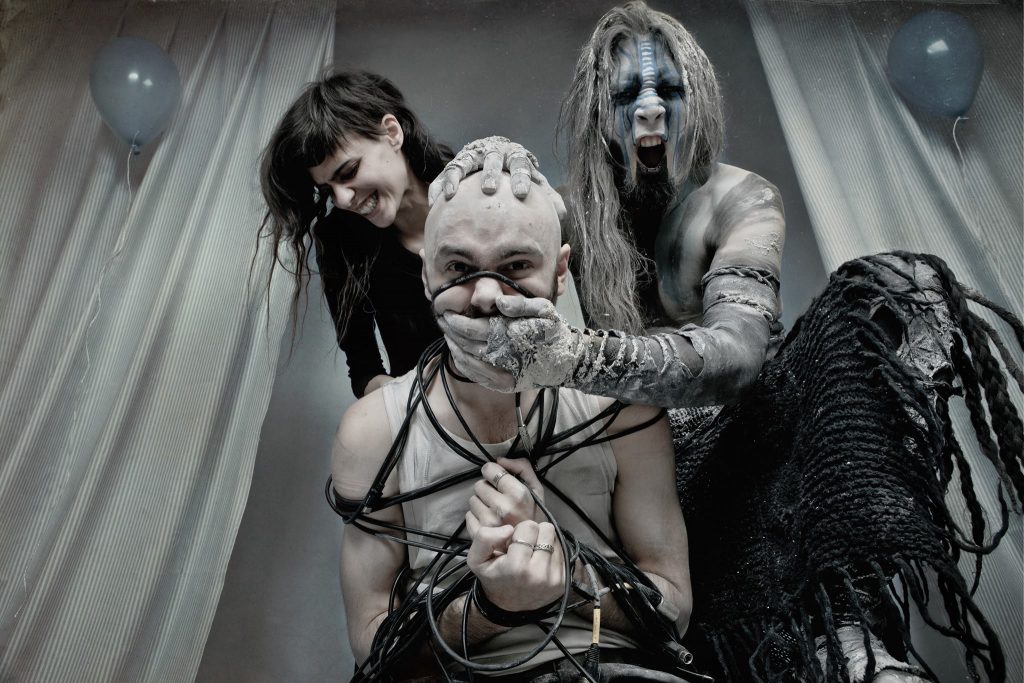
Euringer is a counter-culture, surreal, psychedelic, art house, avant-garde, possibly posthumous concept project from Jimmy Urine of Mindless Self Indulgence fame. Featuring guest vocals from Grimes, Serj Tankian (System Of A Down), Gerard Way (My Chemical Romance) and Chantal Claret and also staring Jimmy’s Mom and Dad for good measure! “The record is one long song/musical/concerto, as if an underground movie was made for your ears. I wanted it to sound as if Depeche Mode hired J. Dilla and DJ Premier to drop loops while Frank Zappa produced, and then I came in and shit all over it,” said Jimmy.
Jimmy shares his innermost musical insights through sixteen songs, two covers (Kate Bush’s Wuthering Heights and The Doobie Brother’s What A Fool Believes), four guest stars and one Jimmy. Damn, he is really hyping up this record - it better be good!
He continues, “I was having fun exploring my brain and I wanted to invite my friends to have fun with me immersing myself in another time and space, bit by bit, gaining its form from my daily life into a surreal stream of consciousness.”
From trigger warnings to Martin Niemöller quotes, from reading himself to boasting and testing, from touring the world to alcohol poisoning, from kissing your mother to dismissing his entire career, this two-year adventure is a mindfuck of Jimmy’s escapist reality.
“Mathematically speaking, I am breaking time into pieces of distance and moving through them diagonally at a rapid rate,” says Jimmy. “Naaaahh, I am just fucking with you. I just drank a whole bottle of Southern Comfort and wrote this album. A hallucination, a proclamation, a degradation? Or maybe its all just all a pile of bullshit I made up to stay relevant. Either way, I am right behind you.”
Jimmy Euringer is the frontman, songwriter and programmer for the cult favorite, critically-acclaimed band Mindless Self Indulgence. He has applied his talents as an innovative songwriter, arranger and producer in a variety of projects, including composing songs for and acting in film, television, video games and many remixes.  From: https://www.metropolis-records.com/artist/euringer


The Sugarcubes - Hit - Live 1991


I wonder how many people that like Bjork’s solo albums followed her from as far back as when she was in The Sugarcubes. Actually, I’d even be curious to know how many people knew she was ever even in a band before her solo career at all. I’m willing to bet that the number of people that fall into either category is small, and probably growing smaller as The Sugarcubes fade farther into the past. That supposition is a shame because there are three albums here that show a totally different side of her; the best being this one, Stick Around For Joy. Even by this point back in 1991 Bjork’s unique vocal style was firmly solidified, and due to the music presented here, was even more outgoing and varied than on a lot of her solo albums. What’s more is that due to the amusing nature of the music and the interplay with the other vocalist, she sounds like she had a lot of fun and that feeling is easily translated to the listener. The other vocalist is a male vocalist who is used in mostly spoken word sections to contrast and accentuate Bjork’s vocal parts. His vocals are honestly a little amusing due to his cartoon-like delivery, but it fits within the context of the music fairly well.
Musically the band presents a very unique style that would make it hard to find an artist whose style is similar to this. Those that are only familiar with Bjork’s solo work will need to know that this is nothing like her current outputs; there aren’t any electronics or heavy world-music influences at all. What we do get is very upbeat and energetic music that pulls from everything from Jane’s Addiction to The B52’s and even a little bit of The Cure circa Kiss Me, Kiss Me, Kiss Me. Despite the name dropping of such diverse acts, the band manages to take those influences and combine them into one homogenous mixture instead of a hodge-podge of conflicting sounds. The vibe this creates is overwhelmingly happy and childlike in such a good way. Seriously, the only mood that is conveyed throughout this entire album is one of childlike happiness. It is close to impossible to not feel a little bounce and a little happier while listening to this album. Songs such as “Hit” take the groovy vibe of Jane’s Addiction’s “Been Caught Stealing” and adds synth-horns, Bjork’s vocals, and a ten-times dose of energetic fun. Much like, “Hit”, the rest of the songs are all built around the competent rhythm section which accounts for a lot of the groove factor. The bass player consistently lays down funky bass lines that are complimented by the distinctive and busy beats of the drummer. Over the top of the solid rhythms are keyboards, handclaps, cheers, chimes, guitar riffs, and a number of other sounds which the two vocalists use to their advantage while playfully singing over it all.
I honestly hadn’t listened to this album in years before repurchasing it on a whim (and for cheap) a few weeks back, but I’m so glad I did. I had forgotten about what a fun and easy experience it is while listening to this album. Admittedly, this could be a very hard album for some to get into, even for those that love Bjork’s solo albums, due to the bouncy, child-like nature of the entire output, but it is worth the initial effort. Just keep in mind that even those going from Bjork to this could find a very significant leap to be made, but it’s a leap that is worth attempting.  From: https://www.sputnikmusic.com/review/25645/The-Sugarcubes-Stick-Around-for-Joy/