Friday, July 28, 2023

Red Molly - Wayfaring Stranger (Live)


 #Red Molly #folk #bluegrass #Americana #country #contemporary folk #traditional #roots music

Red Molly are a Roots/Americana trio originating from the upstate New York area. This is a band I’ve loved from the first time I heard them, though, surprisingly, they’ve never made a big impact outside of their home country. They have toured internationally and always draw a good audience, many of which go on to be committed fans, much like myself, and it always surprises me that they’ve never broken through in a big way. Perhaps that’s by design as much as anything else – these women seem too grounded and too committed to making their music to want to compromise enough for the celebrity machine.
The original line up of Abbie Gardner, Laurie MacAllister, and Carolann Solebello came together at the 2004 Falcon Ridge Folk Festival, in Hillsdale, New York state. The three singers, songwriters and musicians were the last ones left at a song circle, liked the way they sounded together and the way their instruments complemented each other and decided to work together as a band. The band name is taken from one of the characters in Richard Thompson’s well-known song, ‘1952 Vincent Black Lightning’, though the band didn’t know it was a Thompson song at the time, having only heard the Del McCoury version! All three were up-and-coming performers in their own right, having been writing and recording as individuals for some time, before meeting up. It was their ability to create intricate vocal harmonies that marked them out from the start, but the combination of Gardner’s fine slide dobro playing alongside Solebello’s guitar work and MacAllister’s intuitive bass and guitar playing, with the occasional banjo foray, meant they could also produce a compelling instrumental sound that worked particularly well with their harmonising voices.
The Falcon Ridge Folk Festival became a major talisman for the band. Not only was it the location of their coming together but it was the catalyst for their career as a band taking off. In 2006 they received the most votes in the Festival’s Emerging Artists Showcase, bringing them to the attention of audiences in the wider region and resulting in WUMB radio in Boston naming them Top New Artist of the Year and their debut live album, “Never Been to Vegas” as one of their albums of 2006. The following year they toured with the Falcon Ridge Preview tour and their career was really up and running.
The band recorded their debut studio album, “Love & Other Tragedies” in 2008 and it climbed to number 15 on the Americana chart in the U.S. The original line-up released one more album together, “James”, in the May of 2010. This album performed slightly better, making it into the top five of the same chart, before Carolann Solebello quit the band, in June of that year, to pursue solo projects. She was replaced by Molly Venter, a singer/songwriter based in Austin, Texas, who had already released four albums and had an established reputation as a solo artist before joining the band. This new line-up really cemented the band’s reputation, particularly on the festival circuit. Venter brought a bluesier voice to the band, giving them an option for a slightly harder edge. They’d been predominantly known for more folk based material up to this point but the new line up seemed that bit more versatile and their repertoire now covered the full range of Americana styes. Their third album, “Light in the Sky”, which included contributions from both Solebello and Venter, was released in 2011 as the band continued to build their following.
It’s in live performance that this band really shines. Their albums are good but they never capture the fun of their live gigs and their easy rapport with an audience. It’s that ability to really win over a live audience that has seen Red Molly become darlings of the American festival scene and they’ve been four times featured artists at Merlefest, one of America’s biggest roots music festivals, as well as making regular appearances at the likes of Rocky Grass, Bristol Rhythm & Roots, Suwannee Roots Revival and many other festivals and events around the US and further afield. I was lucky enough to catch their last UK tour and they remain one of the most enjoyable bands I’ve witnessed live.  From: https://americana-uk.com/whatever-happened-to-red-molly

Sunday, July 16, 2023

Renaissance - BBC Sight & Sound In Concert 1977

Part 1


 Part 2

 #Renaissance #Annie Haslam #progressive rock #British progressive rock #symphonic prog #classical #orchestral #1970s #live music video

Repertoire Records has previously dug out the De Lane Studios and Academy of Music concerts of Renaissance for official release. In comparison, this 'Live at the BBC Sight & Sound' package includes material that fans are well acquainted with. It draws from the previous BBC Sessions CD and adds, as the main attraction, video of the concert performed by Renaissance at the Hippodrome, London in 1977 as part of the Sight & Sound in Concert series.
I was excited as this was the only color footage taken from a live performance given by the band in the 70s. And it is a beautifully shot concert, way ahead of all of the band's DVDs including the recent ones in that aspect, covering the band from a whole variety of angles. However, when I saw the nervous look on Annie Haslam's face in the first close up shot in the concert as they perform Carpet of the Sun, I began to have misgivings. After a somewhat glaring misstep (hard to be too harsh when somebody's got a voice like that) towards the end of that song, her confidence seems to drop even more and she wears a kind of anxious and downcast look through the rest of the show, for the most part. The wide variety of giggles and grins sported by her in shows over the years attest to how unusual it is for her to be that aloof while performing. I didn't mind the show on the whole but I was also not overwhelmed and just said to myself that you can't have it all. Maybe best quality audio and video had to come at the (slight) expense of musical quality and show(woman)ship.
So I decided to play the audio CD version of the concert, just to see if the audio was better on it as compared to the DVD (it was). And I began to get a different impression of the concert, indeed of Annie's singing. On video, she looks tentative, perhaps weighed down by her perfectionist streak and perhaps also battling a throat that was protesting the workload she had imposed on it. But, on audio, I heard beautiful, confident and expressive renditions, as always. Yes, with those little missteps hither and thither, but it is much harder to notice when the sheer quality of her vocal delivery overwhelms you.
Turns out the Sight & Sound concert is another fine example of Annie's quiet resilience. Perhaps she may have been embattled by inner demons and may have completely abdicated the role of frontperson for this show to the more composed Jon Camp but she was still striving to give her best song after song and did not disappoint the eager fans who had turned up to watch the show. I could finally put in perspective the enthusiastic cheering from the crowd after every song. No, it is not that they were forgiving. It is that she and the band as such had truly mounted a wonderful show, in spite of the somewhat scripted quality these Sight & Sound shows have compared to less high profile performances by Renaissance (or other bands). My pick would be Ocean Gypsy but don't miss John Tout's wonderful piano work on Mother Russia. There are some fine, subtle variations in there that he's sneaked in unobtrusively without altering the spirit of the composition.  From: https://www.progarchives.com/album.asp?id=54564
 
Renaissance's history actually begins in 1969, when - after the breakup of the Yardbirds and a short stint as the acoustic group Together - drummer Jim McCarty and guitarist/vocalist Keith Relf were joined by classically-trained pianist John Hawken who had earlier played with The Nashville Teens, bassist Louis Cennamo and Keith's sister, vocalist Jane Relf. Actually, the original lineup started falling apart prior to the second album's completion, giving rise to personnel and style changes over the next year before reaching a stable lineup. McCarty hated to fly and left the band in 1970 when they were about to embark on a European tour; Keith Relf and Louis Cennamo left shortly after to pursue a heavier style, eventually forming Armageddon. Jane Relf quit after the tour completed in the fall of 1970 and was replaced by American female vocalist, Binky Cullom from late October to December 1970. John Hawken, dissatisfied with the new vocalist among other reasons, left to join Spooky Tooth and was replaced by keyboard player John Tout around the same time. Hawken later joined The Strawbs in 1973-1974 Louis Cennamo left to join Colosseum and played on the Daughter Of Time album.
Annie Haslam, a brilliant young singer with formal classical vocal training, a beautiful five-octave range and a vivacious personality, answered the Melody Maker advert and got an audition with the band where she met founding members Keith Relf and Jim McCarty. The lineup of Annie Haslam, John Tout, Terry Crowe, Neil Korner, Terry Slade and Michael Dunford toured Europe extensively leading to further personal and acoustic transitions. Danny McCullough, Frank Farrell and John Wetton each took their turn at bass during the period. Keith Relf and Jim McCarty were still very much involved in the direction of the band behind the scenes and while Relf eventually became disinterested, McCarty remained involved until 1973.
Renaissance are in important band in progressive rock - one which far outranks the bands actual sales in the peak years or their fame at the time. The band seemlessly blended classical, rock and folk in a symphonic progressive style that is almost at the center of this genre's description. Anne Haslam was one of the first females to front a progressive rock band and in many ways serves as the reference point for both a style of music and a description for other female vocalists in the progressive genre. Starting with the band's 2nd release with Haslam, Prologue, and running though 1975's Scheherazade and including large portions of the albums released surrounding this period, Renaissance delivered some of the most respected and fresh progressive rock in the classic period of the 70's.  Their live release from Carnegie Hall is one of the cleanest performances and records among the 'live' collections of the era.  Songs such as Ocean Gypsy, Ashes are Burning, Mother Russia and Scheherazade are often cited as classics of the genre.
Starting in the late 70's and early 80's, as the influence of directed radio grew, the band found it hard to get noticed and slowly migrated to a more conventional pop/rock sound leading to the bands effective closing the door by the mid-1980's. Meanwhile, in 1977, original members Jane Relf, Jim McCarty, Louis Cennamo, and John Hawken would go on to form a band and record under the name Illusion. Haslam has gone on to record a number of solo works of varying styles including progressive ones, and the band have reformed in various combinations in the years following including a kind of 'renaissance' (pun intended) in the 2000's with new music and live performances to the delight of new and long time fans.  From: https://www.proggnosis.com/Artist/247
 

Uncle Acid & The Deadbeats - Runaway Girls


 #Uncle Acid & The Deadbeats #heavy metal #stoner rock #doom metal #heavy psych #hard rock #occult rock #music video

There are a plethora of bands nowadays that tackle the aesthetics that call back to a heritage classic rock band’s heyday. Greta Van Fleet’s Josh Kiszka howls just like Led Zeppelin’s Robert Plant and Ghost taps into the theatrics of Kiss and Alice Cooper. While these are bands that are dominating the mainstream music consciousness, there is one band that has resided in the underground for over ten years that haunts back to the grim sound of metal at its earliest point of formation in the late ’60s/early ’70s: Uncle Acid & the Deadbeats. Hailing from Birmingham, England, Uncle Acid is the brainchild of Kevin Starrs, who has ultimately taken on the moniker of the band’s name with a revolving door of band members (The Deadbeats). The fruits of their labor emerged 40 years to the day of Black Sabbath’s debut, Friday the 13th in February 2010, with their debut album Volume 1. Recorded with a nonexistent budget, no knowledge of conventional recording techniques, and a lack of distribution network or audience marks the bearing of a true DIY effort. With this record, the roots of their sound lie in the heavy psych vein with some tasteful ’70s-tinged guitar leads, Jon Lord-esque organ runs, and vocal melodies that are accessible.
If I were to sell Uncle Acid & the Deadbeats to an old soul, they would feel right at home with this band. There is an obvious Black Sabbath similarity with their crunchy Iommic riffs, but with a heightened sense of doom and fuzz. As heavy as they are, they are unbelievably melodic to the point where they can be deemed “poppy” in some respects. Kevin Starrs’ vocals are a hybrid of Ozzy Osbourne, John Lennon, and Neil Young. With added distortion and tasteful harmonies, they create this eerie element that perfectly compliments the doomy riffs.
For anyone interested in horror and the occult, the lyrics and album concepts can easily attract them. The grim nature of the subject matters they delve into goes hand in hand with the heaviness of the music. While Uncle Acid’s sound has evolved to work in more elements to provide some light and shade, outsiders could go as far as to say that when you hear one song, you’ve listened to them all. It can sometimes come across as an AC/DC situation; it may all sound the same, but the style suits them well, and they do a damn good job at executing it. Besides, occult doom bands are always welcome in the ever-broad musical climate of today.  From: https://vwmusicrocks.com/are-uncle-acid-the-deadbeats-a-modern-day-black-sabbath/

My Little White Rabbit - The Key


 #My Little White Rabbit #psychedelic rock #garage rock #psychedelic pop rock #German #music video

Psychedelic rock became the soundtrack of the wider cultural exploration of the hippie movement. Considering it was widely dismissed at the time as merely another momentary fad, and erroneously presumed to be pretty much dead in the water by the middle of 1968, the influence of psychedelic rock runs long and deep, and because of its links to the hippie movement many bands having psychedelic elements get a modern hippie imprint all over their image, just like Hamburg’s My Little White Rabbit. Starting out in 2014 when the band members met up at a dry river bed in the Mojave Desert, My Little White Rabbit bring the hippie movement into the 2010s, both musically and visually.

Q: A lot has happened since you started. Today My Little White Rabbit are five members but you started out in 2014 just as a three-piece.

Rike: Yes, we’ve had some changes in the band. It wasn’t that clear who was and who wasn’t a band member because of how much time people had, so we played with different people. That’s why there was just the three of us on band pictures.

Jan: It was also a question of style, we needed some time to find our own identity. In the beginning we made kind of different music compared to what we do now. We just started by putting all our ideas together to see what direction to take it and some people weren’t that super interested in that. Not that it was a huge thing but some people left the band. But the three of us still wanted to be in this band and liked whatever direction we went, and decided that we’re the core of the band because we support the direction and the style of it. With that we had to find people who were as experimental as us.

About your debut album that just came out; does it relate to your EP from 2015 or is it something completely new?

Rike: It was released on the June 7th. We really wanted it to be released in March but as usual you need to deal with the label and other stuff. There are still some songs from the EP on the album because we released the EP ourselves without a label. That’s why the cover design is similar to the EP, to get a kind of fluid transition.

Jan: It’s kind of easy with the whole design thing. We stayed with our designer because we always like his stuff. The collages, the weird stuff, we all find that it fits very well with our music. Why change the design as long as we all like it? He always comes up with new ideas on designs.

Rike: He is great with implementing our weird and unprofessional ideas (laughs), a great man!

Jan: And for the album it’s great because we also want to show our fans how varied we are and that we have old songs we’re very proud of. Of course the old songs don’t sound like our new but that is how it has to be.

In 2014 someone people claimed that you played “absurdo pop” and I just had to laugh a bit about it. Let’s say your style now is lots of sixties psychedelic guitars and that people compare or describe you as hippies.

Rike: Someone started with this old hippie thing and it has followed us ever since. But we really aren’t that kind of hippies who dance around naked on meadows. I have nothing against people who like to do that (laughs), but we’re not really a one-genre band. Everything is moving around the psychedelic frame, sometimes more blues, sometimes more guitars, and some songs which are more psychedelic pop.

Lasse: It’s always difficult with the terminology because everybody has their own opinion about it. Is it more an aspect of life or is it a direction of music? In the late sixties it was rather a kind of collective name. There was everything you would imagine in terms of music and people who were different compared to what was normal, that’s why they came up with terms like “weltmusik”. Everything not like what’s the usual stuff belongs to “weltmusik”.

Jan: But if you use “hippie” as somebody who wants to be without social limitations and relate that to our music, I would say we are hippies because we want to make our music just as we feel and like. If it means freedom and self-expression, I can deal with it.

Rike: That’s exactly what we want to represent. You don’t have to follow certain rules just because you want to belong to one style.

Jan: A modern phenomenon in revival rock bands is that they get on stage in what looks like uniforms. Old leather boots, beards, slim shirts and all that stuff. The whole image has to fit the style, not just the music. That’s something we don’t want to do. It is important that everyone of us still stays an individual, that’s how our music comes to life.

You said you like to listen to music on your own. Which era is your favorite that you would love to live in?

Lasse: Awesome question! You always think about the sixties because there were bands like the Beatles. But I would say today anyway because there has been so much fun stuff happening after the sixties and we would have missed all of it then.  

Jan: I would say the same. If you’ve asked me a few years ago I would also have said the sixties, to see Led Zeppelin or Jimi Hendrix play live, which would have been really cool. But it’s actually awesome today. I listen to very much new and interesting music on Spotify; it’s insane how many new artists I’ve found there just in the past four to five years. I’m in there every day. It would have been great to be a bit younger today and listen to all that stuff without thinking “I already know it” and be more open to it; being twenty years younger and skip the nineties would have been great (laugh). For music listeners it’s really great to be able to listen to music wherever you are. Maybe not for the bands.

Rike: Back then it was kind a hard to find new music. When I was like fifteen I always watched VIVA2 or MTV to find new music and to stay up to date. That was the channel we had and you wrote it down and got the record at the store or just listened to it there. It would have been great to have the channels we have today back then. Very easy access and a wide range of new bands and stuff.

Lasse: But it was more mystic back then. You were not able to listen to new bands every day, and you didn’t get to know what Uriah Heep had for breakfast (laughs). If I talk to my parents how they consumed music when they were young it’s really interesting. We were at Jethro Tull last Friday which was really awesome, and I asked them how they listened to that music back then and they were like “Somebody had the record or you had to go to a club and just hope the DJ would play it”.

Jan: You dealt with music differently. You bought an album and if you found it really awesome you sat with your CD player and listened to it over and over again. Today, I mostly listen to music when I’m on the road, back then I sat in front of my stereo and listened to one album like five hundred times because I was so thrilled about it. Not playing video games, not meeting up with friends, only listening to music. A complete spare time activity. Today it is more on the side. I’m still into it but I also have more time to listen to new music.

Lasse: That’s what every musician says. Music is available around the clock and you can listen to music everywhere.

Positive and negative, two sides as usual. Rike, one last question for you. You started your career in the classical field?

Rike: I started to play piano as a kid, at the age of six. At nine I started with violin and I played lots of the classical stuff until the end of my teenage years - years I don’t regret at all. At some point I started to play guitar because I wanted to do something new without having to take lessons. After the whole classical stuff it was important for me to do something without knowing exactly what I was doing, just have an open mind. It’s really good, both sides are really good. And classic music isn’t always just something you need to think about when doing.

Lasse: But you have to read notes (laugh).

What about singing? Did you start that as well as a kid or did it come later?

Rike: I’ve had singing lessons but really late. I sang in a choir as a kid and somebody said I had to get some singing lessons, but I didn’t want to sing the way people told me to. In the end I got lessons and tried out much stuff, but really late, ironically.

But you are good anyway.

Lasse: Well, yes. (laugh)

From: https://www.messedmag.com/2019/06/12/hamburg-crib-sessions-7-my-little-white-rabbit-interviewed/

Sparklehorse - Dog Door


 #Sparklehorse #alternative/indie rock #alternative country rock #lo-fi #slowcore #psychedelic rock #animated music video #stop-motion #Quay brothers

Although its name suggests the presence of a full band, Sparklehorse was essentially the work of singer/songwriter Mark Linkous, an alumnus of the mid-'80s indie band the Dancing Hoods. A tenure in the Johnson Family (later known as Salt Chuck Mary) followed, as did stints sweeping chimneys and painting houses. He began working as Sparklehorse in 1995, honing his spooky, lo-fi roots pop in the studio located on his farm in Bremo Bluff, VA. After a demo made its way to the offices of Capitol Records, Linkous signed to the label and issued Sparklehorse's acclaimed debut, Vivadixiesubmarinetransmissionplot, scoring an alternative radio hit with the single "Someday I Will Treat You Good."
In early 1996, after a Sparklehorse concert in London, Linkous nearly died when he passed out after mixing Valium with prescription antidepressants. He spent 14 hours unconscious on his hotel's bathroom floor, his legs pinned under the rest of his body, and the prolonged loss of blood circulation nearly left him crippled. Many months and countless surgeries later, he was quite literally back on his feet, and his recovery provided inspiration for 1998's Good Morning Spider. Linkous then collaborated with PJ Harvey and the Cardigans' Nina Persson on 2001's radiant It's a Wonderful Life. In between that album and 2006's Dreamt for Light Years in the Belly of a Mountain (which featured contributions from Tom Waits and Danger Mouse), Linkous contributed songs to the soundtrack of the film Laurel Canyon and produced Daniel Johnston's 2003 album, Fear Yourself.
The next Sparklehorse project was truly an ambitious one: a multimedia sound and art gallery done in conjunction with Danger Mouse and filmmaker David Lynch called Dark Night of the Soul. The project featured several singers, including James Mercer, Gruff Rhys, Jason Lytle, Julian Casablancas, Frank Black, Iggy Pop, Nina Persson, Suzanne Vega, Vic Chesnutt, Scott Spillane, and David Lynch, whose photographs made up the 100-page accompanying book. Although slated to appear on the Capitol label in 2009, Dark Night of the Soul ended up dry docked by a legal dispute between EMI and Danger Mouse. Dark Night of the Soul was left marooned as an adjunct hostage in a complicated legal entanglement. Copies leaked out in different configurations, but it became apparent that Dark Night of the Soul's legitimate release was in serious jeopardy. Cutting his losses, Linkous instead turned his attention to a collaborative project with laptop artist Christian Fennesz. The two had previously recorded music together in 2007, and excerpts from those sessions were packaged together, forming the 2009 release In the Fishtank. As of early 2010, Linkous had moved to Hayesville, NC, and was reportedly nearing completion of a new Sparklehorse album. On March 6 of that year he was visiting friends in Knoxville, TN, when he committed suicide at age 47 by shooting himself in the chest with a rifle.  From: https://www.allmusic.com/artist/sparklehorse-mn0000008549/biography

Well she's as mean as a needle
Don't get too close to the heater
She's like a mean shop keeper
Who got an extra gun
She about 6'4" and she's a wrecking ball
Now go ahead and kiss her
She brought the bad weather with her
She got you coming through the dog door

Now pigs get fat hogs get slaughtered
You ought to walk away
Well you can't but you ought to
Climb the rickety stairs
She got the long black hair
But don't sit there
Electricity chair
She got you coming through the dog door

Pitchfork
Crowbar
Claw hammer
Hot tar

She's got ruin in her name
But she can make it rain
She's a small town jail
And she's starving in the belly of a whale
She got me coming through the dog door

Pitchfork (Pitchfork)
Crowbar (Crowbar)
Clawhammer (Clawhammer)
Hot tar (Hot tar)

Light in Babylon - Baderech El Hayam


 #Light in Babylon #Michal Elia Kamal #world music #Mediterranean folk #ethno folk #Turkish folk #Middle Eastern folk #music video

The Ingathering: What’s the band’s story, did you get started playing on the streets?

Michal Elia Kamal: We started playing on one specific street, called İstiklal Avenue [İstiklal Caddesi, or Independence Avenue], not everywhere.

Specifically just that one street in Istanbul?

Yes, İstiklal Avenue, it is a very special place. We started around 11 years ago in Istanbul on İstiklal Avenue, which is in the city center near Taksim Square. It’s very specific and a very special place. That was in 2009, almost 2010, and that moment was also a very good time in Turkey, culturally. Istanbul was chosen to be the cultural capital of Europe, and that period was like a golden time. It is not like that anymore, by the way, but then it was a place with a really big potential for musicians, and artists in general. İstiklal Avenue is a huge avenue with no cars. There are more than two million people passing through there every day. It is very crowded, very touristy, and it was like an artists’ avenue. You had bands playing there—even half-organized—proper bands brought their equipment and put on concerts. You had a puppet show. It looked like a festival. It was not an organized festival, but it was like that every day. It was so intense.

Is that where you met Metehan Çifçi (Mete)?

I wanted to learn music, and I wanted to start my own project. I traveled in India, worked a bit in Europe, and decided I was going to dedicate my life to music. I had even already looked at music schools in Israel. But I looked around, and many of my friends studied music in Israel. I saw them struggling, actually. They are really high-level musicians. They put a lot of money and effort and study into it, and I didn’t see them achieving what they deserved. That changed my mind a bit, and I thought that maybe music school was not the place for me.
I continued to travel. I passed through Turkey almost by chance. It was just before I was about to go back to Israel to figure out what I was going to do, and I just discovered Istanbul. I discovered it not only in a musical way, because it was also a place that’s attractive to me in a much more personal way, too. I arrived in Istanbul, and I started to feel my heart beat. I arrived at İstiklal Street, and I asked my friend — I was with a Turkish friend — I said, “Is this like a holiday or Independence Day or something?” And she told me, in this heavy accent, “No, this is Taksim, baby.” Something was happening there. That was normal, every day. I saw all the musicians, everybody was playing, and I realized that this was the place for me.
I had met Julien, and together we were thinking about building up a project. I knew I could find musicians in Istanbul. Julien said, “There’s İstiklal Street, let’s play there a little and see how it goes. Maximum, it doesn’t work.” We rented a small room in a neighborhood nearby. We earned a little money. Then he said, “There’s this one santur player. I saw him play solo on İstiklal Street. He’s very shy. He doesn’t speak English. But he’s really, really good. We need to find him.” Every day, we went to İstiklal Street, and finally, we found him. We approached him — I had my own songs already that I wrote — and we said, “Can we play?” He said, “Yes,” and I think that moment was when we played our first song as a band. We didn’t know Turkish. He didn’t know English. But it was like, bam. At that moment, something was created. A crowd started to form, and that was the very first moment, 11 years ago. It was like this magical moment, like the spark was there, and all the rest is history. We played one song, a second song, and 10,000 songs since then.

You had instant chemistry.

Yeah, I don’t think that’s happened to me before or after like that. I don’t know what it is in Mete. He’s Turkish, but today he’s family, after all we’ve been through.

What language do you speak with him?

At first, we spoke with our hands, plus a little English, and a little Turkish. Now he’s learned English. I taught him English, and he speaks English like an Israeli [laughs]. We’ve also learned Turkish. Nowadays, we speak English and a bit of Turkish. But in the beginning, we started from scratch. It started from music, which is the main thing. I think it’s what’s beyond language that makes the connection. Even Julien, he’s from France — today he is my husband — I am Israeli, Persian, and Jewish. But the three of us, we say we are dreamers, and that’s what we had in common. We had this culture of dreamers. We decided to go out from our comfort zones, and achieve some inner dream or inner wish, and to take that risk. Choosing music as a lifestyle is a risk. Playing in the streets is a risk. It is not conventional. That was the first thing that brought us together. It was very clear. You didn’t even need to explain it in any language. It was something that was very clear for the three of us, and that’s why it worked.

You said you’re Persian, do you speak Farsi, too?

I understand Farsi, but I don’t speak it that well because I grew up in Israel. I was born and grew up in Tel Aviv. My parents spoke Farsi at home, but I didn’t speak it. People who came to Israel from Iran had to leave something behind. They realized that they were not going back there. That was also something my parents realized. They ran away from Iran so I would have a better future and have a normal life. I am very grateful for that. I have singer friends in Iran, and it is not a place I want to be. I think my parents made a decision to sacrifice something so I would be able to integrate better in Israel — that my first language would be Hebrew and that my first identity would be Israeli.

But did you hear Iranian music around the house?

Yes. You need to sacrifice something, but there are some things you cannot take out. I grew up in a Persian home, with the huge carpets, Persian music, and only Persian food. I think that is why I found myself, eventually, in Istanbul, because it is like a bridge for me. It’s my personal bridge between Iran and Israel. When you grow up in Israel and come from an Iranian family, you grow up in a sort of conflict. My parents told me about a world that doesn’t exist anymore, because it’s the Iran from before the revolution, and today Iran is something else. I also think my parents were conflicted. They came from Iran, but at the same time they are Jewish and Israeli.
That conflict for me is not only between being Israeli and Iranian, but it is also a conflict between east and west. I grew up in Ramat Aviv, which is a very good neighborhood in Tel Aviv and very Ashkenazi. I was the only Mizrahi in my class in my school. I was always very different, and I grew up in a very Mizrahi and Iranian home. On one hand, I enjoyed the privilege of growing up in modern society, in Israel, where women are more empowered, for example. It gave me confidence as a women in this world, and all the benefits you get that come from the west, including the education. But on the other hand, I still have the rich culture from home — the colors and the smells and the music and the warmth and all this stuff they brought from Iran.
I think that is also a conflict you find in Istanbul — between east and west — and sometimes, it’s not always a conflict. It isn’t always a negative thing. It’s a positive thing. It’s a mix. It’s something that is always there, the question of identity, and it is something I speak about a lot in my music. However, after 10 years of meeting people from all over the world and making music and having fans from many religions and cultures and countries — including countries I can not even enter — I am learning more and more about the common things we do have. Maybe it sounds like a cliché, but east, west, Jewish, Muslim, Christian — we all have a choice. Every individual chooses, and takes responsibility for his own choices. It doesn’t matter what his background is. In every language, we feel love, or anger, it is something we all have, and we have a choice, to either choose the positive side or to chose the negative side. That is something that I found in many people, and I find it again and again at every concert.
About the question about identity, that is getting blurrier with time. Not blurry — it is always inside me — but it is becoming less important. For me, Mete is not a Turkish guy from a Muslim country, to me, he’s family. His religion or his background isn’t relevant, because you have a different kind of connection with the person. He’s a human being. But why is that connection possible? Because he made a choice similar to my choice. And then you spread that to a big amount of people and fans.  From: https://theingathering.substack.com/p/light-in-babylon-and-the-universality
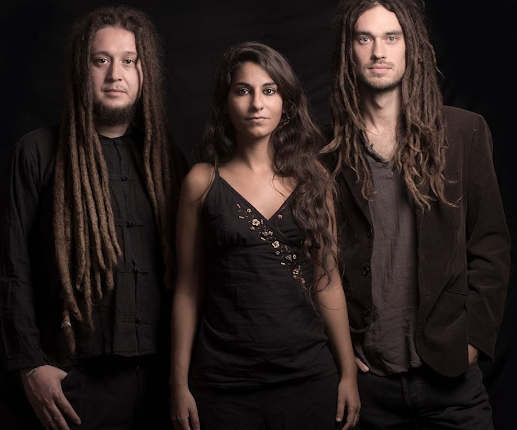
The Nields - Snowman


 #The Nields #Katryna & Nerissa Nields #folk rock #contemporary folk #alternative rock #indie rock #Americana #1990s

Where do you start with the Nields? Let's say that for twenty years you've wanted to write about the Nields, to help spread the word about their music but also to solidify your sense of why that music is so compelling, so worth your time. Where do you start? You could start copy-editorially. For example: There once was an indie folk-pop-rock band from New England called the Nields, and their name involved a grammatical joke. The band's principal members were the sisters Nerissa and Katryna Nields. Nerissa's husband, David, changed his last name from Jones to Nields and played guitar in the band. They called themselves the Nields. No matter how many people named Nields form a group, however, they collectively aren't the Nields. To be the Nields, they would each need to be named Nield. An "s" makes Nield plural. Since in reality they are each named Nields, together they are the Nieldses, "es" making Nields plural. The Nieldses might hang out with the Robertses and keep up with the Joneses. (If Nerissa, Katrina, and David had all been named Jones, they'd probably have named themselves the Jones.) Of course, you can understand why a band wouldn't want to go by the unwieldy name of the Nieldses. Why would they want to go by the ungrammatical name of the Nields? It's funny! A group of indie folk-pop-rock New England young people follow the lead of, say, the Osmonds, who were brothers, or the Ramones, who weren't. But in this case having a cool-or-at-least-coolish-sounding name means embracing a grammatical error. In this way the Nields resemble the long-defunct indie pop band Let's Active, whose name was meant to convey a faulty translation. Or they might be distant cousins to Led Zeppelin, who embraced the power of a spelling error because it looked, you know, heavier. So much for copyediting. Alternatively, you could start with the Nields personally. For example: For a couple years in the early '90s I lived in the same cozy corner of western Massachusetts as the Nields, or the Nieldses, or Nerissa and Katryna Nields and their bandmates. The name the Nields popped up frequently in that area, the Pioneer Valley, to the point of being annoying. I imagined their music was annoying too: cutesy, cloying, crunchy-folky.
By the summer of 2001 I was living in Manhattan and finally saw the Nields perform as part of a series at the base of the World Trade Towers. The Towers stood on an inhospitable, perpetually windswept concrete plaza with terrible acoustics. I have trouble believing that the Nields, homespun hometown heroes of the Pioneer Valley, played in that incredibly unlikely spot, below the twin phalluses of capitalism, but I know they did, I didn't dream it, because at their merch table after the show I bought their 2-CD set Live from Northampton (2001). Through the years that I'd lived in Amherst, MA, I'd spent time in nearby Northampton, but never set foot in Northampton's Iron Horse Music Hall, because no one I wanted to see ever played at the club. Now, years later, I proudly owned a live album recorded there. After seeing that phenomenal show at the base of the World Trade Towers, which was sort of like seeing a band of hobbits at the base of Sauron's tower (hobbitses, Gollum calls 'em, at least in the movies), I urgently wanted to support the Nields because as people they seemed so nice and genuine, because their songs were so catchy and inventive, and because I needed to hear more of the sisters' breathtaking, otherworldly harmonies. I remember asking at the merch table which of their recordings sounded the most like the show I'd just heard. On September 11 of that year, the World Trade Center was destroyed. At some point after that, I wrote to the band and thanked them for their show, which had humanized a forbidding location and left me with--at long last! and in the end--a warm memory of that place. Nerissa sent me a charming reply, saying the show had meant a lot to them too.
It was only in writing this piece that I discovered that Nerissa and Katryna's roots are in New York City. And if you started with the Nields historically, you'd visit their Wikipedia page and website (https://nields.com; see also https://nerissanields.com), then present facts such as that they formed in 1987 and have released, as of this writing, 20 recordings, from the out-of-print 66 Hoxsey Street (1992) to the state-of-the-state, furiously political November (2020). Their Wikipedia page and website and Discogs fudge on that discography, though, because some of the recordings are by the Nields and some are credited to Nerissa and Katryna Nields. In any case, if you were starting musically, you could discuss any or all of those recordings, which are so sparely and tastefully produced that they still sound fresh. You might say that Gotta Getta Over Greta (1996), their bid for mainstream success, rocks and makes the band's Beatles influence explicit with a fun cover of "Lovely Rita." Play (1998) unexpectedly draws on alternative rock and psychedelia, name-checking Ani DiFranco but drawing on equal parts Throwing Muses and Buffy Sainte-Marie--and if you think I'm kidding, sample the kickass, weirdass, rhythmically off-kilter track "Tomorrowland." If You Lived Here You'd Be Home Now (2000) trades alternative rock for classic rock and employs a wide instrumental palette. Live from Northampton, the final recording by the original five-piece Nields, provides an excellent career overview and lively introduction to the Nields' special blend of influences, powerful playing, and impassioned vocals.
The description folk-pop-rock might lead readers to think they know what the sisters' music has sounded like all these years, but prior experience with other music of this kind doesn't convey just how ferocious, somberly beautiful, or playful the Nields can be or how attentive to textures they are; these aren't your average strumming or picking folkies. Nor, more importantly, does it tell you what happens when Nerissa and Katryna sing. The sisters' voices individually display great flexibility, but in harmony those voices seem to draw strength from each other. With my untutored ears I can't tell whether they ever aim for the same note, but the notes they hit seem harmonically suited yet tending in different directions, sort of like Kate and Anna McGariggle's harmonies but wilder. The image that comes to mind is of two violins, with each bow at the same place on the same string yet angled in its own way so as to inflect the note. Meanwhile, the making of that note conveys joy, which becomes ecstasy as notes lead into higher ones. The characteristic Nields sound is of two voices swooping effortlessly, like birds barely having to flap their wings as they ride air currents. On the sisters' recordings over the decades, they gain greater and greater control over that motion.  From: https://www.furious.com/perfect/nields.html