Tuesday, May 16, 2023

Eve's Plum - Cherry Alive


 #Eve's Plum #Colleen Fitzpatrick #alternative rock #power pop #grunge #1990s

Eve's Plum was a rock band that originated in 1991 in New York City. They released two albums and various singles in the mid-1990s, before disbanding in 1998. Michael Kotch and his twin brother Ben Kotch had been looking to start a band and needed a singer and bassist. After Colleen Fitzpatrick met Michael while both were in school at New York University, she eventually became the group's singer; Fitzpatrick, who had studied dance previously, had recently had some success with a leading role in John Waters' 1988 film, Hairspray, which went on to become a cult classic. The band went through several bass players. The name "Eve's Plum" was derived from Eve Plumb, the actress who most notably portrayed Jan Brady on The Brady Bunch.
The group was signed to Sony Records in 1992, and in 1993, their debut album, "Envy", was released. Its first single (arguably its most popular) was "Blue", which had the good fortune to have its music video appear in an episode of Beavis and Butt-Head. Two additional singles were released from Envy, "Die Like Someone" and "I Want It All". After some difficulty locating the right bass player, Theo Mack joined the group. Another single, "Eye", appeared on the soundtrack to "Higher Learning".
The band's second album, "Cherry Alive", was released in 1995. While developing the album, the band recorded a cover version of "If I Can't Have You" which found its way onto a compilation album, "Spirit Of 73 Rock for Choice". Two singles were promoted from Cherry Alive, though not very well: "Wishing the Day Away" and "Jesus Loves You". Not successful commercially, the band did not receive further support from their label and were subsequently dropped. They performed for some time thereafter, but this was the beginning of the end. They recorded "Save a Prayer" for a Duran Duran tribute album in 1998, but the band was not really viable. Its members moved on to other projects. Fitzpatrick has had some success with solo albums under the name Vitamin C, as well as acting parts in several films.  From: https://www.last.fm/music/Eve%27s+Plum/+wiki

Planxty - 'P' Stands For Paddy, I Suppose


 #Planxty #Christy Moore #Andy Irvine #Irish folk #world music #Celtic folk #traditional #1970s

 Irish stalwarts Planxty begin Cold Blow and the Rainy Night -- their third record for Shanachie -- with a rousing version of the Scottish battlefield classic "Johnnie Cope." It's a fitting opening to a record that essentially rounded out their recording heyday as the members splintered off to form equally influential Celtic acts like the Bothy Band, Moving Hearts, and De Danann. Co-founder Dónal Lunny, despite contributing instrumentally to a few tracks and taking a seat in the production chair, left the group, allowing newest member Johnny Moynihan to take over bouzouki and -- along with Andy Irvine and Christy Moore -- vocal duties. The title track is one of the finest of their career, utilizing Liam O'Flynn's expert uillean pipes and the band's peerless harmonizing to a tee. Moore's gorgeous "Lakes of Pontchartrain" and Irvine's moving closer, "Green Fields of Canada," showcase the group's timeless mastery of balladry, a style that would greatly inform their later solo works. Cold Blow and the Rainy Night, along with The Well Below the Valley, and their legendary debut, are essential listening for those in love with, or merely intrigued with, the genre.  From: https://www.allmusic.com/album/cold-blow-and-the-rainy-night-mw0000206988

P Stands for Paddy / T Stands for Thomas

Planxty sang ‘P’ Stands for Paddy, I Suppose on their 1974 album Cold Blow and the Rainy Night. They noted: We first heard ‘P’ Stands for Paddy a long time ago from Joe Heaney but we didn't get the words until recently. These came from a recording of Colm Keene of Glinsk Co. Galway. The verses are a strange mixture as if made up from different songs and it has a fine air.

Lal and Norma Waterson sang T Stands for Thomas on the Watersons' 1975 album, For Pence and Spicy Ale, Norma Waterson sang it on the Holme Valley Tradition cassette Will's Barn, and Waterson/Carthy sang it live at the Beverley Folk Club in June 1992. A.L. Lloyd noted on the Watersons' original album: These B for Barney, P for Paddy, J for Jack songs are usually Irish in origin though common enough in the English countryside. Often the verses are just a string of floaters drifting in from other lyrical songs. So it is with this piece, which derives partly from a version collected by Cecil Sharp from a Gloucestershire gipsy, Kathleen Williams. Some of the verses are familiar from an As I Walked Out song sung to Vaughan Williams by an Essex woodcutter, Mr Broomfield. The verses about robbing the bird's nest recall The Verdant Braes of Skreen.

Peter and Barbara Snape sang T Stands for Thomas on their 2008 CD Take to the Green Fields. Barbara Snape noted: This particular version of the song is an Irish/English hybrid! I first heard it in Liverpool some time ago, sung by an Irish singer, Davy Brennan. Having never forgotten it, but never quite fully remembering it either, I have used the version published in The Wanton Seed to supplement the bits I had lost.

Niamh Boadle sang P Stands for Paddy in 2010 on her CD Wild Rose. She commented on this Irish traditional song: A conversation overheard and dwelt on to learn about love. Not a strictly orthodox method of teaching but there you go.

From: https://mainlynorfolk.info/watersons/songs/tstandsforthomas.html

Garbage - Thirteen


 #Garbage #alternative rock #electronic rock #industrial rock #trip-hop #industrial power pop #Alex Chilton cover

The name of the album was #1 Record, which was bitterly ironic, as it ended up selling under 10,000 copies upon its initial release in 1972. The name of the band, Big Star, also proved to be an unfortunate misnomer, because outside of critics and other musicians, they remained virtually anonymous during their brief time together. Despite all these negatives and contradictions, Big Star included on #1 Record one of the best ballads of the rock-and-roll era, the hauntingly yearning “Thirteen.” The title comes from the age of the narrator, and the song is one of the most accurate depictions of an era in life when the first pangs of romance arrive to simultaneously enthrall and torture.
On #1 Record, their debut album, Big Star wielded an impressive duo of singer-songwriters in the Memphis-raised pair Alex Chilton and Chris Bell. Chilton had already achieved chart success as a teenager with The Box Tops, displaying gritty vocals that were soulful beyond his years on a string of rhythm and blues-influenced singles. But when he joined up with Bell, a proponent of a combination of Byrdsy jangle and Beatles-y catchiness that would come to be known as power pop, Chilton changed his game. Bell and Chilton wanted to emulate the Lennon/McCartney formula as much as they could, so they shared credit on many of the songs on #1 Record even though there was in fact little writing collaboration between the two. “Thirteen,” for example, was entirely Chilton’s creation, and he also delivers the aching vocal that vacillates between hope and heartache and that many cover versions have tried to emulate but never quite matched.
“Thirteen” focuses on an age that is somewhat underrepresented in pop and rock music. Many have written songs about childhood, and, since rock and roll was born out of teenage rebellion, high school ages and upward are of course the focus of many a ditty. But Chilton finds that bittersweet spot in between when innocence still lingers but more complicated emotions start to work their way into the picture. Over tender acoustic guitars, Chilton begins with a question that thirteen-year-old boys have been asking thirteen-year-old girls for generations: “Won’t you let me walk you home from school?” “Won’ t you let me meet you at the pool?” he follows, again treading lightly so as not to scare her away. He eventually suggests a date at the dance on Friday; “And I’ll take you,” Chilton delicately sings, as if anything more forceful than a gentle plea will destroy his chances.
In the second verse, the narrator for the first time reveals an obstacle blocking the path to this girl for whom he is clearly falling hard, his modest queries notwithstanding. “Won’ t you tell your Dad get off my back?” he asks her. His response to the doubting father is brilliant: “Tell him what we said about ‘Paint It Black.’” By drawing a parallel between his own musical tastes and that of the father, he’s hoping to show that he’ s not just some punk kid with bad intentions, although doing that by name-dropping a song by The Rolling Stones, one of the most lascivious bands, might be defeating the purpose. And his next exhortation (“Come inside now, it’s okay/ And I’ll shake you”) shows that his intentions aren’t all that pure after all, the sexual hinting a gutty and honest move by Chilton.
The final verse finds him struggling as she remains both rigidly unknowable (“Won’t you tell me what you’re thinking of?”) and frustratingly proper (“Would you bean outlaw for my love?”) His concluding lines redeem him in terms of his integrity and honor, even as they suggest that he’s losing his opportunity with her in the process: “If it’s no then I can go / I won’t make you.” The final “Ooo-hoo” that Chilton utters is a real killer, tinged as it is with the sting of implied refusal.
From: https://americansongwriter.com/behind-the-song-thirteen-by-big-star/

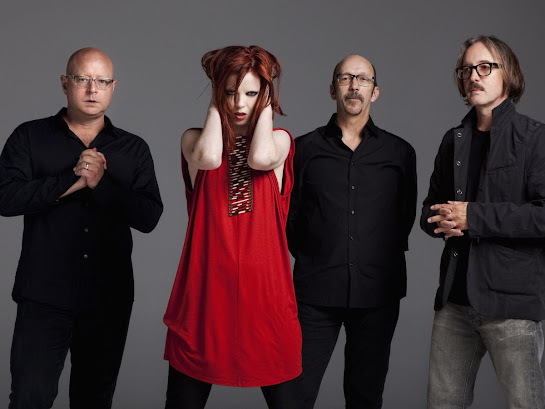
Unveiling the new model of a machine that made its debut three years prior, alternative rock outfit Garbage polished the raw grind of their hazy first album with the sparkling digital sheen of 1998 sophomore effort Version 2.0. Emerging from the eerie trip-hop and bleak grunge of the critically acclaimed, multi-platinum Garbage, the quartet expanded their vision, going into overdrive with a futuristic sound that blended their inspirations both classic (the Beach Boys, the Beatles, and the Pretenders) and contemporary (Björk, Portishead, and the Prodigy). While Garbage retained the sleaze and effortless cool of their debut -- hinted on early tracks "As Heaven Is Wide" and "A Stroke of Luck" -- they infused Version 2.0 with deeper electronic layering, improved hooks, and an intimate lyrical focus courtesy of iconic vocalist Shirley Manson, who seized her place as the face and voice of the band with authority and confidence. On the propulsive "When I Grow Up" and the bittersweet "Special," Garbage took cues from '60s girl groups with "sha-la-la"s and stacked vocal harmonies, grounding them with a delivery inspired by Chrissie Hynde. Elsewhere, the hard techno edges of Curve and Björk cut through the frustrated "Dumb" and the lusty "Sleep Together," while Depeche Mode's Wild West years received tribute on the stomping "Wicked Ways." Beyond the blistering hit singles "I Think I'm Paranoid" and "Push It," Version 2.0 is also home to Garbage's most tender and heartbreaking moments, from the pensive "Medication" to the trip-hop-indebted "The Trick Is to Keep Breathing" and "You Look So Fine." Balanced and taut, Version 2.0 is a greatest-hits collection packaged as a regular album, not only a peak in Garbage's catalog, but one of the definitive releases of the late '90s.  From: https://www.allmusic.com/album/version-20-mw0000032128
Creedence Clearwater Revival - Effigy


 #Creedence Clearwater Revival #roots rock #blues rock #country rock #swamp rock #classic rock #1960s #1970s

"Effigy," written by Creedence Clearwater Revival frontman John Fogerty, is the last track on the Willy and the Poor Boys album. This was the fourth studio album released and the third platinum album for CCR, riding the peak of their popularity in 1969. This song is a good example of the "roots rock" style that CCR helped to pioneer. While Bob Dylan is largely credited with starting the roots movement in 1966, only a handful of bands followed that lead, while the rest turned to folk, blues, or psychedelia. CCR fits into the niche within the country-influenced roots rock genre in between The Byrds, Tom Petty, Lynyrd Skynyrd, the Eagles, and of course The Flying Burrito Brothers. By sticking to the basics while everybody else was jumping on the experimentation bandwagon, they could be progressive and anachronistic at the same time.
Another thing that set CCR apart was the tight cohesion of the band members. While other groups swapped members between each other like so many kids playing Red Rover, CCR remained their own little island of Fogerty, Fogerty, Clifford, and Cook, with the only change being when Tom Fogerty split in 1971, after which they were down to a trio. Furthermore, they had considerable influence for a band that was only releasing albums together five years!
CCR drummer Doug Clifford said that this is a political song through and through. "It's pointing the finger at the Nixon administration when they were crumbling," he explained in Bad Moon Rising: The Unofficial History of Creedence Clearwater Revivial. "The dark period, if you will." An effigy is a model of an actual person that is made for the purpose of being destroyed as an act of protest or expression of anger. The "palace lawn" is referring to the lawn of the White House. In Fortunate Son: My Life, My Music, Fogerty affirms Nixon as the inspiration for his song, calling the former president "a schmuck." The specific event that triggered Fogerty to write the song happened October 15, 1969, when millions of people marched around the world to protest the Vietnam War. Nixon completely dismissed the event. As Fogerty remembers it, the former president said, "Nothing you do here today will have any effect on me. I'm going back inside to watch the football game." That dismissive attitude enraged Fogerty at the time and, judging from the writing in Fortunate Son, enrages him still.
From: https://www.songfacts.com/facts/creedence-clearwater-revival/effigy

KidneyThieves - In Love With a Machine


 #KidneyThieves #industrial rock #trip-hop #industrial metal #alternative/indie rock

KidneyThieves started in 1997, the union of two talented musicians: Free Dominguez (vocalist and occasional guitar) and Bruce Somers (multi-instrumentalist, programmer and sound engineer). Somers with his background of programming/engineering and collaborating with several notable bands such as Nine Inch Nails, Orgy, The Misfits and Marilyn Manson; Dominiguez bringing a trip-hop/hip-hop affinity, along with a sensual, melodious voice – a marriage of Nine Inch Nails-inspired industrial rock and trip-hop along the lines of Massive Attack. In Somer's words, the band is a combination of heavy and light to form a sound that is not quite one genre altogether and yet it stands on its own. Confused? Most are when they first listen to any of their music; one moment you will be listening to a decent noisy guitar riff with industrial layers, the next you will be listening to a whispered trip-hop track concerning forlorn thoughts — the muscles of grinding rock formed around the soul of downtempo.
Their latest album, ‘The Mend', is the conclusive result of their Kickstarter campaign launched in December 2015; by April 2016 they had reached their goal (it reached nearly double the initial goal) and the album was released in September of the same year. This approach is typical of KidneyThieves' ethics of DIY and being progressively eco-friendly (the album was recorded in a “green studio” and independently released). ‘The Mend' is a concept album revolving around the contemporary issues that were most prominent during 2015 and 2016 – the division and disconnection, the corrosion, the escalation of hate and general distrust – topics most directly reflected in track titles such as “Fist Up”, “In Love With A Machine” and “Let Freedom Ring”. The album also focuses on the notion of catharsis through healing and becoming whole again after a major upheaval, the systems we find ourselves locked into and finding a grand mending through each other via compassion and realising the worth of our struggles.
KidneyThieves are unique in that they prove that whilst industrial rock tends to be synonymous with nihilistic tendencies and self-destruction, KidneyThieves show more depth with a philosophical edge by focusing on abstract thoughts and psychological subjects, borrowing from Jung. They also demonstrate a range of skill by not getting too comfortable playing to one genre. The whole of ‘The Mend‘ presents itself as the next step in the band’s continuing journey with a message of hope. The noticeable absence of certain elements (such as the heavier guitars and more polish given to tracks) might make long-time fans reluctant but this is an album that remains a worthwhile listen. In the end this is what music ultimately means for us all: a form of sublime, unconditional catharsis.  From: https://nevermore-horror.com/kidneythieves-the-mend-2016-review/

Sunday, May 7, 2023

Queen - Live At The Rainbow 1974

Part 1

Part 2

#Queen #Freddie Mercury #Brian May #Roger Taylor #hard rock #glam rock #progressive rock #heavy metal #classic rock #1970s #live music video

Truly great stage presence is a rare gift for any band. Sure, some acts can get away with just standing around and playing their hits, but a really amazing concert experience requires that little extra something -- that indefinable spark of charisma and electric personality. That ability to reach out into the crowd and command an audience, fully connecting with every single fan no matter how large the venue is. Led by the unique musical charms of Freddie Mercury, Queen had that singular talent, turning every one of their performances into something special, and 'Live at the Rainbow '74' is no different. Featuring the band after the release of their first three albums, the show captures the group at the cusp of super stardom, revealing their early penchant for kinetic showmanship.
Filmed over two nights at the Rainbow Theater in North London in November 1974, the concert spotlights the band during their "Sheer Heart Attack Tour." The lineup consists of Brian May on lead guitar, John Deacon on bass, Roger Taylor on drums, and Freddie Mercury as the lead vocalist and pianist. Primarily made up of tracks from the group's first three albums, the songs carry a distinct mixture of styles, blending hard rock and progressive rock sensibilities with a more melodic and occasionally even operatic quality. With that said, these earlier records don't quite carry the same pop friendly stadium rock style that the band's later anthem hits ("We Will Rock You," "We Are the Champions") would become famous for.
After a brief intro following the band into the Rainbow Room, we quickly segue straight into the show. Opening with a rousing rendition of "Now I'm Here," we start in darkness only to have the lights kick on and off during key beats before finally bathing the stage in a warm glow as the band really kicks it into high gear. From there, we're treated to an energetic and varied view of the show, complete with close-ups, wide-shots, zooms, and frequent dissolves. Likewise, the lighting design keeps things interesting, washing the screen in moody oranges, greens, and blues, nicely complementing the tempos of each song. And what would a rock show be without smoke? Well, I'm not sure, but fret not! We get plenty of atmospheric fog.
Of course, Freddie Mercury is not one to be up-staged by mere lights and camera angles, and the legendary front-man commands the spotlight. First decked out in all white and then sporting a black ensemble complete with diamond claws (apparently a gift from the devil himself), the only thing louder than the singer's costume choices, is his voice. And wow, what a voice it is. With incredible range and seemingly effortless poise, Mercury carries us through the set-list without skipping a beat, infusing each note with deep emotion and charm. Likewise, the musician will playfully address the audience in between tracks to introduce new songs, maintaining a fun and intimate rapport with his fans. The rest of the band also get their moments to shine keeping things from becoming a one-man show, and we're treated to some fantastic drum and guitar solos as well.
Highlights include spirited performances of "Killer Queen" and "Keep Yourself Alive," and the band's climactic take on "In the Lap of the Gods… Revisited" is simply riveting. Really, there are no missteps throughout the entire production and each song is fully realized. Together, Mercury, May, Taylor, and Deacon create a truly engaging concert experience, using a little bit of rock star flash to enhance but not overpower their music. Instead, everything flows together perfectly, and each band member is firing on all cylinders, bringing the group's unique sound to life with a dynamic spark.  From: https://bluray.highdefdigest.com/12753/queenliveattherainbow74.html


Amanda Palmer - Want It Back


 #Amanda Palmer #ex-The Dresden Dolls #alternative rock #dark cabaret #dark folk #punk cabaret #singer-songwriter #music video

Last month it was announced that self-styled "punk cabaret" performer Amanda Palmer had managed to raise $1.2 million through crowd-sourcing site Kickstarter, with nearly 25,000 fans donating money to fund her forthcoming album Theatre Is Evil. To celebrate, she performed in a car park in Brooklyn wearing a dress made out of balloons, encouraging any of her fans with pins to come forward and slowly burst each balloon until she was left completely naked.
There's probably a metaphor in there somewhere relating to the open relationship Palmer has with her fans, but it also displays her willingness to bare all for her art. This feeling of being comfortable in her own skin can be seen in the stop-motion video for the excellent Want It Back, in which the lyrics to the song are scrawled on her body (bed sheets, walls and iPad). Talking about the making of the video, Palmer says: "I'm so comfortable being naked at this point that I almost forget. I’m also proud that that video has nudity, but it isn't sexual or erotic. it's using the body as a raw canvas, which I love."
Filmed by Australian director Jim Batt, it's a brilliantly intimate and anarchic representation of the song, the line "it doesn't matter if you want it back, you've given it away" made even more open and honest. Mind you, it could also refer to her no-refunds policy for fans who donated money.  From: https://www.theguardian.com/music/musicblog/2012/jul/09/amanda-palmer-want-it-back-video

This Friday, Amanda Palmer — the boob-showing, armpit-hair-wearing, theatre-loving cabaret-rock misfit who might be reinventing the music industry one tweet at a time — is coming to play a show in San Francisco. It's sold-the-fuck-out, of course (you can catch her again Sept. 26 at the Fillmore) but that shouldn't at all diminish your enjoyment of her excellent (and, coincidentally, NSFW) new video for “Want it Back.”
Here again we get Amanda in the nude, but not to especially erotic ends. Rather, her skin becomes a canvas for the beautifully scrawled lyrics of the song, which race over her chest, around her body, then down her leg and off to the walls of the room, someone's iPad, and a bunch of other places before returning to from whence they came, as Amanda herself turns black with ink. The concept is simple but totally arresting, with the type of the writing (and even some words) changing throughout, and the he whole thing working in a kind of bewildering stop-motion courtesy of editor/producer/director Jim Batt. Musically, Palmer's band, the Grand Theft Orchestra, is in full-on piano-rock mode, with a meaty arrangement of agile, ear-friendly pop. Palmer's voice is always a bit more growly than we remember; she's distinctive and evocative and powerful, although not sweet. All in all this is top-notch stuff — definitely worth that million-dollar Kickstarter campaign.  From: https://www.sfweekly.com/music/amanda-palmers-nsfw-want-it-back-video-the-naked-truth-is-not-necessarily-sexy/article_e89b909a-6068-5e4a-bbd3-2945de572db7.html