Saturday, May 6, 2023

Varttina - Laulutyttö


 #Varttina #Scandinavian folk #worldbeat #Finnish folk #world fusion #traditional #folk rock #contemporary folk #Finland

They are one of Finland's biggest musical exports but they could hardly be described as typically Finnish. They are, simply, Värttinä: musicians with a unique sound, with their feet firmly rooted in Finnish ground, in its language, culture and history, yet with the courage to develop over nearly two decades, something no-one else in the world has been able to copy.
Värttinä’s devoted and loyal fans all over the world may not all be Finnish speakers but they are intoxicated by the voices of Susan, Mari and Johanna, singers with the stage presence of a Wagnerian soprano, acting out roles from fishwives to lovers, while the guys lure the listeners with beguiling bouzouki, sax, accordion playing to die for, searing drums, guitar and bass.
Driving all this forward is the Finnish language itself, with its unique rhymes and rhythms, and spitting throaty sounds; words that launch themselves into the atmosphere and return several syllables later. Think of the pumping rhythms of Longfellow’s Hiawatha and you’re half way there.
For Värttinä it all began in the Finnish village of Rääkkylä in 1983 when a few mothers and grandmothers encouraged the children to sing and play some of the old songs from the Karelian region. Ancient stories once told with a simple accompaniment on the kantele (the Finnish zither-like instrument) suddenly woke up to find saxes, fiddles and guitars in their midst. This wasn’t important just for the birth of Värttinä but for the revival of Finnish folk music in general.
What emerged though wasn’t a folk band but, eventually, a ten-piece pop/rock style ensemble which established the formula of female voices at the front, boys at the back. Blessed by the no-nonsense and sometimes shocking lyrics of the ancient traditional sagas of blood, sweat and a lot of tears, the confrontational style of singing and song-writing won the music world over until the band was propelled into Finnish stardom in 1991.  From: https://realworldrecords.com/artists/varttina/

Thursday, April 27, 2023

DakhaBrakha - Live Music Hall Daile, Latvia 2015

Part 1


Part 2

#DakhaBrakha #folk #Ukrainian folk #world music #Eastern European folk #folk rock #cabaret #music video

DakhaBrakha has been on the frontlines of Ukraine’s cultural struggle against Russian domination for the past decade, reaching a global audience by infusing raucous traditional music from rural villages with a cosmopolitan mélange of instruments and influences. But the folk-punk quartet didn’t expect to find themselves literally under the gun last year, fleeing Kyiv as Russian troops tried to take the Ukrainian capital on Feb. 24. When shells started falling near the Kyiv airport, the musicians scattered as they sought safety, but by mid-March they’d reassembled in France for a series of solidarity concerts. Vocalist, percussionist and accordionist Iryna Kovalenko made her way to Hungary as the Russian army poured over the border, abandoning her car in a miles-long queue to cross the border. She eventually rejoined her husband and daughter in Seattle, where they had settled about six years ago.
“My wife and my two children are temporarily in France,” wrote Marko Halanevych in an email. Like his DakhaBrakha bandmates, he contributes on vocals and multiple instruments, including the goblet-drum darbuka, tabla, didgeridoo, accordion and trombone. Nina Garenetska, who plays cello and bass drum, is with her family in Lviv, “the western part of Ukraine, which is quite far from the front line,” Halanevych wrote. “But still, Russian missiles fly there from time to time.” Olena Tsybulska, who plays bass drums, percussion, and the button-accordion garmoshka, is with her family in Kyiv, “as well as the rest of the team,” Halanevych wrote. “However, we have relatives who live close to the frontline and even in the occupation.”
Now global ambassadors for a country fighting for its existence, DakhaBrakha hasn’t been able to perform at home since the invasion. Their audiences, particularly in Europe, increasingly include fellow Ukrainians displaced by the war who are eager for reminders of what they’ve left behind. “Often we met with them before or after the concerts, and we felt that these concerts were very important to them,” Halanevych wrote. “For some it is support, therapy. For some it is memories of home.” Supporting each other on the road the band has become a self-contained pod that manages to deliver walloping performances while keeping one eye on the news stream from home. They know they’re in an enviable position far from danger, but anxiety about loved ones serves as both fuel and a distraction.
“More than once I had to go on stage knowing that Russia fired about a hundred missiles,” Halanevych recalled. “Will all your relatives and friends survive these two hours? Being outside Ukraine, we are in constant contact with them, monitoring air alarms, battles at the front, and the needs of volunteers.” Marked by galloping rhythms, extended vocal harmonies, and striking instrumental textures, DakhaBrakha’s music has always evoked extreme emotions and situations. Responding to the conflict with Russia the group has added material directly inspired by the struggle, like the band’s 2018 requiem “Lament,” which is dedicated to all those who’ve died during the war. The women tend to perform with little visible expression, but the song “causes a wave of dramatic emotions,” he wrote. “It’s important for us that it is heard. There is also the composition ‘Boats,’ which is dedicated to all those who are currently defending our freedom, and to those who lend us their friendly shoulder.” American audiences have certainly been lending their eyes and ears as Ukrainian culture has become more visible in the U.S. than ever before. San Jose Jazz’s Winter Fest’s “Counterpoint With Ukraine” programing, which runs through March 3, features some of the Eastern European nation’s most acclaimed improvisers. And Dakh Daughters, an all-women music and theater project from Kyiv, present “Ukraine Fire” at Berkeley’s Freight & Salvage April 24.
Garenetska, DakhaBrakha’s cellist and vocalist, was a founding member of Dakh Daughters, and both ensembles grew out of Kyiv’s influential avant-garde Dakh Theater. She’s been too busy with DakhaBrakha to tour with the Daughters recently, but Garenetska made the Hollywood Palladium performance presented by Sean Penn last June that raised $1 million for Ukraine. Buoyed by enthusiastic audiences and words of support, they cherish their role in the struggle, knowing “that we are doing extremely important things for the victory of good over evil,” Halanevych wrote. “We believe that our concerts can influence public opinion, and civilized countries will be more willing and faster to help us with modern weapons.”
From: https://www.mercurynews.com/2023/02/28/after-fleeing-war-ukrainian-band-dakhabrakha-back-in-bay-area/

Cibo Matto - MFN


 #Cibo Matto #alternative rock #art rock #trip-hop #alternative pop rock #electronic #music video

From the start, it’s clear that Yuka Honda, one half of the New York City band Cibo Matto, doesn’t like to stay within the lines. When asked to name five albums that everyone should hear, she rattled off all of Stevie Wonder’s records, everything by Earth, Wind, and Fire, Sly Stone, all of the Beatles’ albums, John and Yoko, Talking Heads, all of Brian Eno’s stuff, and Antonio Carlos Jobin. When asked to offer up a simple description of Cibo Matto’s music, she shyly responded Oh. I don’t think I could do that.
Her unwillingness to accept boundaries is an excellent metaphor for Cibo Matto. When it comes to the group’s music, the keyword is fusion. From heavy metal to bossanova to hip-hop, Cibo Matto mixes everything to produce an eccentric recipe for sound.
Honda was born in Japan and came to the United States in 1987. She says her experience gives her a different perspective on making music. I am not only from Japan, but I lived in Europe for some time, Honda said during a phone interview. I have learned that although people have very different mind sets, they also have a lot in common. I don’t know why people like to categorize things between country and genre and like to put a border between things.
It was open-mindedness that eventually led her to form a musical union with another Japanese-born New Yorker, Miho Hatori. At first, Cibo Matto came together to play only one gig for fun. We were just really having fun, a lot of fun, and thinking we can just do whatever we want, Honda said. There was a lot more freedom to try out and be experimental for one gig.
A fan base started to form from Cibo Matto’s random performances and then led to a recording contract with Warner Brothers. Cibo Matto’s first album was released in early 1996. Entitled Viva! La Woman, the debut album conveyed what was on Honda’s and Hatori’s minds – food. Of the 11 songs on the album, 10 were about food. In fact, cibo matto is Italian for food madness. Viva! La Woman was highly innovative, built on the hip-hop loops produced by Honda’s extraordinary keyboard skills and Hatori’s vocal power.I started getting into hip-hop in 1986, Honda said. It was always very exciting, especially since I did computer music. I always try to build the song as much as I can. I look at it from different angles, but I don’t want to lose the live feel. I try to think about aspects of the music and realize as much as possible in every song.
Her openness to musical exploration paid off. Cibo Matto went on tour opening up for Beck, Luscious Jackson and other headliners. Viva! La Woman was named in Time magazine as one of the top 10 hip-hop albums of all time. As Cibo Matto grew more successful, new band mates joined to support the duo on the road. Sean Lennon was added on guitar and bass, and Timo Ellis and Duma Love on percussion. The group played at the Tibetan Freedom Concerts and opened the one in Chicago in June. Yuka thinks that the Tibetan Freedom concerts have brought together the most diverse of today’s artists. Cibo Matto is especially close with two groups that also call New York City home – the Beastie Boys and Luscious Jackson. We don’t help each other out in writing stuff, but we’re good friends, Honda said. We definitely have a sense of family in the music industry.
This past June marked the release of Cibo Matto’s second album, Stereotype A, which Honda produced. A more pop-oriented album, it shows that Cibo Matto is growing in leaps and bounds. Honda said a pop album should have something that sounds familiar, but also has to show you something new about it. Like most things, Honda had something to say about the title of the group’s latest release. People have a lot of stereotypes, she said. They are not used to women handling machines. If we have problems with the equipment, and we call a friend, they always want to talk to Sean first. Even if a producer walks in, they will always look to the man. People aren’t used to women pushing buttons and pulling strings.  From: https://www.gwhatchet.com/1999/11/18/cibo-matto-blends-variety-of-genres-to-produce-its-own-sound/

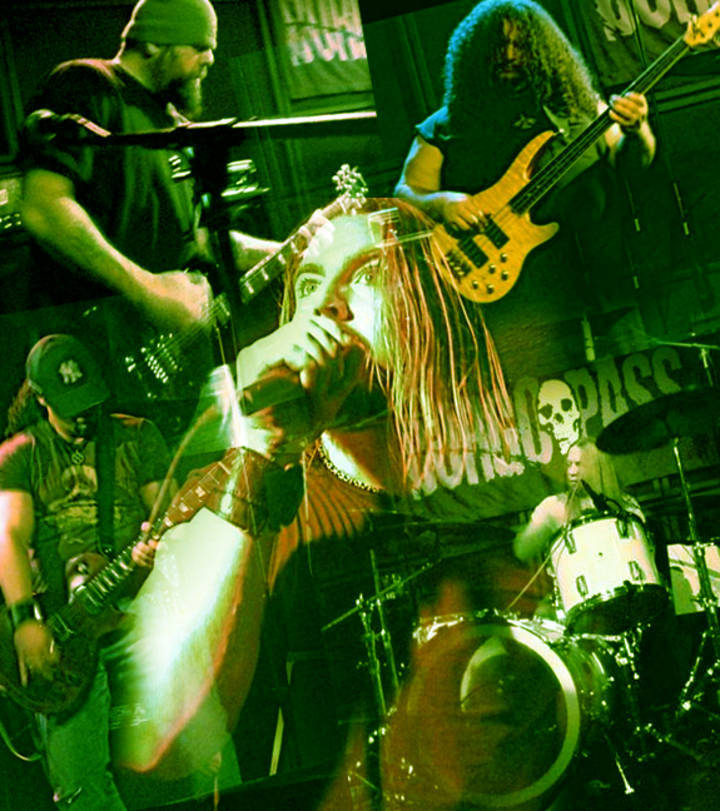
Borgo Pass - Burning Breath


 #Borgo Pass #heavy metal #sludge metal #hard rock #doom metal #retro-1970s #music video

An Interview with Borgo Pass

You five have been playing for a long time, since the 90’s right?

Tommy: You are correct. We’ve outlasted most marriages, and we’re catching up to the Rolling Stones.

Joe: Borgo Pass actually started as a Black Sabbath cover band in the 90’s. After several lineup changes and two CDs, this lineup of Borgo released our first CD in 2001. We’ve been going strong ever since.

Bet there have been a lot of ups and downs during the last couple decades. How have you managed to hang tight as a band?

Jimmy: We are all great friends, adults and respect the fact that we have created a Frankenstein that has stood the test of time. We still have fun and play a lot of relevant shows with the occasional national opening slot. It kinda never is a chore.

Paul: Ups and downs definitely sums up the past 20 plus years of Borgo Pass! I prefer to remember the ups, but it’s hard not to remember the downs. The disappointments and mistakes have been learning lessons and we have become a stronger band because of it. I believe that we have survived all of these years because of our love and respect for each other and our universal love of writing, playing and performing music. We literally have music in our veins and bleed Borgo Pass!

Tommy: Hell yea that’s just life in itself, but the ups most definitely outweigh the downs.

You state that Black Sabbath is one of your main influences. What do you think of the relatively recent revival of doom metal and stoner rock on a global scale?

Joe: Black Sabbath was the common denominator that brought the five of us together. We all have different influences, but Sabbath was the one band that we all agree had the strongest effect on us musically.
It’s refreshing to see the stoner-doom scene finally finding it’s place in the U.S. music scene. This scene was already catching on in Europe, but it’s past due to give these bands some recognition over here. In a small way, I kinda miss being able to check out, for example, Weedeater in a small club like CBGB and just chilling with 30 people enjoying the tunes. Now bands like Sleep are selling out every room they play!
With past festivals like the Stoner Hands Of Doom Fest, Emissions Fest, and now Eye Of The Stoned Goat and Psycho California, it’s great to finally see people coming in droves to hear some great bands! Just like Roadburn and DesertFest in Europe, people are supporting the U.S. scene like never before.

Jimmy: Black Sabbath for me is the battery of it all. it just doesn’t get more personal, original, or heavy. It’s almost like it’s magical, listening to Sabbath since I was a child. I think it’s a fresh revival of bands some really good and some trying too hard to play slow with a lack there of vocals and stage presence especially with the singers. That’s just me from what I have seen of the new breed of cadre. I mean, Ozzy was insane and the band looked as angry as a pitbull raging when they played. I like a newer band called Pallbearer from Arkansas, who have a great vibe and sound. I also still love DOWN and Corrosion of Conformity and Crowbar, as well, who have been carrying the baton for many years. I miss Type O Negative a lot.

Tommy: Black Sabbath is THE main reason we ever started this band, there are other reasons but Black Sabbath is number one! I’m happy to see a revival of doom and stoner rock, given all of the forced-fed crap that’s out there. It’s about time the people started thinking for themselves and actually enjoy real music with real emotion and raw feeling. I still like to listen to the heavy local acts.

What has been the biggest challenge in promoting Borgo Pass to new listeners in this brave new world of DIY marketing?

Jimmy: We have a unique, heavy sound with many elements. It’s been tough to sell it to the corporate establishment, as they want something cookie cutter. I call us very original and extremely marketable heavy music that could reach many different sub-genres of fans.

Tommy: God awful pop music is still our biggest enemy. That is our biggest challenge.

Speaking of the new listener, what song and album would you recommend a person start with if they want to get to know the band?

Jimmy: Our Deadwater album, starting with the first track: “Rotted Chain.”

Paul: If someone were to ask me what song or record of ours to listen to first, I would recommend listening to ‘Slightly Damaged’ (2002), our first recording with Jimmy on vocals and them listen to our following recordings, 'Nervosa’ (2005) and then 'Deadwater’ (2011) so that the listener can hear how we’ve grown and matured as song writers over the years.

From: https://doomedandstoned.com/post/119706967253/borgopass

Maximum the Hormone - A-L-I-E-N


 #Maximum the Hormone #metalcore #alternative metal #hardcore punk #alternative metal #nu metal #experimental #Japanese #music video

Maximum the Hormone is a Japanese band which derives influence from Punk Rock, Funk, Rock, Pop, Metal, Anime, Manga and Japanese popular culture with lashings of sex. They are not a "comedy" band, but many of their songs, like "Bikini Sports Ponchin", "Chuu Chuu Lovely Muni Muni Mura Mura Purin Purin Boron Nururu Rero Rero" and "(Cutter Knife Dosu Kiri) Honjou Hasami" have pretty damn funny lyrics when contrasted with the upbeat tunes of the songs.
The band are probably best known for their songs "What's Up, People?!" and "Zetsubou Billy", which are the second opening and closing themes of the Death Note anime, and are generally harder-edged and less hilariously perverted than most of their material. It's worth noting that they're also pretty successful in their home country, their latest album being in the top 20 best selling albums of 2013 in Japan.
Their music contains examples of:
Avant-Garde Metal: Genres will get mashed up with impunity.
Death by Music Video: There are two songs that became part of Death Note Anime OST, which were the second opening and ending for the anime version: What's up, people? and Zetsubou Billy. In the videoclip of the latter is shown a lot of kind of Japanese bands and soloists, since Visual Kei to an Idol Singer, all of them dying one by one because of the Death Note written by a mysterious person behind the TV (assumed to be Kira) only to left the real MTH playing the instruments left by the Visual Kei band that recently died.
Digital Piracy Is Evil: Somewhat inverted: the lyric "Stop, stop Winny upload" refers to the old p2p service Winny (comparable to Napster), but when asked in an interview about using such an old reference, the lead singer mentioned that he wanted to have a catchy “Stop” phrase where other stuff like “Stop Nukes” could be replaced. Knowing their self-referential humor and love of playing with expectations.
Dissonant Serenity
Funk Metal: Driving slap bass taken up to eleven just sounds like Funk, especially in the hands of their bassist.
Genre Mashup: They combine and cross genres more-or-less when they feel like it. Few other J-rock bands have achieved the same level of Genre-Busting, the notable examples being Dir en grey and Melt-Banana.
Gratuitous English: "Koi no Mega Lover" - just from the title you can hear this making its insidious presence felt. Their name itself doesn't make grammatical sense either, does it?
Hardcore Punk: Had their roots in this.
Iconic Outfit/Iconic Item: Ryo's toilet sandals of VIC, which he wears almost all the time. It influenced the track "Benjo Sandal Dance", which is about his habit of wearing those sandals.
Indecipherable Lyrics: The screaming and the Motor Mouth lyrics make it very hard to understand a word.
Japanese Delinquents: Mentioned in "Chuu 2: The Beam" ("8th Grade: The Beam" in English). Mentions how grade school punks are known to hang around the mini amusement park areas on the rooftops of stores that are somewhat common in Japan.
Long Title: They have garnered quite a few over the years, "Rei Rei Rei Rei Rei Rei Rei Rei Ma Ma Ma Ma Ma Ma Ma Ma" and "Chuu Chuu Lovely Muni Muni Mura Mura Purin Purin Boron Nururu Rero Rero" in particular being major offenders.
Lyrical Dissonance: "Chuu Chuu Lovely Muni Muni Mura Mura Purin Purin Boron Nururu Rero Rero" sounds catchy and upbeat, but the lyrics themselves are all about sex and violence. "Koi no Sperm" is set to the catchiest, cheeriest tune one could imagine. You're guaranteed to have "Sperma... Oh, Sperma... Oh Sperma!" stuck in your head at some point. "My Girl" from the Greatest the Hits EP is a (mostly) upbeat Nu-metal track (with shades of 80s glam rock/metal). If you didn't know Japanese, you'd be forgiven for thinking it was a lighthearted song about a relationship. It's actually incredibly dirty and about how much they love pussy.
Metal Scream: Daisuke provides some very impressively ranged harsh vocals. Luckily for him, Ryo takes charge of the clean vocals, so his larynx probably isn't completely stripped out.
Motor Mouth: The lyricism is delivered so fast, it's hard to understand anything. Sometimes you might even mistake the language!
Nu Metal: Cited Korn as an influence and mixed clean, harsh and rapping vocals. Not your typical Nu Metal band, though, it's safe to say.
Self-Titled Album: Or to be accurate, Self-Titled Song. The eponymous song "Maximum the Hormone" was first released in their "Greatest the Hits" EP in 2011, before being in the "Yoshu Fukushu" album in 2013. The band would eventually release a direct sequel to the song in 2018, albeit with a subtitle.
The Smurfette Principle: Nao is the only female member of the band. She is also the oldest member, pushing 45 at the time of this writing.
Soprano and Gravel: Nao, who sings clean female vocals, represents soprano. Daisuke is responsible for screams, therefore representing gravel. Finally, Ryo is middle ground between those two - he provides singing, but also some screams himself.
Surprisingly Gentle Song/Fake-Out Opening: Parodied with "Chiisana Kimi no Te" (Your Little Hands), a pop rock song that plays at the beginning of the music video for their self-titled song, "Maximum the Hormone". The song seems to end abruptly, after which Ryo is seen vomiting on the TV screen that showed the video for the previous song, leading into the actual song.
Visual Kei: Invoked in the video for "Zetsubou Billy", which depicts a Stylistic Suck Visual band, among other Stylistic Suck takes on other music subcultures.
Vocal Tag Team: A big part of their sound is the constant alternating between Daisuke's rap/screamed vocals, Ryo-kun's middle ground cleans (although he does scream quite a bit as well) and Nao's fully clean, pop-esque style.
While he very rarely sings lead, Ue-chan usually contributes backing vocals. In live performances especially, he frequently fills in for harmony parts, whenever Ryo-kun or Nao would have overdubbed their own backing vocals on the album.
Vulgar Humor: Pretty much their schtick most of the time.
From: https://tvtropes.org/pmwiki/pmwiki.php/Music/MaximumTheHormone


Ike & Tina Turner - Whole Lotta Love


 #Ike & Tina Turner #soul #R&B #funk #blues #funk rock #rock & roll #1960s #1970s #Led Zeppelin cover

As husband and wife, Ike & Tina Turner headed up one of the most potent live acts on the R&B circuit during the '60s and early '70s. Guitarist and bandleader Ike kept his ensemble tight and well-drilled while throwing in his own distinctively twangy plucking; lead vocalist Tina was a ferocious whirlwind of power and energy, a raw sexual dynamo who was impossible to contain when she hit the stage, leading some critics to call her the first female singer to embody the true spirit of rock & roll. In their prime, the Ike & Tina Turner Revue specialized in a hard-driving, funked-up hybrid of soul and rock that, in its best moments, rose to a visceral frenzy that few R&B acts of any era could hope to match. Effusively praised by white rock luminaries like the Rolling Stones and Janis Joplin, Tina was unquestionably the star of the show, with a hugely powerful, raspy voice that ranks among the all-time soul greats. For all their concert presence, the Turners sometimes had problems translating their strong points to record; they cut singles for an endless succession of large and small independent labels throughout their career, and suffered from a shortage of the strong original material that artists with more stable homes (Motown, Atlantic, Stax, etc.) often enjoyed. The couple's well-documented marital difficulties (a mild way of describing Ike's violent, drug-fueled cruelty) eventually dissolved their partnership in the mid-'70s. Tina, of course, went on to become an icon and a symbol of survival after the resurgence of her solo career in the '80s, but it was the years she spent with Ike that made the purely musical part of her legend.  From: https://www.allmusic.com/artist/ike-tina-turner-mn0000094224/biography

Mouth - Parade


 #Mouth #progressive rock #psychedelic rock #krautrock #hard rock #retro-1970s #German

Mouth were formed in Cologne in 2000 as a trio, comprised of Christian Koller (vocals, guitars, keyboards), Jan Wendeler (bass, bass synth) and Nick Mavridis (drums, backing vocals, keyboards). The band's style is a blend of 'golden era' progressive rock - with influential names such as Yes, Genesis, Gentle Giant, Soft Machine, Hatfield & The North - as well as classic rock/hard rock and prog related names old and new: Led Zeppelin, The Who, David Bowie, T. Rex and Fish. Indeed, this is often cited as a mixture of retro prog, krautrock, hard rock, psych and glam rock - all together it fuses into a unique spleen, often underlined with dystopian themes.
In 2007 they were offered to record an album, and their debut 'Rhizome', released for Bluenoise label, saw the light of the day two years later. Nearly at the same time Nick Mavridis left the band and was substituted by Thomas Ahlers until Mavridis re-entered the crew in 2010. Jan Wendler left in 2012 and Gerald Kirsch joined as the new bass player in 2013. During the next years the band recorded a lot of songs, with the result being the albums 'Vortex' (2016) and 'Floating' (2018), both highly acclaimed productions showing way more kraut and psychedelic rock attitude. After the death of Gerald Kirsch in 2018 the band went on a short hiatus, then announced Thomas Johnen as a new member in March 2019. Their live comeback was at the Krach Am Bach Festival. Containing new and previously unreleased material, a further EP is planned for late Summer 2019.  From: https://www.progarchives.com/artist.asp?id=5194