Wednesday, March 22, 2023

Otyken - Storm


 #Otyken #Siberian folk #Siberian indigenous music #traditional #world music #folk rock #throat singing #tribal drumming #music video

A group of aboriginal Siberian taiga people makes its way across a frozen river. The sky is gray and the wind is growing stronger: a storm is coming. They unpack their gear, pull out large drums and proceed to pummel them. “Are you going east?” A girl in a colorful indigenous outfit and long black hair wails. “Then be careful!” This is followed by a song that can best be categorized as ethnic rock: there is throat singing, a keyboard sampler imitating an electric guitar, drumming and dancing. Also making it into the picture is a bass guitar-looking instrument made out of something that looks like the skull of a large animal - and you’ll find that that’s exactly what it is. This is Otyken and this is how the video for their track ‘Storm’ begins. The band members are all indigenous Siberians who hail from the Krasnoyarsk Region, in the heart of the Russian North. Otyken was founded in 2019 and is the brainchild of Andrey Medonos, director of the local museum of ethnography. Their style is a mixture of rock, R&B and tribal electronica, complete with throat singing. They perform in three languages - Chulym, Khakassian and Russian. All the band members are representatives of the Chulym, Ket and Selkup ethnic groups. And all hail from tiny villages in the remote taiga - no coffee shops, pharmacies or even electricity. The name ‘Otyken’ comes from the turkic word meaning the “holy place where warriors laid down their arms and held talks”. According to Medonos, Otyken gained popularity thanks to foreign tourists interested in Siberian life. South and North Americans and Canadians are frequent visitors, often looking for parallels with their own cultures. At first, Otyken had a more authentic and traditional sound, but, in order to increase their reach, the band began introducing outside elements. The costumes were improvised, as well - they’re not really true replicas, but more of a mixture of traditional and modern elements. You’ll often see animal hides, feathers and modern elements all rolled into one. As for the instruments, the same principle of embellishment applies. “The most unusual instrument we have is the morin khuur [a Mongolian string instrument] made from a horse’s skull. We have other instruments and outfits as well: maracas, horns…” says Tsveta, who plays the Jaw harp.  From: https://www.rbth.com/arts/335614-otyken-siberian-indigenous-band

Led Zeppelin - Poor Tom


 #Led Zeppelin #Jimmy Page #Robert Plant #hard rock #blues rock #folk rock #heavy metal #folk metal #heavy blues rock #1970s #music video

Led Zeppelin’s Poor Tom was composed in 1970 by vocalist Robert Plant and guitarist Jimmy Page when they were staying at Bron-Yr-Aur, a small cottage in Wales, and was recorded at Olympic Studios on 6 May 1970. The song was left off the album Led Zeppelin III but was eventually included on the band's album Coda, released in 1982 two years after the death of drummer John Bonham, having been produced by Page at his newly-acquired Sol Studios. Although the lyrics can be difficult to decipher, the song appears to be about a hard working labourer on the Mississippi River named Tom who does away with his unfaithful wife Ellie May. Tom may also be psychic, as the lines 'Poor Tom, seventh son/Always knew what was goin' on' can be interpreted as a reference to the folk belief that seventh sons of seventh sons were clairvoyant. The title may have come from Charles Kingsley's The Water Babies. In the story, a poor chimneysweep called Tom falls into a bedroom owned by Miss Ellie, who is dying. Tom is accused of being a thief and subsequently drowns in a river after being pursued. This song seems to be a variation on the theme of Robert Wilkins' That's No Way To Get Along, recorded in 1929, which was covered by The Rolling Stones for their 1968 Beggar's Banquet album, under the title Prodigal Son. The music for Zep's Poor Tom also bears resemblance to a track recorded in the 1960's called She Likes It, by Owen Hand, who was allegedly a friend of Bert Jansch's.  From: https://en.citizendium.org/wiki/Poor_Tom

Here's a tale of Tom
Who worked the railroads long
His wife would cook his meal
As he would change the wheel

Poor Tom, seventh son,
Always knew what's goin' on
Ain't a thing that you can hide from Tom
There ain't nothing that you can hide from Tom

Worked for thirty years
Sharing hopes and fears
Dreamin' of the day
He could turn and say

Poor Tom, work's done,
Been lazin' out in the noonday sun
Ain't a thing that you can hide from Tom

His wife was Annie Mae
With any man a game she'd play
When Tom was out of town
She couldn't keep her dress down

Poor Tom, seventh son,
Always knew what's goin' on
Ain't a thing that you can hide from Tom

And so it was one day
People got to Annie Mae
Tom stood, a gun in his hand
And stopped her runnin' around

Poor Tom, seventh son,
Gotta die for what you've done
All those years of work are thrown away
To ease your mind is that all you can say?
But what about that grandson on your knee?
Them railroad songs, Tom would sing to me

I Draw Slow - Apocalypso


 #I Draw Slow #folk #contemporary folk #Americana #roots music #contemporary bluegrass #Irish 

I Draw Slow is an Irish folk/Americana band that bridges the gap between Dublin and Nashville with exceptional picking and singing and a deep love for American roots music. Citing influences like Doc Watson, Joni Mitchell, the Carter Family, Neil Young, and Hank Williams, the group was founded in 2008 around the talents of Adrian Hart (fiddle), Colin Derham (claw hammer banjo), Konrad Liddy (double bass), and siblings Dave (guitar and vocals) and Louise Holden (vocals). Employing a compelling blend of bluegrass, Appalachian folk, old-timey country, and Americana, the group released their acclaimed debut album, Redhills on Pinecastle in 2011. They tapped veteran Irish producer Brian Masterson (the Chieftains, Van Morrison, Norah Jones) to helm their sophomore outing, 2014's similarly well-received White Wave Chapel, and in 2017, they inked a deal with Compass Records and released their third studio long-player, Turn Your Face to the Sun. 2020 saw the band retreat into isolation due to the COVID-19 pandemic. Healing from that shared trauma was at the core of the group's eponymous fourth long-player. Released in 2022, I Draw Slow looked inward and introduced new sonic elements into the group's rootsy sound, including retro-pop, jazz, and ambient soundscapes.  From: https://www.allmusic.com/artist/i-draw-slow-mn0003232529/biography

Tomorrow - Revolution


 #Tomorrow #Steve Howe #psychedelic rock #British psychedelia #psychedelic pop rock #1960s

Writing this from a cafe (since PG&E has shut down the power for the weekend), I head back through the decades for one of my favorite eras/genres, the late 60s British psychedelic scene.  Tomorrow weren't exactly a huge seller at the time, and are probably best remembered for (a) the killer single "My White Bicycle," a perennial Nuggets-type compilation mainstay, and (b) guitarist Steve Howe, who left afterwards to join Yes.  But the album is actually pretty great, a mix of heavier psychedelia and lighter, more twee, very British pop. Again, "Bicycle" is the keeper here, a delirious psychedelic rocker with a killer guitar hook and all manner of studio playfulness.  But it's joined by some other winners, among them the silly but amusing "Three Jolly Little Dwarfs," the even lighter but almost Ray Davies-infused "Auntie Mary's Dress Shop," the cool guitar riffs of the more complex "Claramount Lake" and "Real Life Permanent Dream," and the trippy, goofy acid rock of "Revolution" (no, not a Beatles cover).  Not to mention a pretty straight and superfluous but still decent version of "Strawberry Fields Forever" (yes, a Beatles cover). The CD version of the album (and the version that streams on Spotify) adds a bunch of bonus tracks, including a few solo tracks from singer Keith West and, most notably, the absolutely bonkers single "10,000 Words In A Cardboard Box," recorded by a couple members of the band performing as The Aquarian Age; it's one of the best (and most underappreciated) examples of psychedelic pop, right up there with Status Quo's "Pictures of Matchstick Men."  From: https://www.jitterywhiteguymusic.com/2019/10/tomorrow-tomorrow-1968.html

Renaissance - A Song For All Seasons


 #Renaissance #Annie Haslam #progressive rock #British progressive rock #symphonic prog #classical #orchestral #1970s

The 1978 Renaissance album ‘A Song for All Seasons’ is the ideal entry point for showcasing the individual talents and collective chemistry of the band. Underpinning the whole piece is the glorious, soaring, five-octave ranged voice of protean singer and artist, Annie Haslam. In a decade replete with stunning female vocalists, Haslam can stand shoulder-to-shoulder with anyone, using her voice with the precision of a surgeon using a scalpel, yet maintaining the searing beauty in her delivery.
Haslam’s vocal talent notwithstanding, Renaissance are an accomplished collective of musicians. A Song for all Seasons boasts the considerable keyboard talents of John Tout. A classical pianist by inclination, his distinctive, layered style provides a crucial backdrop over which Haslam’s precision vocals can truly be enjoyed. With John Camp and Michael Dunford providing an intricate and layered guitar sound, and Terry Sullivan on drums, this album sees the recognized classic line up for Renaissance (if such a thing truly exists in a band with such a fluid membership).
The album itself is, therefore, an accumulation of collaborations, with the band calling on the production talents of erstwhile Genesis producer, David Hentschel and orchestral arrangements arranged by the Royal Philharmonic Orchestra’s Harry Rabinowitz. All of these diverse musical elements are encapsulated in the spectacular opening track ‘Opening Out’, a piece which actually prefaces the direction of the album. Tout’s classical piano is eschewed in favour of intricate synthesisers, there is considerable orchestration and, of course, Haslam’s vocal prowess.
The rest of the album is a concoction of musical styles. ‘Day of the Dreamer’ and ‘Kindness (at the end)’ are clearly heavily rooted in progressive rock and would not have been out of place on an album released 5 years earlier. Despite this fused style the album manages to maintain an internal coherence. The acoustic-folk of ‘Closer than Yesterday’ sits comfortably alongside accessible tunes such as ‘Back Home Once Again’. The eponymous ‘A Song for All Seasons’ nicely rounds the original album off and provides a welcome reprise of their genuine prog credentials.  From: https://wearecult.rocks/renaissance-a-song-for-all-seasons-3cd-reviewed

Peter Green's Fleetwood Mac - One Sunny Day


 #Fleetwood Mac #Peter Green #Mick Fleetwood #John McVie #blues rock #British blues revival #heavy blues rock #psychedelic blues rock #1960s

Their third LP, 1969's Then Play On, was Fleetwood Mac's first masterpiece, building on their beloved blues with edgier guitar tones, expanded arrangements and elements of folk, art-rock and psychedelia. There was plenty of space to get heavy, and a prime example is "One Sunny Day": Over Fleetwood's steadily thudding toms, Green and Danny Kirwan intertwine distorted, descending riffs and high, piercing melodies — even, at times, dipping their collective toe into the proto-metal pool.  From: https://ultimateclassicrock.com/heaviest-fleetwood-mac-songs/

I don’t want to rock the boat, but to me Fleetwood Mac never meant Stevie Nicks, Lindsey Buckingham or the tedious media fascinations with the band members’ relationship conflicts. To me, Fleetwood Mac meant one thing: Then Play On – one of the greatest blues-rock records ever made. Then Play On was the group’s third album, released on the Reprise label in 1969. This gatefold record is hard evidence of Fleetwood Mac’s growth from an excellent blues band to a blues-based act that defied description. The group at this point featured Peter Green and Danny Kirwan, each on guitar and vocals, Jeremy Spencer (whose only contribution here is piano on “Oh Well”), and the world-class rhythm section of bassist John McVie and drummer Mick Fleetwood.
I’m impressed by how Then Play On prioritizes what I assume Fleetwood Mac wanted to show of themselves: their ability to create both taut, vocal-led tracks and stunning instrumental workouts. Sure, Fleetwood Mac and Rumours are great albums that served up anthems for an era, but I can usually hear select cuts from those records while waiting at my bank machine, or at the grocery store. On the other hand, when I want to hear brilliant blues rock that never compromises and demands to be heard, I put Then Play On on my turntable and play it loud.  From: https://www.guitarplayer.com/players/why-fleetwood-macs-then-play-on-is-one-of-the-greatest-blues-rock-albums-ever-made


Laura Love - I Am Wondering


 #Laura Love #folk #Afro-Celtic #Americana #Afro-Carribean #folk pop #funk #R&B #world music #singer-songwriter

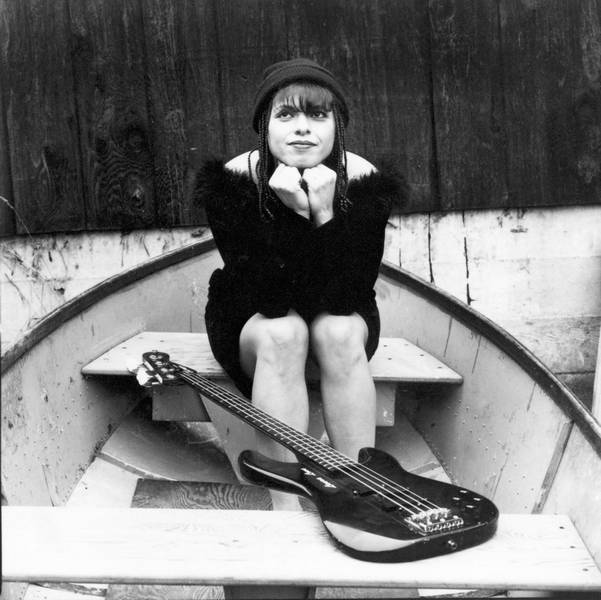
Laura Love's restless, musically adventurous spirit has carried her in a remarkable array of directions. A bass player with a unique vocal style, Love has performed everything from grunge to jazz to bluegrass. She has covered songs as diverse as Hank Williams' I'm So Lonesome I Could Cry, Jackie DeShannon's Put a Little Love in Your Heart, and Kurt Cobain's Come As You Are. Most remarkably, she has melded her own funky, folky genre from African and Caribbean rhythms, Irish melodies, and R&B. She calls it Afro/Celtic. "Love has a powerful raspy voice not unlike Toni Childs, and she uses it to full advantage — howling , crooning, and even yodeling," Lahri Bond wrote in Dirty Linen magazine. "These tunes usually have spiritual underpinnings that give Love's lyrics a simplicity with a lot of depth. Love often strings together 'nonsense' words that serve as rhythmic connecting devices similar to scatting or African chant."
With self-deprecating wit, the singer described her sound to Billboard as "more like confusion than fusion. I don't really devour a lot of music, but I hear snippets here and there at festivals without meaning to. Some of it just sinks in — the really emotionally grabbing stuff — and sticks with me. But I've always loved Appalachian — the high lonesome, bluegrassy, mournful, minor-key white soul music — and I love black soul music. Time magazine music critic Christopher Farley has described Love as more traditionally folky than musically exotic, believing that Love could be a descendent of Joni Mitchell, and her songs address typical coffeehouse subject matter. "Love has a voice rich with dark shadings and rural twang," Farley wrote. "She calls her music Afro/Celtic, but it's mostly front-porch folk with a few twists."
Love made her jazz-singing debut for a "captive audience" at a penitentiary in her home state of Nebraska in the early 1980s. She was 16 years old. Later, she developed a following in the Seattle music scene, where she played grunge rock in the early years of her career. Eventually, Love found — or, more accurately, created — her own niche. "The Afro-Celtic label doesn't communicate the full flavor of Love's songs," Nelson George wrote in Playboy. "Her songs have bright, lilting melodies that contrast nicely with lyrics that focus on poverty and pain. But Love isn't as heavy-voiced or didactic as Tracy Chapman. Her vocals are lighter, higher-pitched, and less guarded than those of her fellow pop-folkie. As pained and bitter as the songs are, Love suggests there's room for optimism."  From:https://musicianguide.com/biographies/1608000914/Laura-Love.html