Saturday, July 26, 2025

Gary Wright - Dream Weaver - Midnight Special 1976


If you’re of a certain age, the Sunday night of September 9th, 1956 is seared indelibly upon your memory, because it’s the night Elvis Presley first appeared on CBS Television’s The Ed Sullivan Show before 60 million viewers, changing your young life forever. If you’re of a younger age, the Sunday night of February 9, 1964 is the one you’ll never forget, because it’s the night The Beatles first appeared on CBS Television’s The Ed Sullivan Show before 63 million viewers, changing your young life forever.
But if you’re my age—which is to say you were born at the tail end of the Baby Boom—the Saturday morning (and by that I mean 1 AM) of April 9, 1976 is the moment that changed everything forever, because it’s the night Gary Wright appeared on CBS Television’s The Midnight Special. And just as was the case with Elvis and The Beatles, I wasn’t the only kid who would never be the same.
I would guesstimate that there were sixty-three other kids across the country who watched in awe as Wright, the American keyboardist who made his name in the English band Spooky Tooth, played his smash single “Dream Weaver” before cavorting across the stage with his portable keyboard as he “rocked out” to his other smash single “Love Is Alive.” And I would venture that all sixty-four of us wanted keyboards we could wear around our necks. Gary didn’t play a keytar that life-altering night but he was a keytar pioneer, and had he been playing one I dare say we’d all have gone out of our little minds.
I knew a visionary when I saw one. I may not have known that Wright had befriended and absorbed the Eastern religion of former Beatle George Harrison after playing keyboards on Harrison’s 1970 triple album All Things Must Pass, but you didn’t have to be a holy man to realize Gary was a sublimely spiritual being, one who had pierced the veil of Maya through means of pure keyboard karma. I too wanted to hop aboard the Dream Weaver train. I too wanted my very own astral plane. That wasn’t Gary Wright on stage that night—it was an avatar of Krishna. He wasn’t playing music—he was preaching an escape from samsara rebirth to the masses.
Like Krishna, Wright was a charioteer, and his chariot, of course, was 1975’s The Dream Weaver. One night Krishna appeared to Wright in a dream, wearing pretty much the same white suit with celestial necklace Wright wore on The Midnight Special, to say, “You will spread bliss by producing a very special album, an album that will transport its faithful adepts to the supreme abode of the all-pervading.” He added, “It would be really cool if you used only that holiest of holy instruments, the keyboard. Although I guess real drummers would be okay. And I wouldn’t object if you were to bring in Ronnie Montrose to play guitar on track five. It’s a real rocker.”
And who argues with the eighth avatar of Vishnu? Nobody who doesn’t want to answer to Hanuman, the shape-shifting monkey god and commander of his very own monkey army, and who served informally as Vishnu’s consigliere! Gary immediately set to work, in his native New Jersey of all places, on the songs that would make up the third, and most bliss-inducing, of his solo albums.
When I say The Dream Weaver was produced using mostly keyboards, I’m not implying that Gary was a one-man keyboards band. No, Wright’s band included two additional keyboardists, David Foster and Bobby Lyle. Three keyboardists! The album’s lousy with ‘em! And while all the keyboards leave the LP with this Space Age meets New Age aura, it doesn’t have an iota of Wendy Carlos in it. Wright’s a rocker at heart and a pop songwriter by trade and the results are what Robert Christgau, writing about another one of Wright’s solo LPs, once (dismissively for the most part) dubbed “cosmic-commercial.” Like his mentor George O’Hara (Google him!) Wright had one foot firmly planted in the spiritual world and the other in the material world, and maya or no maya, a gold record is a gold record.  From: https://www.thevinyldistrict.com/storefront/graded-on-a-curve-gary-wright-the-dream-weaver/

Birdeatsbaby - Deathbed Confession


Having walked the high wire between punk and prog for nine years, Birdeatsbaby have foregrounded their progressive leanings while retaining a punk ethos on fourth album Tanta Furia. “In the beginning it was a punk cabaret kind of thing,” explains singer and pianist Mishkin Fitzgerald. “Quite theatrical and not very heavy, but as the band has progressed it’s got bigger, better, heavier, darker. I now feel we’re close to creating that perfect sound that I’ve been looking for the whole time. It’s definitely progressive but it’s also classical, punk rock, goth and I like it that way,” she says, citing Muse and Queen as key influences.
The Brighton four-piece, completed by Hana Maria on violin and vocals, Garry Mitchell on bass and guitar and Forbes Coleman on drums and vocals, also showcase multi-layered string arrangements in their music, adding to their unique sound. “We’ve got two violins, cello and double bass. I’m a sucker for strings so having Hana, this virtuoso violinist, in the band is incredible.”
A gospel choir (The Dulcet Tones) appear on two tracks on the new album, including the politically charged Mary, which Fitzgerald describes as “basically the ‘Hail Mary’, but with all the words changed”. In the accompanying video she stars as an authoritarian preacher. “It’s about feminism and religion,” she explains. “The Church has abused its power over the years to oppress women so we’re taking the prayer back. I was brought up very much in the Church. I would sing hymns and play organ and piano there so a lot of my early writing influences came from hymns. Then, much to the disappointment of my parents, I went to study music in Brighton but secretly I was just forming a band.”
Third album The Bullet Within was Kickstarter funded in 2013 to the tune of £11,000 by fans (who are affectionately dubbed ‘The Flock’ by the band) who continue to bankroll ventures on a subscription basis. Fitzgerald reveals just what that means to a fledgeling outfit attempting to fly the nest. “Now we’re using Patreon. We’ve got a really strong group of superfans helping us with our touring and production costs and every expense that comes from being a DIY band. We have all the control, all the freedom. If we want to put out a metal album next time, we can. We’ve recently covered Tool’s Sober, which we’re going to put out – one of my favourite songs of all time. We don’t have to answer to anyone and that’s just beautiful.”
The devotion of The Flock has already paid for European and US tours, as well as a Mishkin Fitzgerald solo show in Mexico City, where the fans were plentiful. “I’ve never seen so many people know about our music,” the singer muses. “It was just weird in a really cool way. We’re going to do another American tour next year and go down to Mexico. It’s why we named our album Tanta Furia as well, a little nod to our Mexican fans.”  From: https://www.loudersound.com/features/introducing-prog-punkers-birdeatsbaby

Crosby, Stills & Nash - Helplessly Hoping


This song is about two young lovers. I'd venture that it's a romance built largely around the wordplay in the lyrics.

"Helplessly hoping..." this is a series of alliterations built first on "H" and then on "W," and "G". In the Italian Commedia dell'arte theater tradition, "Harlequin" was the name given to a clown/mime figure who was also usually the young male romantic lead. This stanza is a portrait of a confused (and like the original "Harlequin", speechless) young man who is attracted (as so many of us are) to an elusive lover that is leaving ("sound of goodbye").

"Wordlessly waiting..." this is alliterations again, this time with the W first, and then the H. Now that his lover is gone, he pines and misses her. But has she really left? He doesn't know if his love interest is entering or leaving his life ("hello" or "goodbye").

"Stand by the stairway..." is new set of alliterations, this time "S", "C" and "L". This is the love interest, the Columbine to the Harlequin, an equally confused young lady who is trying to leave, but instead "lingers" feeling "lost." She is drawn to a love connection, but she is "choking" on admitting it.

"They are 1 person..." There's a different word game in the chorus. Each number after the first one is a pun. You should read this as:

They are one person
They are too alone
They are free together
They are for each other

As with many songs, the chorus answers the questions and resolves the confusions of the verses. The lovers may not know if they are destined for each other, but the chorus confirms their pre-ordained love. They are "one person" --that's possibly an allusion to (pseudo) Aristophanes's myth that soulmates are two halves of the same person, from Plato's Symposium. They are lonely, they bring each other freedom, and finally, they are "for each other."

This song was written by Steven Stills. It was written when he was trying to make ends meet as a session musician, before he became a superstar. The woman in the song he is writing about is Judy Collins, who he met and fell in love with working as a session musician. She was a huge star at the time, as big as you could get in the folk music scene in 1968. He was not, as the band he belonged to had just broken up. Anyways, they did start a relationship, and she already had a son who Steven adored. I believe thats where the "3 together" line comes in. So, as this goes on, Judy meets actor Stacy Keach, who also gets along extremely well her son. She drops Steven, and goes with Stacy. And that's that. I'm sure there are more sordid details of the relationship, but I don't know them. He also wrote Suite: Judy Blue Eyes about her, and I'm sure some other songs.

From: https://musicfans.stackexchange.com/questions/8195/what-does-the-song-helplessly-hoping-by-crosby-stills-nash-csn-talk-about

Altın Gün - Rakıya Su Katamam


Hailing from Amsterdam but coming from various backgrounds, Altın Gün has captured the world’s imagination with an indelible fusion, for over five years now. The band combines psychedelic rock, deep funk, synthpop, cosmic reggae, and more with the rich and incredibly diverse traditions of Anatolian and Turkish folk music.
After two years of recording separately from home during the pandemic and releasing Âlem and Yol (2021) as a result, the band members of Altın Gün now recorded a live album in the studio again, called Aşk. This album sees Altın Gün swinging away from the electronic, synth-drenched sound of their home-recorded albums, to capture all the infectious power and urgency of the band’s famously, propulsive live performances. Aşk (2023) therefore marks a new start for the band, who’s ready to tour the world again.
Recorded using vintage equipment and techniques, the ten groundbreaking tracks on Aşk all represent visionary new readings of traditional Turkish folk tunes, revealing how these ancient songs remain eternally resonant and ripe for reinterpretation. This results in an exuberant return to the 70s Anatolian folk-rock sound that has characterized Altın Gün’s first two albums.  From: https://ebbmusic.eu/artists/altin-gun/

The Grateful Dead - Beat-Club 1972

The Grateful Dead - Beat-Club 1972 - Part 1 

The Grateful Dead - Beat-Club 1972 - Part 2

Beat-Club, a music program broadcast from Bremen, West Germany, was born in the same year as the Grateful Dead, 1965. Eventually, the show reached cult status amongst German youth. Beat-Club evolved with the times, incorporating go-go girls to dance to the music and integrating psychedelic backdrops and colorful imagery while musicians played. This stage hosted the premier musical acts of the day.
On April 21, 1972, the Grateful Dead set up on the Beat-Club stage and sound checked “Loser” and “Black-Throated Wind.” After they were introduced, the band proceeded to play for eighty-three minutes. Out of this dynamic set of music, only “One More Saturday Night” was aired on Beat-Club. Five decades later, the entire Beat-Club video was shown in select theatres nationwide at the 4th annual Grateful Dead Meet-Up at the Movies in 2013.
A triumphant “Bertha” opener sets the tone as the band digs in and performs as if this is just another concert on their magical journey across Europe. A slow-moving tie-dye/psychedelic backdrop glides across the screen as the band jams. The closeups of the Dead are superb. As “Playin’ in the Band,” begins, Donna joins the festivities. One of the highlights of this video is watching Jerry unload early in “Playin’” as Donna softly sways. Pigpen’s vocals impress during a swinging presentation of “Mr. Charlie.”
The Grateful Dead had difficulty capturing the X factor in recording studios throughout the years. On this occasion in Bremen, they were essentially performing a concert without a live audience, and the results were fabulous. Fifteen years later, the Dead successfully used this format of setting up as if they were performing live when they recorded In the Dark, which turned out to be their most successful commercial album.
A lively “One More Saturday Night” is followed by a second serving of “Playin’ in the Band.” Redundancy is not an issue here as the band doles out another wild and wicked round of improvisation—fusion fireballs galore. TV for Tivoli (4-17-72) and Beat-Club both feature essential footage of the Dead during this legendary tour. The Tivoli segment is more song-oriented. Beat-Club rages with numerous flights of free-flowing improvisation.
Since this wasn’t a live show, a song could be restarted when the musicians weren’t feeling it. There were minor missteps early on in “Sugaree,” the second “Playin’,” and “Truckin’.” The Grateful Dead could play through anything, but on these occasions, they proclaimed a mulligan and started over. The “Truckin’” jam was cooking along, but the band skipped the chorus reprise and let their drummer lead them into “The Other One.” A clock was ticking out their allotted stage time.
The last “Other One” on 4-16-72 was a twisted tease of anticipation without the volcanic eruptions associated with this tune. The Beat-Club rendition is the complete opposite. The band blasts away from the get-go and there’s an abundance of succulent “Other One” meat. Garcia’s shrieking leads blaze a trail through a path of pounding bass detonations. The jam dissolves, reorganizes, and strengthens before Weir sings, “Spanish lady comes to me she lays on me this rose.”
Between verses there’s an aural inferno before the jam dissolves into a dreamlike state, drifting in and out of consciousness—time out of mind terrain. With a subtle shifting of tempo, the jamming becomes more furious than before—Garcia’s searing leads spiral round and round in a tight blizzard of sound. “Escaping through the lily fields I came across an empty space,” howls Weir. On this day, Apollo 16 landed on the lunar highlands of the moon. All this cosmic improv captures the flavor of the day. Back in Bremen, the Grateful Dead’s allotted studio time is almost done. Instead of an abrupt ending, the band noodles away as they resist the temptation of breaking into a new tune before improvising a climactic instrumental fanfare.  From: https://liveforlivemusic.com/features/grateful-dead-europe-72-revisited-germany-beat-club/

The Soul Survivors - Expressway (To Your Heart)


“Expressway to Your Heart” was the first Top 40 hit not only for the band, but also for its producers, a pair of ambitious Philadelphians named Kenny Gamble and Leon Huff. Gamble and Huff would go on to develop the silky sound of Philadelphia soul, perhaps the single greatest musical style to reach America’s radios in the Seventies. (Think “Love Train,” “Me and Mrs. Jones” and “If You Don’t Know Me By Now,” just for starters.) They hadn’t found their own sound when “Expressway” came out. It’s pretty much Young Rascals with a twist of Righteous Brothers.
Soul Survivors frontman Charlie Ingui puts a little too much of himself into the “much too crowded!” vamping after the first verse. As a result, he sounds like he’s fighting to get most of the second verse out of his throat. Sinatra used to call those moments of hoarseness “coughing up a Chesterfield;” Ingui’s second verse sounds like he brought up a half-pack of king-size. And yet, it works, in an impassioned sort of way.
Now, you can’t have a Young Rascals-style white-soul single without the Hammond organ any more than you can have clam sauce without garlic. But the main keyboard instrument on “Expressway” is the driving piano that carries the riff, and that needs to come through loud and clear. So G&H found creative uses for their Hammond player, who lays out in the first verse; drops in to support the breakdown (“I was wrong / It took too long”); and then leans on every two-beat during the second verse, further accentuating the work being done by the snare drum. The listener receives his or her required dose of soulful organ without ever really noticing it, like the vitamins that are baked into bread.  From: https://neckpickup.wordpress.com/2012/07/20/five-for-the-record-the-soul-survivors-expressway-to-your-heart/

Richard & Linda Thompson - The Little Beggar Girl


Richard Thompson, Richard Thompson, Richard Thompson... For years I was convinced he was destined for international stardom. Blessed with one of those instantly recognizable voices, Thompson was also a gifted writer and an amazing guitarist. In spite of years of critical acclaim (from both English and American writers), it never happened... 
One of the founding members and creative mainstays of the original Fairport Convention, Thompson left the band in 1971. The multi-talented Thompson spent the next year sharpening his chops with a series of studio sessions for the likes of Sandy Denny and John Martyn.  Late in the year he signed a recording contract with Reprise, releasing his solo debut "Richard Thompson: Starring as Henry the Human Fly". Prominently supported by backup singer Linda Peters (soon to become Mrs. Linda Thompson), the album featured a professional if somewhat pedestrian collection of folk-rock efforts. Unfortunately, precious little of Thompson's songwriting or guitar skills were on display. In spite of favorable reviews, the album failed to attract much of an audience leading Reprise to quickly drop him from it's recording roster.
I Want To See the Bright Lights Tonight: First off, I'll be upfront and tell you this is one of my all time favorite albums... I normally don't hype albums, but here's an exception. Signed to Chris Blackwell's Island Records, 1974's "I Want To See the Bright Lights Tonight" found Thompson and new wife Linda officially collaborating as a duo. With Richard responsible for all ten tracks, musically the set contained some of his all time classic songs. Lyrically, material such as 'The Cavalry Cross', ‘Withered and Died' and 'Down Where the Drunkards Roll' was typically dark and depressing (hard to imagine Richard was only 25), though roughly half of the set was wrapped in memorable up tempo melodies. The real surprise here was Linda. Blessed with a wonderful voice that was easily a match for the late Sandy Denny, she effortless plowed her way through Richard's material. Equally at home with mournful ballads (Has He Got a Friend For Me), or injecting a dark sense of humor into her performances (The Little Beggar Girl), Linda's crystal clear voice provided a perfect balance to Richard's deep and somber delivery. Personal favorites, Richard's blistering guitar on ‘When I Get to the Border’ and Linda's wicked delivery on the title track. Sadly, the album didn't see an American release until the mid-1980s.  From: http://badcatrecords.com/THOMPSONrichardLINDA.htm


Keef Duster - Necrodancer


Super heavy acid/stoner rock, quite original for an otherwise sort of monotonous genre. in fact, songs lean more towards the weird and psychedelic, thankfully. I think that's because the guitar work's outstanding and, at least in part, undoubtedly inspired by Flower Travellin' Band's 'axe-wielding maniac' Hideki Ishima.  From: https://keefduster.bandcamp.com/album/keef-duster  

The Bangles - Dover Beach


A track from the first Bangles album, "Dover Beach" was written by their guitarists, Susanna Hoffs and Vicki Peterson, and sung by Hoffs. The beach in question is the one at the bottom of the white cliffs in Dover, England, exalted in the 1940 song "The White Cliffs Of Dover." There is no mention of Dover in the lyric: the title comes from the poem Dover Beach, published by the Englishman Matthew Arnold in 1867.
In a Songfacts interview with Vicki Peterson, she said: "Susanna and I were slightly geekish about opening the Norton Anthology of English Literature, flipping through that and going, 'Hey, this is a great line.' She had come across the Matthew Arnold poem Dover Beach at some point and that inspired that song, that idea of applying the fantasy of escape and the reality of what that would really mean. It was a really fun time to just mine the world for ideas."  From: https://www.songfacts.com/facts/bangles/dover-beach

Vinx - Keeping It To Myself


Vinx De'Jon Parrette (born 15 December 1957), known professionally as Vinx, is a percussionist, singer, songwriter, and former athlete. Vinx performed for the first time at Montreux Jazz Festival on July 9, 1978, after legendary musician Taj Mahal invited him to perform with him at Casino Montreux. Vinx was a member of the Austin, Texas funk & soul band Extreme Heat.
The next time Vinx performed at Montreux Jazz Festival would be July 20, 1990, when he performed nine of his own songs. The songs were taken from Vinx's first album, Rooms in My Fatha's House which was released through Sting's record label Pangaea Records, and featured guest vocals and bass by Sting. Taj Mahal, Branford Marsalis, Sheryl Crow, and Herbie Hancock were also among the album's guest musicians. The actor Roscoe Lee Browne appears on "While the City Sleeps". Vinx's regular band, made up of percussionists and a vocalist, was dubbed the Barkin' Feet.  From: https://en.wikipedia.org/wiki/Vinx_De%27Jon_Parrette

The Nields - I Need a Doctor


The Nields - Gotta Get Over Greta: It's easy, with many many rock bands, to get the impression from their lyrics that they decided to be in a band first, and only later acknowledged that this suggests that they need to write some words for their songs. I never got the impression, for example, that Steve Perry would have spent his lunch hours writing love poems even if he'd turned out to be an insurance clerk rather than a singer. The Nields lyrics, on the other hand, have the feel of family gossip, childhood pageants, late-night discussions and long-distance confessions. They feel like stories that came first, little dramas that weren't thought up to fill the meter, but, quite the reverse, were what drove the family into music to begin with, searching for the proper setting for their tales. And so we get the charming inside-joke insistence on referring to the philandering older man in "Best Black Dress" by his full name ("Mr. George Fox" they sing, forming the words so precisely that, though no rancor is evident, I feel certain the family is smiling sardonically at remembrances of the man's transgressions), the title-track's ambivalence about growing up (where I particularly like the projection of adult standards onto childhood relationships when they describe the end of a childhood friendship by "there is no divorce more final"), the frank inside perspective on an anonymous sexual encounter in "I Know What Kind of Love This Is", the adolescent dominance games of "King of the Hill", and childhood memory itself in "All the Pretty Horses".
To me the most affecting pair, however, are "Fountain of Youth" and "Cowards", which come back to back towards the album's end. The crisp, bouncy "Fountain of Youth" is almost certainly the most fascinating pop song I can recall about a younger woman's view of her affair with a married older man. "'Here are the keys to my Infiniti', you say to me", she sings, both reporting his come-on and, effectively, her reaction to it. When she dreams, in the middle of the song, about his wife, things could easily take a cliched turn, but Nerissa avoids this deftly by having the dream take a surreal (and perfectly dreamlike) turn, in which the narrator and the wife are discussing the man's immaturity, and wondering if he'll ever have children, despite the presence of lots of photographs in which he already has some. "Cowards" is a stalled-relationship song that gets its authenticity and pathos not from the relationship itself, but from the contrast between the couple's denial of their stasis and the reactions of their friends and family.
Even the album's packaging suggests a lineage. The intricate hand-done layout of the lyrics reminds me strongly of the program for a family play, and the profusion of iconographic illustrations suggests an intimate involvement with these songs, as if the contents of this album were selected from an overflowing chest of personal treasures, rather than just being invented to fill the running time. In an era where too many albums sound to me like they were made because the creators had a record contract, it's profoundly encouraging to hear one that sounds like it would have been made even if there were no record contracts, no records, and nobody but the band themselves to hear it. And even though I'm not related to them, I like it, too.  From: https://www.furia.com/page.cgi?type=twas&id=twas0060

Maldito - Moon and the Stars


Maldito is out of Trondheim, in the north of Norway and the home to a jazz-oriented conservatoire as you may know but their music is definitively tinged by a previous era and I’m thinking of the 1970s. Maldito was actually formed in Liverpool by students of the Institute of Performing Arts there, in common with many other bands that have come to my attention in recent years, and mainly from Norway as it happens. They established an early name as energetic live rockers. Then they gained some early fans while touring Germany, just like a scouse band whose name escapes me for the moment, back in the 1960s.
Prior to the pandemic they played many gigs across Europe including blues festivals. They even represented Norway in the International Blues Challenge in Memphis in January 2020. Their debut album was released in 2021, followed by ‘Contact Light, in May of this year, in which they ventured into new and previously unexplored territory, “drawing inspiration from 1970s prog rock, experimenting more with sound, time signatures, and genres while staying true to their roots in blues rock.”
That’s where we pick them up and while they released some early singles from it I zeroed in immediately on the opening track, ‘Moon & the Stars’, a blazing, rollicking, rocker of a thing that falls somewhere between The Allman Brothers and Yes, if you can imagine Steve Howe playing a catchy Blues riff while Wakeman picks away at a synthesiser with mazy little runs. And speaking of Yes, Maldito’s vocalist, Vegard Ring, has a distinctive rock voice and easily nails the very same high notes and pitch that was and still is Jon Anderson’s trademark. I like what they’ve done here. A Blues/prog combo isn’t unique but it isn’t found frequently either, and they have made it work exceptionally well. ‘Moon & the Stars’ makes you hungry for the whole 11-planet Solar System that is ‘Contact Light’ and is an excellent choice for opening track.  From: https://www.nordicmusiccentral.com/maldito-norway-moon-the-stars-sample-track-from-the-album-contact-light/

Inner Ear Brigade - Shaman Coin Toss


A Rock Oaklanders Inner Ear Brigade were founded in 2006 as a quartet by a guitarist / frontman Bill Wolter and his fellow musicians. Although their lineup has not been settled, basically they've utilized Hammond Organ, Fender Rhodes, Moog synthesizer, voices, vibes or a viola for their music experimentalism, obviously influenced by Sun Ra, Ruins, and especially Magma. Since 2009 they've expanded their formation into a septet, featuring voices, guitars, bass, drums, keyboards, saxophone, and vibraphone. In January 2012, Inner Ear Brigade released their first full length album "Rainbro" via an Italian independent label AltrOck Records and upon their bandcamp (as a downloadable material).  From: https://www.progarchives.com/artist.asp?id=7638

Jesus Christ Superstar (Yvonne Elliman) - Everything's Alright


"Everything's Alright" is a song from the 1970 album and 1971 rock opera Jesus Christ Superstar by Tim Rice and Andrew Lloyd Webber. It is about the anointing of Jesus. In the song, Mary Magdalene tries to calm Jesus with an expensive ointment and tells him not to get worried. Judas accuses her of wasting resources which would be better served helping the poor. Jesus retorts by saying that there will always be poverty in the world and that they will never be able to help everyone. The song is musically notable for its 5/4 time signature. Yvonne Elliman and Ted Neeley sing "Everything's Alright" in the 1973 film Jesus Christ Superstar. Yvonne Elliman, who sang the part of Mary Magdalene on the original rock opera concept album Jesus Christ Superstar and also in the 1971 Broadway original cast and 1973 film, released a single of "Everything's Alright" in 1971.  From: https://en.wikipedia.org/wiki/Everything%27s_Alright_(Jesus_Christ_Superstar_song)

Inga-Dingo - I'm Alone


The music of Inga-Dingo is a thrilling combination of airy melodies and raw intensity that takes listeners on a sensory adventure. Every note demonstrates their command of the guitar as they skillfully weave complex riffs and solos that have a profound effect. Their music is distinguished by its wide dynamic range, which allows it to flow from intense and dramatic sections to reflective and surreal ones with ease. Inga-Dingo takes cues from the 1960s psychedelic movement to create a kaleidoscope of vibrant sounds and textures in their music.  From: https://www.viberate.com/artist/inga-dingo/

Saturday, July 12, 2025

I Draw Slow - Live at Pickathon 2013


 I Draw Slow - Live at Pickathon 2013 - Part 1
 

 I Draw Slow - Live at Pickathon 2013 - Part 2
 
In the latest installment of The First Time, Belfast-based photographer Joe Laverty catches up with Louise Holden of Dublin-based roots/Americana five-piece I Draw Slow to pry, ever so respectfully, into the “firsts” of her music-listening, loving and making life.

First album you bought? 
I’d like to say the Carter Family but actually I think it might have been Aha

First single you bought? 
‘Shake the Disease’ by Depeche Mode

First live concert/gig? 
The Cure in Dublin

First album you properly loved? 
Rust Never Sleeps, Neil Young. Still my favourite.
 
First artist/band to change your music-listening/making life? 
Joni Mitchell shook me up when it came to vocals and lyrics.

First local band you got really into? 
Any of those McGonagle’s bands – That Petrol Emotion and such.

First festival experience? 
Feile in Cork, I think it was 1992.

First favourite film soundtrack? 
The Jungle Book

First band t-shirt/jumper? 
The Cure

First song to make you cry? 
‘Love Song’ by The Cure

First time you knew you wanted to make music? 
When I set up my first school band, The Grinning Daisies

First instrument you learnt to play? 
Guitar

First riff/song/piece you learnt from start to finish? 
The piano intro to ‘Blue’, by Joni Mitchell. Can’t play past the intro so I pretend to get diverted at that point.

First original song you wrote? 
‘I Wonder Why The Grass Is Green’. I think I stole the lyrics and the tune though.

First gig or performance of your own? 
A 21st birthday party with Friendly Fire.  I think there’s another band called that now (ed: Friendly Fires, maybe?)

First musical hero/idol you ever met? 
I met Morrissey at a bar in Dublin. He said “How did you know it was me? I look so old and fat.” He didn’t.
 

Los Lobos - Dream In Blue - Live 1992


Only a few years removed from breaking through with their cover of Ritchie Valens' "La Bamba," Los Lobos turned even more heads with Kiko, a beautifully textured and flawlessly executed musical statement that reveals the group taking on ambitious musical challenges and surmounting every one. In pairing with producer Mitchell Froom, the band yielded this critically acclaimed 1992 set that remains the apex of its distinguished career.
In Rolling Stone's original review of Kiko, David Okamoto remarks "the music sounds more created than contrived, thanks to the compassionate touch of the group's main songwriters, singer-guitarist David Hidalgo and drummer Louis Pérez." Indeed, the Los Angeles ensemble tackles tough-minded social issues such as alcoholism, suicide, abuse, homelessness, death, and rape without coming across as preachy or melodramatic. The record's power relates to that possessed by the most timeless albums – the emotional and metaphysical capacities to transcend problems, overcome adversity, and deliver catharsis.
Spanning rollicking blues and dreamy pop balladry to snarling rock and traditional Mexican-inspired waltzes, Kiko seemingly knows no bounds. Lullabies such as "Saint Behind the Glass" claim mellifluous elegance while the cabaret-laced jazz of work like "Kiko and the Lavender Moon" glows with a dark majesty, thanks to both the skilled performance and Froom's illuminating production. Los Lobos seldom, if ever, drifted so far outside of the roots-rock box as they do on Kiko. And yet, the collective's binding connection to folklore remains intact. Native American, Hispanic, and Catholic elements surface in the lyrics and arrangements, the characteristics expressing a multicultural reach that parallels the songs' multidimensional construction.  From: https://mofi.com/shop/music/vinyl/los-lobos-kiko-numbered-180g-vinyl-lp/

Cold Specks - Neuroplasticity (A Short Film)


It's been a year since the release of Cold Specks' second album, Neuroplasticity, but the sorrow in Al Spx's voice is as urgent as ever. Today, she's back with a short film of the same name, soundtracked by two particularly emotional songs off the album, "Living Signs" and "Old Knives." The film, directed by Young Replicant, features a beautiful narrative, wracked with love and loss, and ultimately hones in on what it feels like when those two things intersect.
"In the studio, I was aggressively determined to construct songs that were wild but still elegant. I wanted to create movement. Listening now, I can hear a sense of urgency in the songs," Al Spx explained to The Fader over email. "We didn’t want to make another typical music video, so we set out to create something that would stand on its own as a piece of art.”
Young Replicant offered up some additional context, too: "I left half the script unfinished until after we had found our location and had done some of the casting. It was important for me to make sure the video had a very specific sense of place, a unique energy inspired by the setting as much as the music itself."  From: https://www.thefader.com/2015/09/14/cold-specks-neuroplasticity-film

Canadian singer-songwriter Al Spx (who uses a stage name out of respect for her parents' disapproval of her career in music) found her band's name, Cold Specks, in a James Joyce quote. "Born all in the dark wormy earth, cold specks of fire, evil lights shining in the darkness," is the line from Ulysses that compelled Spx to keep making the dark, incendiary music she'd started writing at university.
Joyce's quote can also be applied to Spx's latest project, a short film featuring two songs from Cold Specks' 2014 album, Neuroplasticity. Fans of the television show Twin Peaks will find references in both story and image, as the video's young protagonist spins obsessively through his own anguish and obsession toward a violent and heartbreaking climax. Much like David Lynch's famously inscrutable series, "Neuroplasticity" creates as many questions as it answers. Spx's propulsive voice and seething music, paired with director Young Replicant's tense, choppy storytelling, will both reward and confound on multiple viewings.  From: https://fm.kuac.org/music/2015-09-16/cold-specks-explores-violence-obsession-and-memory-in-neroplasticity 

Citay - Dream Get Together


"I don't feel a need to distance myself from anything I like," Ezra Feinberg told a magazine in 2006, not long after the release of Citay, his extravagant self-titled debut of unbridled classic rock grandiosity for Important Records. "If anything I want to bring myself (and my bandmates, as well as my friends and family) closer to everything I like." The interviewer had asked Feinberg about irony in his music-- specifically, how he hoped the irony of Led Zeppelin references, sizzling electric leads, and a heroic, fantasy-rock instrumental dubbed "Vinter" might work amidst a landscape of cynics and smartasses. After one record, it might've been hard to say much of Feinberg's intentions. Yeah, those classic riffs ruled, and the layers of warm Jethro Tull and ELO textures that he and producer (and former Fucking Champ) Tim Green stuffed into Grateful Dead-like shapes sounded fantastic. But what about that flute? And those keyboard layers and string-section sprees? He must be teasing at least a little bit, right?
If any doubt lingered after Little Kingdom, Citay's triumphant and enormous 2007 debut for Dead Oceans, then Dream Get Together-- Feinberg's third and most expansive album as Citay-- dispels it entirely. From the Fleetwood Mac grandeur of the ballad "Mirror Kisses", sung by tUnE-YaRdS' Merrill Garbus, to the five minutes of instrumental swagger of "Secret Breakfast", Dream Get Together gathers the totems and taboos of 1970s rock and, as the record's title suggests, treats them all like the guests of some imagined jam session. At times, it might seem a tad cornball or cute, but Citay make triumphant, affirming music that leaves no room for irony.
Dream Get Together's closer, a cover of the 1988 Galaxie 500 single "Tugboat", is the most concise and accessible example. A room-filling acoustic guitar, more brisk and bold than it is schmaltzy, takes the rhythm, and a radiating electric line washes atop, announcing the theme in advance of Feinberg's, for once, dominant vocals. "I don't want to stay at your party/ I don't want to talk with your friends/ I don't want to vote for your president," he sings in harmony with himself. If the original take followed those declarations with question marks or uncertain ellipses, Feinberg chases them with exclamation points. Like the Galaxie 500 take, Citay end with an extended guitar vamp. But Galaxie 500's dissonance and stuttered lines wound tightly in turmoil. Feinberg and Green whirl in delight, their foil guitars treating the exit more like a liftoff than a comedown. It just feels good.
That holds for much of Dream, too. The title track, for instance, is a total celebration-- shakers, strums, and big drums opening the door for a sharp guitar line and Feinberg's summertime revelry. In one verse, he references Neil Diamond and Steely Dan and, more importantly, details the joy of his dreams-- "two hands out the window, two hands shifting gears." Opener "Careful with That Hat" is a sidewinding epic veering between choral swells, a Motorik midsection, and a solo that sends San Francisco's past exploding into the air like sparks.
Through it all, Citay supply a surprising amount of editing and elegance to these jams. Just two break the seven-minute mark. When Garbus' oohs and aahs float through a thick keyboard-and-acoustic haze on "Mirror Kisses"-- or even when the guitars lock in long, winding harmonies during "Fortunate Sun"-- Citay remain controlled and careful. Songs are constructed so that each line plays a certain role, every note tells its tale. Maybe that's where it will lose some listeners, too: It's not tough and rough and wild around the edges like Green's old band could be, or a lot of heavy metal can be. And it's not open at the ends like jam-band music. But this is Feinberg's third album of eight tracks in about 40 minutes, all exploring the same excitable intersection of psychedelia and pop. By now, he doesn't seem to be the sort to back down from his musical decisions or not to pursue the lavish sounds he hears in his head. Good thing, too: If he did, these intense little trips would be a lot less fun.  From: https://pitchfork.com/reviews/albums/13936-dream-get-together/

Pretenders - Message of Love


This rock and roll love song is unlike any other, with no gooey clichés but a heartfelt appreciation for how a loving relationship can strengthen both sides. It was written by Pretenders lead singer Chrissie Hynde, who has a rather pragmatic view of love. A self-sufficient leader, her bandmates were always men but never her love interests - she didn't start a band to meet guys. Her message of love is one of support:
At the time, Hynde was dating Ray Davies of The Kinks; they had a daughter together in 1983 but split up soon after and never married. Hynde got married twice, first to Jim Kerr of Simple Minds in 1984, then to the artist Lucho Brieva in 1997 - neither worked out. "Relationships are not the be-all and end-all," she told the Sydney Morning Herald in 2015. "You have to be happy within yourself first. No man can give you that."

The Pretenders knocked it out of the park with their self-titled debut album, which was released in 1979 and scored them a #1 UK hit with "Brass In Pocket." After an extensive tour, they were put right back to work, sent to the Pathe-Marconi studio in Paris to record songs for their next album. "Message Of Love" is one of the songs they recorded there, and it became the lead single from their next album, Pretenders II.

Musically, this song is built on a two-chord, one-up one-down guitar riff popular in punk rock. It's unconventional, with no chorus, just instrumental breaks after the verses, and big key change on the bridge after Hynde sings the "over and over and over" part. The song title shows up just once, in the third verse.
The Pretenders had an American frontwoman (Chrissie Hynde), but the rest of the band was from England, which is where they were based. Most American acts didn't make music videos at the time, but British acts did because variety shows and talk shows across Europe aired them. "Message Of Love" got a bare-bones video showing the band performing the song in a studio. Despite the lack of production value, it was exactly what MTV needed when they launched in August 1981: a recently released rock song by a popular band with an American lead singer. It was the 19th video the network played when they went on the air, but not the first Pretenders song on MTV - "Brass In Pocket" was the 7th video they showed.
  From: https://www.songfacts.com/facts/pretenders/message-of-love

Cheeto's Magazine - A.W.K.W.A.R.D.


Cheeto’s Magazine – Amazingous: Meet Todd Rundgren in a Spanish bordello channelling the cheesiest aspects of pop Genesis, while Cheap Trick hurl custard pies from the wings, and watch as these Spanish loons (aye, they’re still loons, five years after that bonkers debut Boiling Fouls) make a joyful pop-prog racket and dance around inside your cranium with all the decorum of a riot in the nursing home.
Full of rambunctious affairs like the irrepressibly daft Ready To Rumble, this album will probably work better in the summer, when the sun is out and we’ll all be too drunk to care anymore. Close Your Eyes thankfully pulls up just short of becoming a power ballad, and there’s an instrumental with the most unthreatening riff you ever heard, called, quite inappropriately, Scum … and what’s this? Ah, very clever… Boiling Fowls, the first album, commenced with a 25-minute epic, so naturally this one closes with one. It’s called Big Boy – you can’t fault the lads’ sense of humour, eh?
Some far too earnest prog albums meander or drear to such an extent that it’s tempting to go and mow the lawn while they stretch an already half-assed idea to beyond the point of reasonableness, as you know they’ll still be droning on when you get back. Not Cheeto’s Magazine, oh no. Listening to one of their huge amorphous beasties is akin to nailing down a box of frogs with a blancmange. One moment Big Boy is a synth-symphony, the next an FM rock folly blasting out across the barrio, then near the end it hints at cowboy movie soundtrack, all at a mostly breakneck pace. There is some classy arranging going on in here, you’ll never nod off, I promise. If playing rock music still paid the bills, by rights this lot should all have holiday homes in Acapulco, with more gold than you could shake a bong at.
It was five years ago Cheeto’s Magazine enticed my world with Boiling Fowls, and reading that review again reminds me what a comparatively worry-free place the U.K. was back then, but having listened to this a few times it somehow manages to let me leave that bag o’shite behind for a while. Not long enough, mind, but every little helps as they say. I would go see this lot live in a flash, should they ever visit these dark lands, and so should you if you know what your soul needs right now.  From: https://theprogressiveaspect.net/blog/2019/03/22/cheetos-magazine-amazingous/

Otyken - Genesis


Enter the immersive, storied world of Siberian indigenous music with Otyken, a collective that brings a rich musical legacy into a modern format. Otyken's performances introduce their listeners to their traditional vocal stylings and instruments, many of which fans may have never even seen before.
In this episode of Global Spin, Otyken performs "Genesis," a song they released in 2021. "Genesis" has some modern elements, but central to this song — and the rest of the group's work — is an evocative introduction to the music that has been coming out of the mountains of Siberia for generations.
Dressed in traditional outfits, Otyken perform in a log cabin-like setting, standing in front of a backdrop of large masks. Though many listeners won't be able to understand the words of the song (the group performs in Khakass and Chulyms, and sometimes Russian), the tone of "Genesis" feels celebratory, with a pulsing beat and joyful, emphatic lead vocals.
Otyken's performance puts a special spotlight on every element of their traditional offerings, including throat singing, a musical line that works as a counterpart to the breathy lead melody. The group also incorporates multiple instruments specific to their Siberian traditions, including a vargan (or jaw harp) and a morinhur (which they refer to as a "music skill") and leather drums.  From: https://www.grammy.com/news/otyken-genesis-performance-video-siberian-indigenous-traditions-instruments-global-spin


Antiprisma - Fogo Mais Fogo


At first glance, “Coisas de Verdade” can be seen as an album that celebrates Antiprisma’s return to the path of releases, but above all, it is a mature and very well-constructed synthesis of everything that this project led by Elisa Moos and Victor José has been doing since 2014, when they released their debut EP. Initially considered a duo that moved between folk and rock, carrying nuances of MPB, Antiprisma has always made a point of experimenting with the limits of the song format. They took their first steps in this field of acoustic sounds, definitively embraced the universe of viola caipira on their first album Planos “Para Esta Encarnação” (2016), flirted with psychedelia and electric instruments on their second album, “Hemisférios” (2019), and now arrives with an organic album with their feet firmly on the ground. In times of rising artificial intelligence, Coisas de Verdade was designed to be as human as possible and to highlight this aspect in every detail, subverting the current context slightly. According to Elisa, who shares production and artistic direction with Victor, “the songs are exactly as they should be, there are no aesthetic concessions of any kind and yet they sound open, somehow inviting to anyone who enjoys songs, which is something difficult to achieve, and this makes us very happy as independent artists”. This can be seen in the themes, the structures of the tracks and the style of the entire album. From the initial composition phase to the final recording, the search for authenticity and a truly emotional connection was a constant guide, shaping each chord, each note and each arrangement. To achieve this, they relied on the solid team of Ana Zumpano and Beau Gomez – drums and bass, respectively – to record much of the new work live and delve deeply into this process. In moments like “Que Seja” and “Um Rosto Desconhecido na Esquina”, everyone is in the same room, celebrating the moment of creating something together and in total harmony. Part of this search for something “handmade” is also in the choice of what to play. In Coisas De Verdade there are no emulators, synthesizers or any instrument that was not played by a real person. The title track itself, for example, has a rhythmic base made with sounds of household objects, emphasizing this search for the organic in every detail. As always in their work, Antiprisma took as much care with poetry as with sound. Unlike other releases, in Coisas De Verdade the lyrics of subjective themes full of landscapes and contemplative images are left out a little. With that, much more personal subjects come into play, almost like small chronicles from the point of view of a more urban experience, as in “Saturnino”, “São Duas Horas e Está Tudo Bem” and “Euforia”, which emphasizes this search for a more tangible work.  From: https://revistaogrito.com/antiprisma-retorna-com-coisas-de-verdade-album-feito-a-mao/

Nephila - Belladonna


Imagine progressive rock and psychedelic dreams combined with heavy blues and theatrical expressionism. The seven-headed rock orchestra Nephila brings out the best of ‘60s and '70s experimental movement, while adding a touch of mysticism and visual storytelling. The band travels freely through history and strange, otherworldly dimensions, bringing back plenty of intriguing tales that open up new realities of understanding in the form of dynamic songs with folkish melodies, proggy stylings, and a pair of fantastic female vocalists. Nephila has been described as a kind of a musical spider, with its sprawling legs represented by the different shades, hues, tones, and techniques prominent in the space rock pioneered by visionaries of the 1970s, such as Jefferson Airplane and Sweden’s Abramis Brama. Members of Nephila come to us from retro band Children of the Sün, where melodies and rhythm spiral like a pulsing red thread stitching together a most marvelous tapestry.  From: https://doomedandstoned.com/post/644741209841188864/nephila

Kansas - Don Kirshner's Rock Concert 1975


Kansas members Rich Williams and Phil Ehart admitted they still can’t understand what pop impresario Don Kirshner saw in them. In a recent interview with Billboard, the two remaining founders said Kirshner, who signed them in 1974, was the only person who showed an interest in their prog-edged music, even though he was better known for his work with the Monkees, the Archies and others. In allowing them time to establish themselves with their fourth album, Leftoverture, he gave Kansas a career that’s lasted more than five decades.
“When we were forming, it was right at the time the band Emerson, Lake & Palmer was coming out, Yes was coming out, Genesis,” Ehart said. “That stuff was just starting to hit the United States... and it showed us you could play different time signatures and things like that. We could do a song like ‘Carry On Wayward Son’ – all the different changes in that song might not have been performed before, especially on a single.”
Williams added that the band was “tired of playing the required music you’d play in a bar. We were very inspired by what became called progressive music. That taught us you can sing about anything you want to, you can use any time signature, any approach you can think of, any instrumentation that appealed to us. We didn’t want to emulate anything or copy the trends on radio. We wanted to do things our way, and we were very stubborn in that.”
They agreed that Kirshner seemed an “unlikely champion” for a band like Kansas. "We never had another offer," Ehart noted. "Nobody showed any interest except him. We could never figure out what he saw in us, a bunch of long-haired guys in jeans, cowboy boots and overalls… To this day, we still scratch our heads and go, ‘Wow. Whatever he saw in us, he definitely delivered.’ He made it happen. He put his money where his mouth was and let us make very good albums, and they weren’t cheap. He gave us tour support. And of course, he recouped, but the point is he believed in us and was willing to invest in these young guys. Man, we owe that guy a lot."
Williams praised Kirshner’s patience, noting that in the 21st century, a band wouldn’t be given the time and support to release three LPs before finding success with the fourth. “By the third album there was a little more pressure,” he explained. “The feeling was it was time to deliver. But that would never happen today, being given all that money … in hopes of something coming out of us. Donnie was patient with us, and [in 1976] Leftoverture exploded.”  From: https://ultimateclassicrock.com/kansas-don-kirshner/


There Is No Mountain - Listening to Sadness


There Is No Mountain - Luna: There Is No Mountain has released an experimental/folk/Americana/psych-pop-rock record that takes inspiration from all kinds of genres. This Portland-based duo is made up of vocalist/percussionist/guitarist Matt Harmon and vocalist/drummer/keyboardist Kali Giaritta, who happen to be married. There’s a ton going on with the guitars, whether they’re big and fuzzy or faint and picked, but it’s like life going on below the surface of a body of water. When the guitar is at its most intricate, it’s also at its softest volume. There are big, fuzzy chords on “Listening to Sadness” and “Waterbound,” but there are also soft, plucked parts hiding in there. “Hiking” is one of the few songs where the guitar gets all the solos it needs to really stand out. Because inspiration was taken from so many sources, at times the guitars sound like ‘90s alternative, or Latin (think of a world music CD being played at a Ten Thousand Villages store,) or a little Renaissance Faire-esque when it gets classical, or kind of folky Americana. I’m pretty sure I even caught a touch of zydeco in “Black Hole (Part 2).” Now keep in mind that all of those different styles may exist within the same song. There are tempo changes all over the place to accommodate for all of the style changes. Add in the vocals and you have even more styles for which to account.
The vocals are shared by Harmon and Giaritta, though their voices sound absolutely nothing like each other’s. They harmonize, but Harmon basically speaks all of his lead vocals while Giaritta has a clear voice I last heard from a church’s choir director. They harmonize well when singing together, but it’s a strange mix when they take turns singing because they styles are so different (even within the same song.) While the music has dark moments, it’s punctuated by things like really audible maracas and tambourine – who can be sad with maracas and tambourines? The lyrics, however, are pretty dark. They’re full of anxiety and depression, like not feeling worthy of the sun’s rays on “Listening to Sadness” because she’ll be dead soon, worrying that she’s not a good wife on “Good Life,” or Harmon wondering what happens if he dies while laughing after announcing that he doesn’t take care of himself on “What If?” Despite the anxieties expressed, “Good Life” has a pretty upbeat sound, and along with “Cat’s Away,” kind of sounds like it was inspired by a sea shanty. “Benjamin” is full of warnings to the title character about how life is sucky and lonely, but it has these cute little plinky keyboard notes that sound so happy. Many of the songs reminded me of being dragged to church as a child, mainly because of Giaritta’s voice and some of the vocal arrangements being really reminiscent of some of the more modern hymns, but also because some of the lyrics start to sound a little preachy. “C’mon Friends” implores us all to give ourselves a break and forgive each other; “Listening to Sadness” wonders why no one listens anymore and guilts us into it; “Black Holes (Part 2)” tells us that we have a choice when we’re afraid. Then there’s “Song of Seikilos,” which sounds like it came from church because the oft-repeated lyrics were taken from an ancient tombstone in modern-day Turkey and translated to English. They basically tell us to live life for the moment because life is short, which is quite a different message than asking a body of water to let you drown (“Listening to Sadness.”) Again, “Hiking” stands out as being different because its lyrics seem to recount a good hike at dusk – though there’s still the worry that it will be too dark to safely find their way back down from the summit of the hill they just climbed. There is no such thing as happiness, you guys. Everything sucks, even successful hikes.
This album is unique, which is a difficult word to use in a review. It blends the many styles and genres it uses well, though the vocals can be a strange mix with each other. The juxtaposition between the sound and the words is a little odd, too. Those lyrics are depressing. It’s all sonically blended together, but somehow all of the parts still stick out as not-quite fitting together. These two are clearly very talented musicians who have crafted a well-produced album with plenty of layers. But as a listener, you have to be in the mood for a little bit of nearly every genre and a lot of anxious lyrics. Maybe this album is a statement about depression, trying to keep a positive sound despite the invasive thoughts and fears. More power to them for confessing so many anxieties.  From: https://survivingthegoldenage.com/there-is-no-mountain-luna/

The Who - Disguises


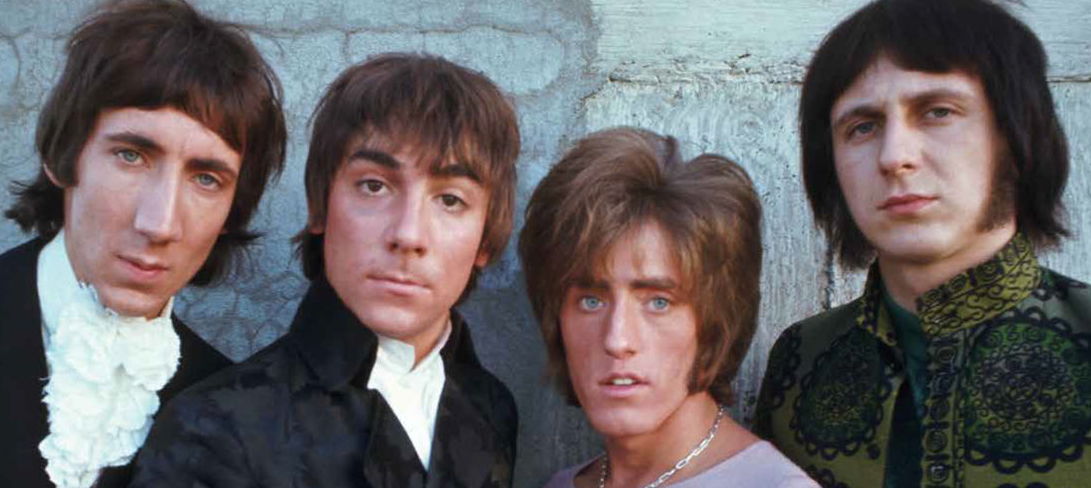
"Disguises" is a song by the English rock band the Who, written by guitarist Pete Townshend. It, along with "I'm a Boy" are of the earliest compositions in which Townshend questions gender identity and identity crisis', a prevalent aspect found later in his songwriting. Both "Disguises" and "I'm A Boy" were written to be parts of a concept album titled Quads, in which parents would be able to choose the gender of their children. However, this idea was later discarded and the pair of songs are the only ones that survived. They were first attempted on 14 June 1966 as demos, And were worked on for some months, before being recorded on 31 July to 1 August of the same year. It is one of the earliest songs recorded by them that features claves, played by drummer Keith Moon, who would also later use them on "Magic Bus" in 1968. French horn is featured in a distinct solo played by bass guitarist John Entwistle. "Disguises" was never performed live by the band. The only live recording of the song originates from a session the Who recorded on 13 September, which was later broadcast on 17 September for an episode of Saturday Club. This version, apparently recorded as a joke, ends with Moon smashing his drums, interrupting presenter Brian Matthew, much to the bands' approval, with Matthew exclaiming "I see". This version can be found on their 2000 compilation album BBC Sessions.  From: https://en.wikipedia.org/wiki/Disguises_(The_Who_song)

The Nields - King of the Hill


The Nields are a five-piece band who you might call folk-rock if you were a marketer under the cowardly impression that everything must have a recognizable label or people will gather in the square at night and put it to the torch. Three of the five are Nields in person, as well. Katryna sings, Nerissa sings and plays guitar and writes most of the songs, and David plays guitar and writes the rest of them. David also provides a first-name link to drummer Dave Hower and bassist Dave Chalfant. Their back-catalog includes the 1994 album Bob on the Ceiling, which includes, among other things, a striking cover of Sinéad O'Connor's "Black Boys on Mopeds", and an EP and a live disc that I haven't heard yet because when I ordered them from the band's Web page I got a note back from their manager saying that they were out on tour and it might be a while.
Calling them folk-rock isn't accurate or evocative, but it's still probably the best place to begin. They use acoustic guitars frequently, and both Nields sisters (at least, I assume they're sisters) sing with fragile voices that sound like they'd be most at home in a small-college-town coffeehouse. And though there's plenty of overdriven electric guitar and loud drumming on this album, none of the Nields seem to have mastered the machismatic bluster with which rock drama is customarily executed. So if folk-rock is what you get when people raised on folk try to play rock, that's sort of what this is.
There's more to it, though, because the Nields' upbringing appears to have been a bit more complicated. Or perhaps everybody's upbringing is complicated, and the Nields just reflect more of theirs in their music than most people do. They remind me of Suddenly Tammy, not because the two bands play similar styles of music, but because the family is evident in the music. There's something fundamentally different about the music you get from four random individuals who gather in a basement to become a rock band, and the music you get from siblings and their assorted friends who play music as an extension of their lives together, and while I don't know anything about the real history here, if the Nields the band didn't evolve out of the Nields the people in this latter manner then this is a cunning imitation all the same.
The result is that the Nields have a large number of interesting elements that you would probably not have thought to include in a rock band constituted from scratch. Neither of the sisters' voices are that impressive on their own, but they play off each other instinctively, one soaring into wailing harmony while the other drops into a quiet, elfin confidence. One of them (or both perhaps, it's hard to tell) is fond of letting notes trail off into wild pitch modulation, and at other times they produce passing hints of a Polly Harvey-like whisper, Jean Smith's flat intonation, Sinéad O'Connor's tense circling and even the Beatles' psychedelic flourishes. David's electric guitars produce a range of sounds from a digeridu-like throaty drone to squeaky rhythm chords to a ragged-sounding lead that could easily be coming out of a cheap amp in the family rec room, and they combine this with the folkier acoustic guitars as if having both in a band at once is the most natural thing in the world.  From: https://www.furia.com/page.cgi?type=twas&id=twas0060

The Move - Cherry Blossom Clinic Revisited


Very few Americans have ever heard of The Move unless they found themselves bored enough to dig deep into the liner notes for one of the Electric Light Orchestra’s commercial successes and learned that Jeff Lynne and drummer Bev Bevan were ex-members. Lynne was a johnny-come-lately, however, and did not appear on Shazam, a forgotten masterwork originally designed to properly introduce this long-popular-in-the-mother-country British band to the colonies, courtesy of A&M Records.
Things didn’t work out as planned. A&M was out of its league when it came to promoting rock bands (the “A” stands for Herb Alpert, for chrissake), and arranged a comically disastrous tour that required the band the lug their stuff around the USA in a U-Haul trailer. Creative and personal tensions between band members didn’t make things any easier. When the rubble had cleared, however, what survived was Shazam, one of the most fascinating rock recordings ever made.
The album has been buried for years, and I only vaguely remember hearing parts of it while growing up. I rediscovered it accidentally while browsing through iTunes and tracked down an extraordinarily expensive import CD version for my collection. I fell in love with it on the first listen, knocked out by Bevan’s drumming, the sheer diversity captured in a mere six songs, the intense riffs, the gorgeous harmonies and the great good fun captured in random street interviews and band chatter.
The album explodes with the no-bullshit guitar and pounding drums of “Hello, Suzie,” the story of a ditzy British teenybopper featuring an introduction that almost forces you out of your seat. Roy Wood growls out the lead vocal with good humor and strong support in the form of a thrilling backdrop of harmonies that come together with a huge exclamation point at the end of the bridge. I keep praying that somewhere out there a band will cover this sucker and use it as an opening number for a gig, as I’d love to see this done live with the same great energy as the original.
After a short interview with some native Brits, Carl Wayne steps to the microphone for the lovely and bouncy string piece, “Beautiful Daughter,” delivered in a perfect combination of romantic sincerity tempered by a touch of tongue-in-cheek and supported by the energetic strings that would later characterize early ELO recordings.
Then a door creaks . . . footsteps . . . the door closes and we hear a diffident voice narrating the story of how he would end up going off his HEAD!!! The band explodes with heavy bass, drums, the works! This is “Cherry Blossom Clinic Revisited,” a high-power remake of one of their earlier songs, and a delightfully wacky remake it is. The heaviness fades into acoustic guitar playing Bach, no less, and ends with an over-the-edge falsetto picking up the tune and eventually blending into layers of perfectly executed harmonies.  From: https://altrockchick.com/2012/05/02/classic-music-reviews-shazam-by-the-move/